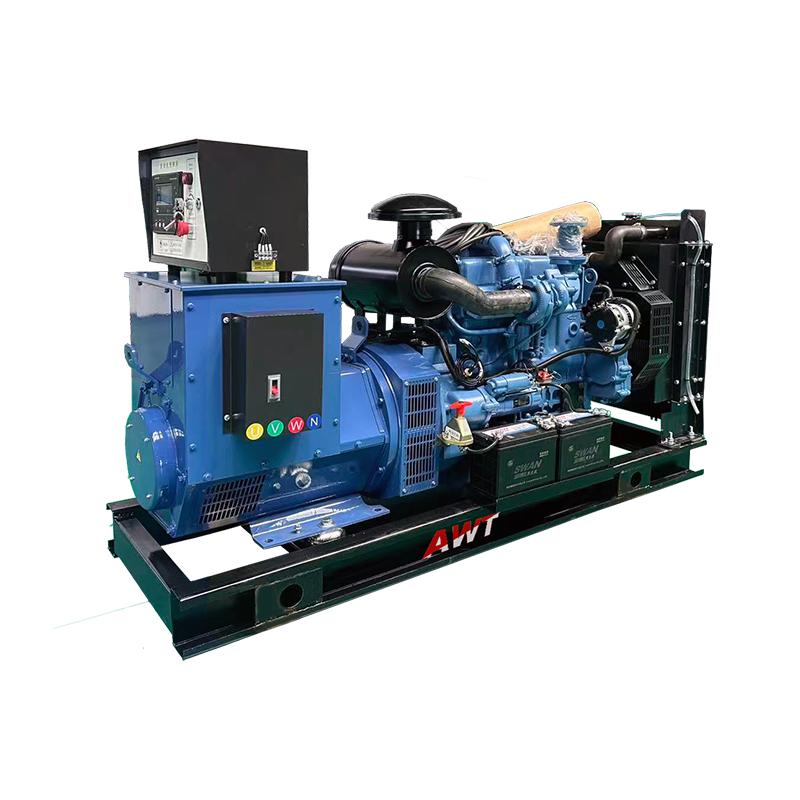
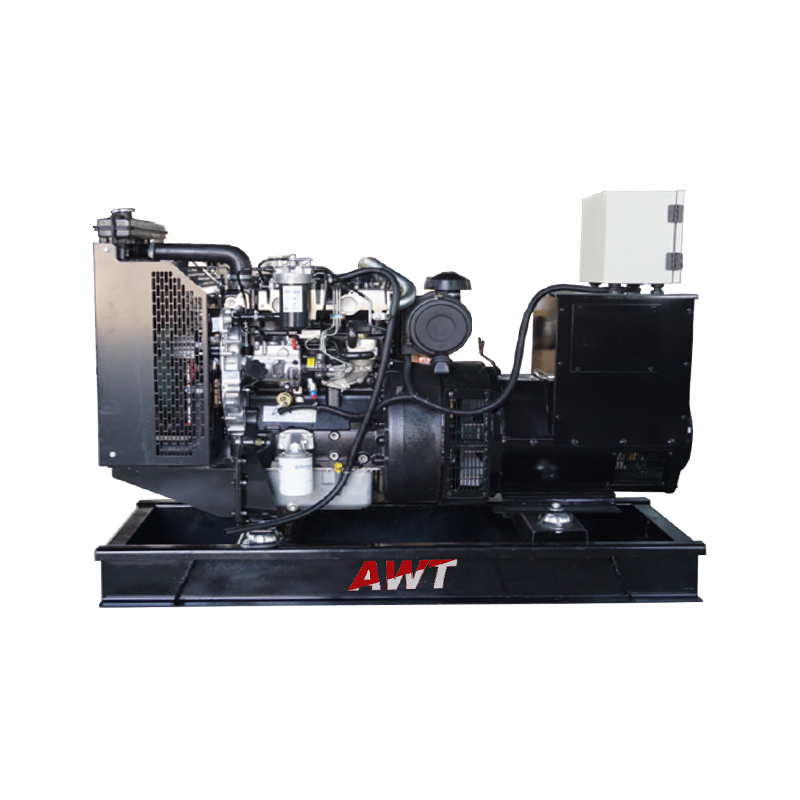
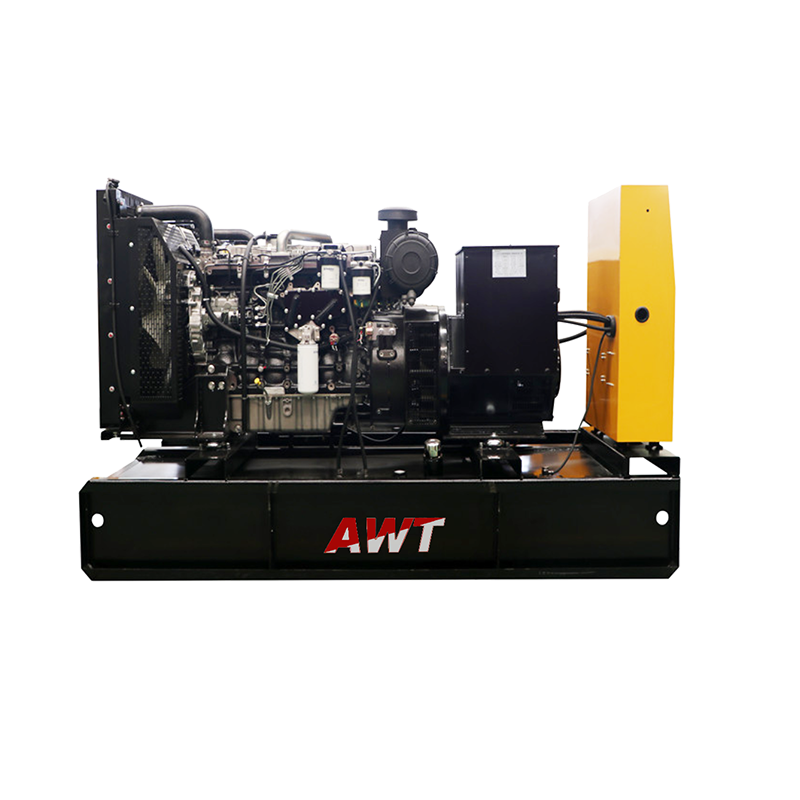
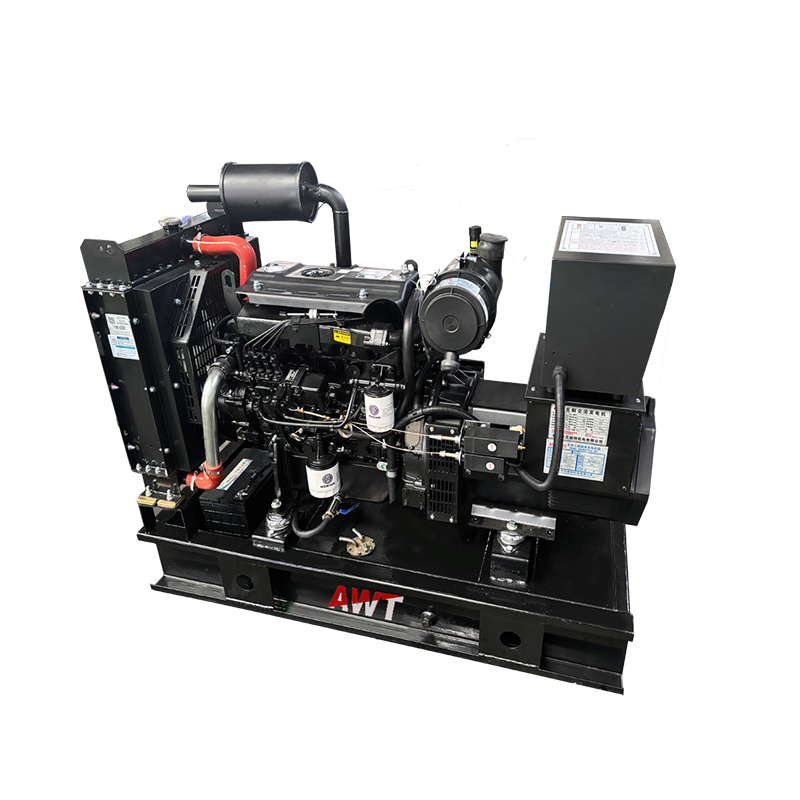
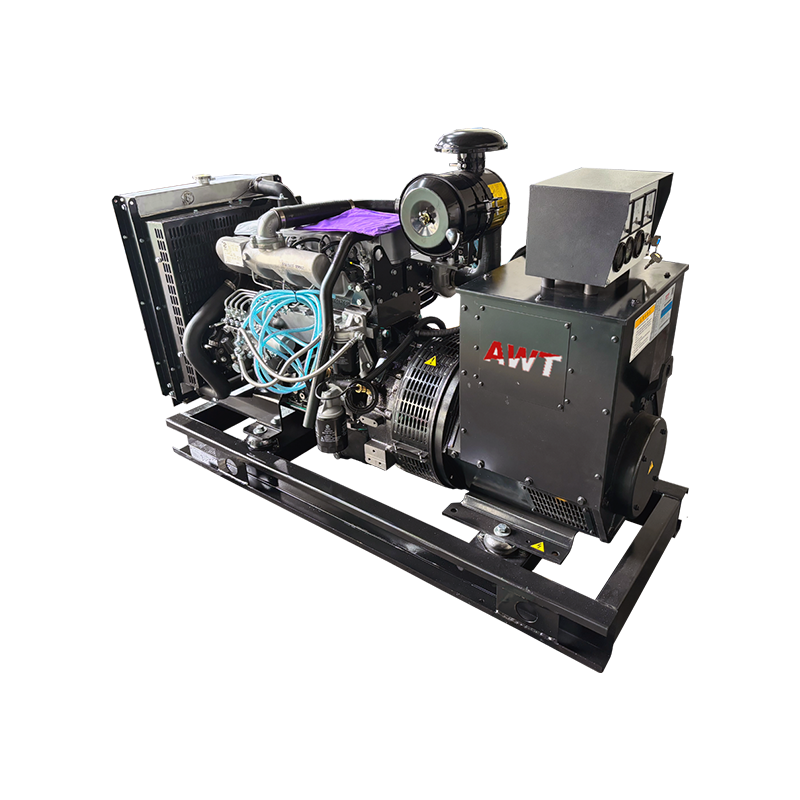
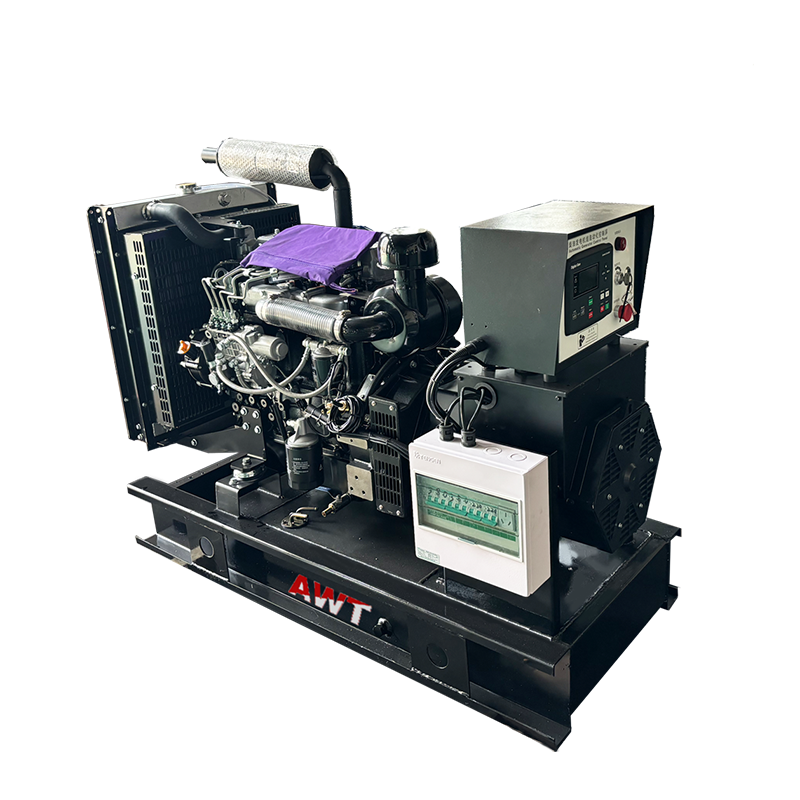
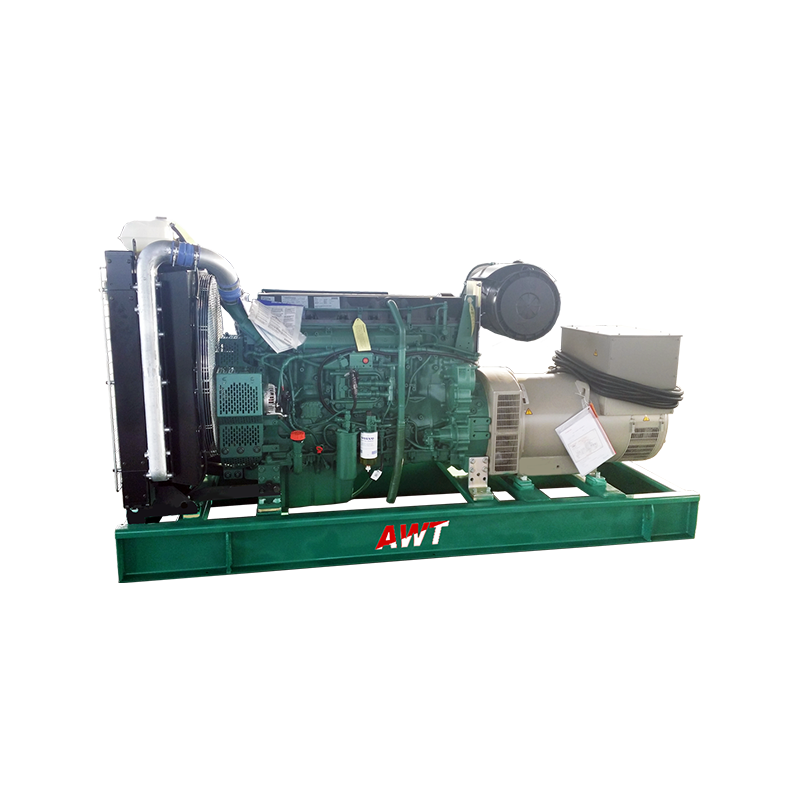
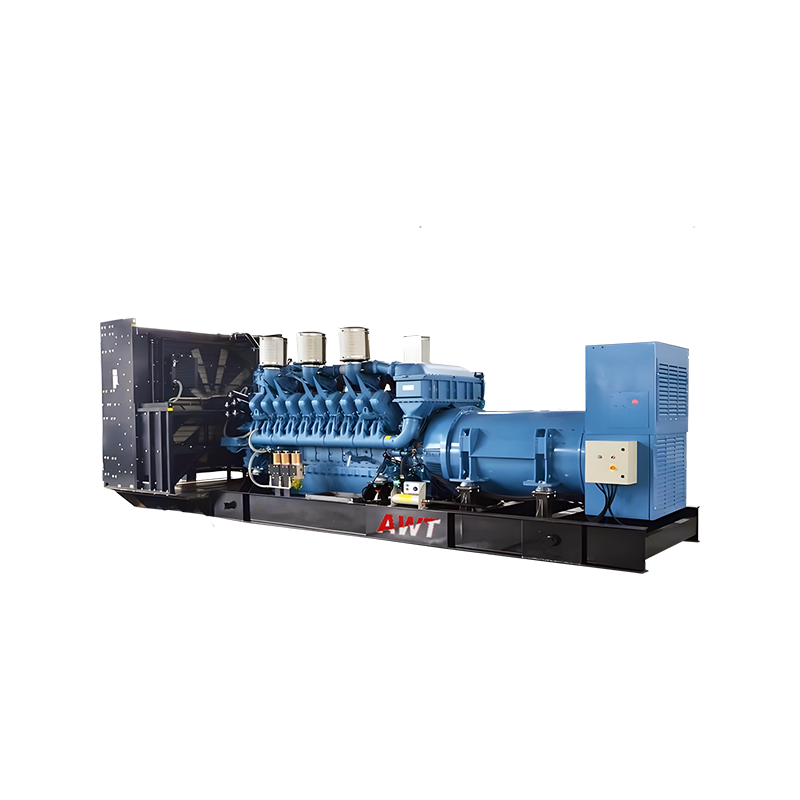
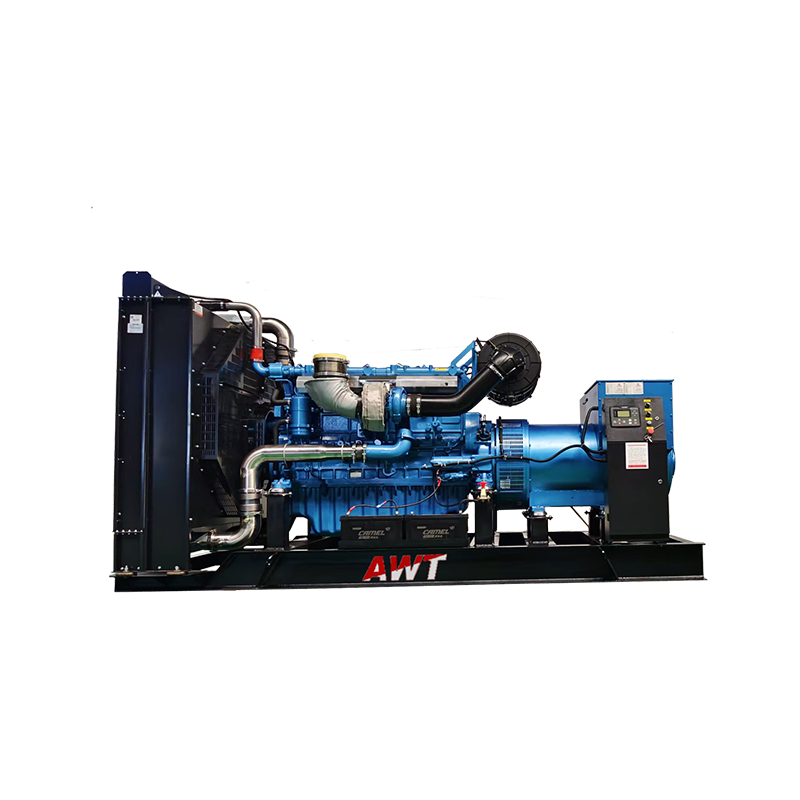
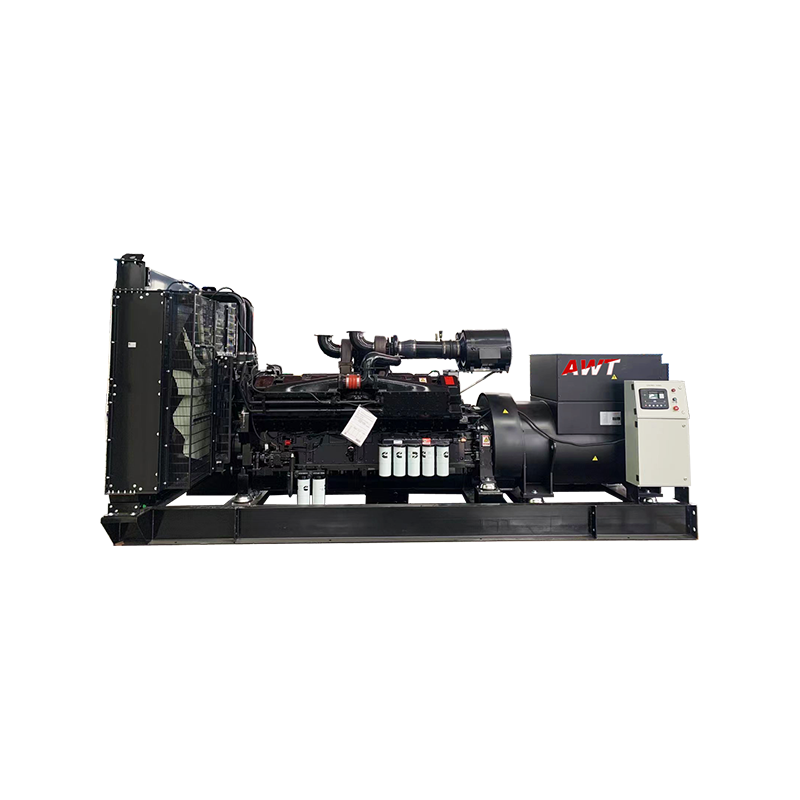
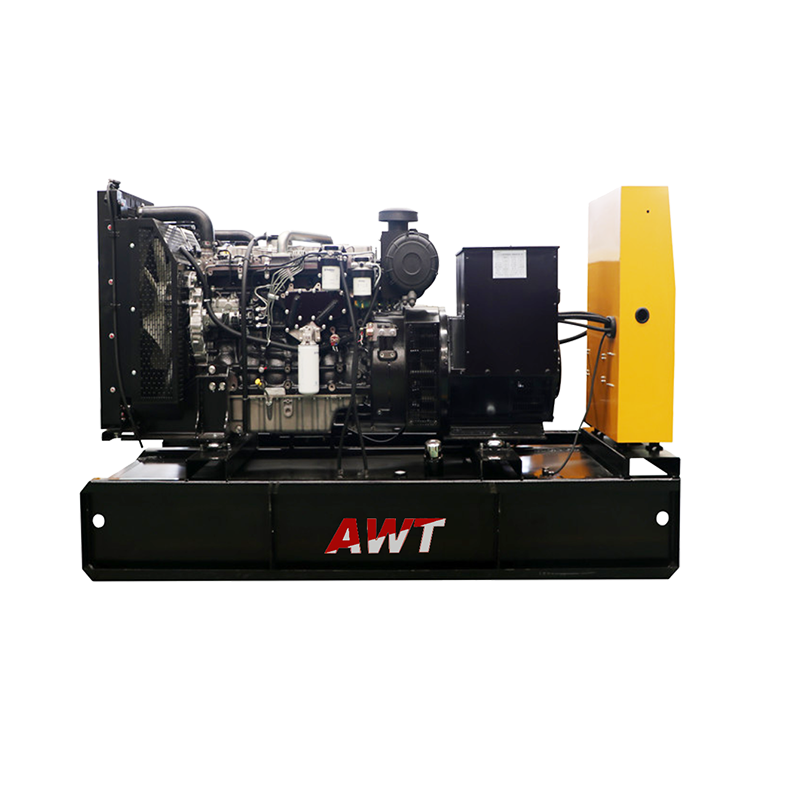
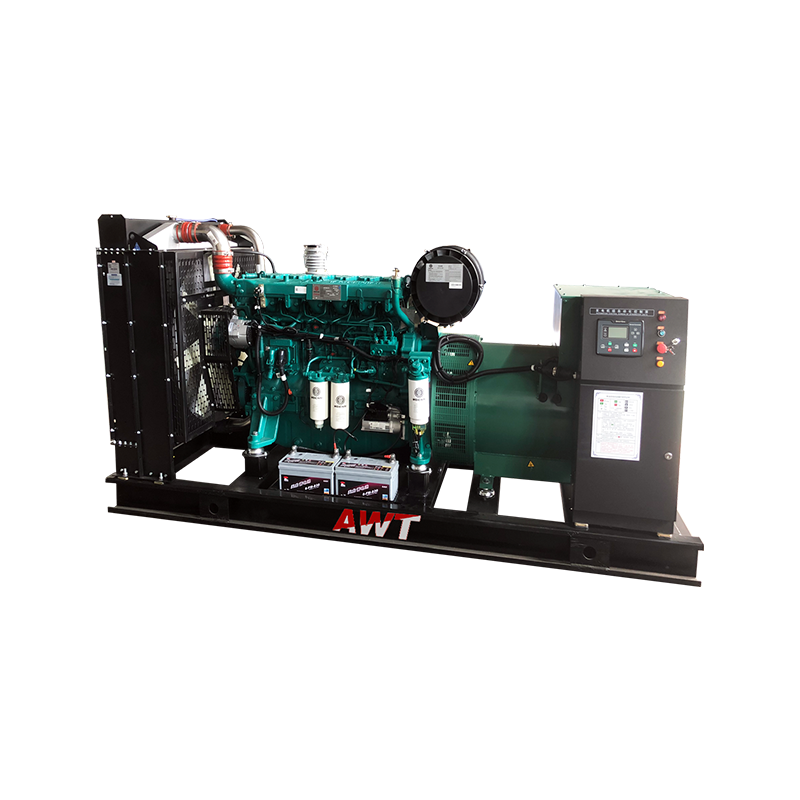
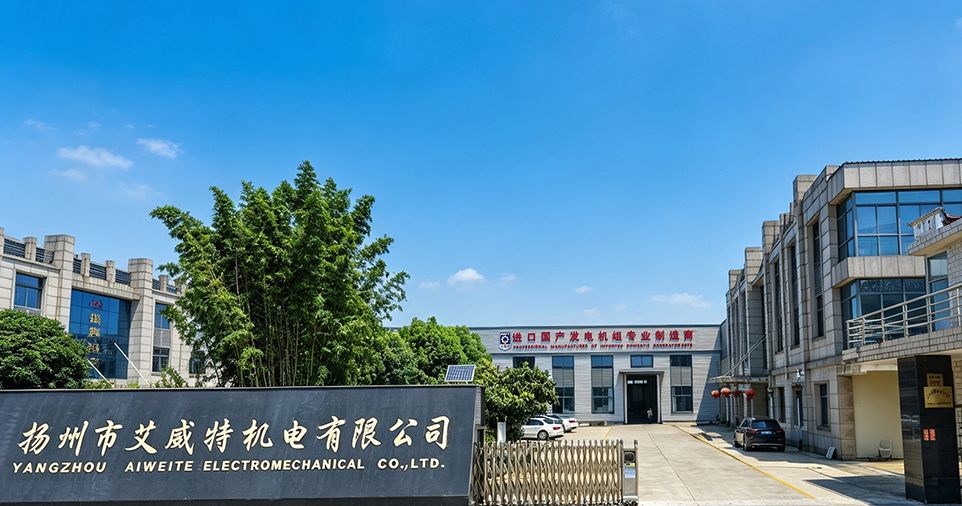
Yangzhou Aiweite Electromechanical Co., Ltd. manufactures 10kVA – 100kVA Universal Diesel Generator Sets as part of a generator programme spanning 1 kVA to 2,500 kVA. This series is the compact end of that range: small-bore industrial diesel engines, maintenance-free brushless full-copper alternators and intelligent LCD control, assembled and load-tested in our own factory before shipment.
The range is built for standby and intermittent duty in buildings, shops, clinics, schools, light workshops, weak-current rooms and outdoor emergency work. Because the platform accepts all mainstream engine brands, we configure each unit around the actual load profile, site conditions and control interface rather than forcing a single engine package.
What This Series Covers
Units in this band are rated from 10 kVA to 100 kVA and comply with ISO 8528 and GB/T 2828. Prime and standby ratings are quoted separately, so the working point is fixed before the engine and alternator combination is released to production. Frequency is set to 50 Hz or 60 Hz and voltage to the destination standard.
- Engine: mainstream small-bore industrial diesel engines with turbocharged intercooling and precision fuel injection, selected for fast starting, low vibration and stable running in humid, dusty or variable-temperature environments.
- Alternator: brushless, full-copper, Class H insulation, IP22–IP23 protection, low voltage distortion for household, office and small precision loads.
- Control: intelligent LCD controller with automatic start/stop, ATS transfer, real-time monitoring and full fault protection; remote and cloud management available.
- Auxiliary: integrated base frame, optimised cooling, triple filtration, lightweight dampers and low-noise muffler.
Power Band and Typical Duty
The table below shows how we normally map the band to duty. Final sizing always follows the calculated running load, starting kVA of the largest motor and the acceptable voltage dip.
| Rated Output |
Typical Duty |
Typical Loads |
Usual Structure |
| 10 – 30 kVA |
Standby, single-phase or three-phase |
Villas, shops, monitoring rooms, small clinics |
Silent or open |
| 30 – 60 kVA |
Standby with intermittent prime use |
Restaurants, offices, schools, community facilities |
Silent or trailer |
| 60 – 100 kVA |
Standby, temporary production, site power |
Light workshops, agricultural sites, field construction |
Silent, trailer or container |
Engine Platforms We Build On
The universal platform lets us match the engine to the duty cycle, fuel quality and spare-parts route rather than to a single brand. Engine families available across our range include Cummins Powered Diesel Generator Sets, Perkins Powered Diesel Generator Sets, Weichai Powered Diesel Generator Sets and Yuchai Powered Diesel Generator Sets. Volvo, Baudouin, MTU, SDEC and Mitsubishi packages are also available where the project specifies them.
For long-term standby in remote areas we favour engines with wide service networks and commonly stocked filters. For sites with poor fuel quality or frequent load steps, we review injection system type and cooling margin before confirming the model.
Structure Options
- Silent type: enclosed canopy with noise attenuation, measured at ≤75 dB(A) for this band, suited to residential communities, schools and medical facilities.
- Open type: base-frame unit for plant rooms and workshops where a dedicated acoustic enclosure or machine room already exists.
- Trailer type: mobile unit for field construction, irrigation, off-grid areas and temporary events.
- Container type: weatherproof enclosure for outdoor installation and longer unattended operation.
Electrical Configuration and Automation
Voltage, frequency, phase arrangement and control platform are fixed at order stage. We build single-phase and three-phase outputs, 50 Hz and 60 Hz, with Deep Sea, SmartGen, ComAp or a customer-specified controller. ATS panels, remote start contacts and cloud monitoring are integrated where the site requires unattended operation.
- Automatic start/stop on mains failure, with adjustable transfer delay.
- Full fault protection: low oil pressure, high coolant temperature, over/under speed, over/under voltage, overload.
- Real-time monitoring of voltage, current, frequency, power factor, fuel level and running hours.
- Dry contacts and communication ports for BMS, SCADA or building monitoring integration.
Installation, Utilities and Site Requirements
These units are compact enough for equipment rooms, rooftops, shops and small offices, but they still need correct air, exhaust and fuel paths. We issue a site preparation drawing with each order covering foundation or anti-vibration mounting, cooling air inlet and outlet areas, exhaust routing and clearance for daily service access.
- Rated output cable sizing and breaker selection matched to the alternator terminals.
- Fuel tank, day tank or external supply with filtration and shut-off.
- Battery, charger and starting circuit supplied as part of the standard scope.
- Earthing and neutral arrangement confirmed against the site distribution system.
Quality Control and Acceptance Testing
Every set passes through incoming inspection of key components, assembly verification, electrical safety checks and mechanical fitting inspection. Before delivery each unit is run through full-load testing from 0 to 110% of rated capacity, step-load response testing, continuous operation endurance testing, voltage and frequency stability testing, and emergency protection verification.
Test records, wiring diagrams, operation and maintenance manuals and the component list are issued with the shipment. Where a project requires witnessed testing or third-party inspection, we schedule it into the production plan and prepare the unit accordingly.
Maintenance and Spare Parts
The platform is designed for simple daily maintenance: accessible filters, visible fluid levels and a controller that logs faults for fast diagnosis. We supply genuine engine components, alternator parts, electrical and control system parts, filters and consumables to keep units running through their service life.
- First service at the interval stated in the engine manual, then according to running hours.
- Battery and charger checks during long standby periods.
- Coolant, oil and fuel filter replacement using the specified grades.
- Annual load test to confirm the set still carries its rated load.
Information We Use to Configure Your Solution
A firm configuration and quotation depends on a small set of project inputs. Send these and we will return a matched model, drawing set and commercial offer.
| Input |
Why We Need It |
| Running load list and largest motor starting kVA |
Fixes the kVA rating and acceptable voltage dip |
| Voltage, frequency, phase and neutral arrangement |
Sets alternator winding and switchgear |
| Duty: standby, prime or continuous |
Determines engine rating and cooling margin |
| Site conditions: indoor/outdoor, ambient, altitude, noise limit |
Selects structure type and derating |
| Control and ATS interface requirements |
Matches controller, panel and remote monitoring |
| Destination port, documentation and inspection needs |
Defines packing, labels and delivery scope |
Frequently Asked Questions
What is the difference between the kVA and kW rating on these sets?
kVA is the apparent power rating of the alternator; kW is the usable active power after the power factor is applied. A 100 kVA set at 0.8 power factor delivers 80 kW of active power. We quote both figures so the load list can be checked against real capacity.
Can a 10kVA – 100kVA unit run unattended?
Yes. With the standard intelligent controller, ATS panel and remote monitoring, the set starts on mains failure, transfers load, monitors itself and shuts down on fault without an operator present. Fuel supply and battery condition remain the main site responsibilities.
Which engine brand should be specified for a standby installation?
For most standby duties any of the mainstream platforms perform well. The deciding factors are usually the local service network, fuel quality and the customer's preference for a specific brand. We confirm the available engine for the required rating before quoting.
How is noise level controlled on residential sites?
The silent version of this series is measured at ≤75 dB(A). Where a stricter limit applies, we review canopy design, exhaust silencer grade and unit placement, and confirm the achievable level against the site requirement.
What documentation is supplied with each generator set?
Each shipment includes the operation and maintenance manual, wiring and control diagrams, the component list and the factory test record. Additional documentation for customs, inspection or project handover is prepared on request.
Can the control panel be integrated with an existing building system?
We provide dry contacts and communication ports for BMS, SCADA or building monitoring. The protocol and point list are agreed during configuration so the panel arrives ready for the site interface.



 English
  Français
  Español