English
 Français
 Español
SDEC Powered Diesel Generator Sets: Power Range and Industrial Application Guide
Nov 13, 2026
Content
- 1 What SDEC Powered Actually Means in a Specification
- 2 Power Range: Matching the Four Bands to Real Loads
- 3 ISO 8528 Ratings: One Engine, Three Different Outputs
- 4 Derating and Load Acceptance: Where the Site Changes the Number
- 5 Structural Format: Open, Silent, Container or Trailer
- 6 Industrial Applications and a Six-Step Sizing Sequence
- 7 What to Check Before You Place the Order
- 8 Practical Answers Before You Specify
Ask three suppliers for the output of an SDEC-powered generator set at 250 kVA and you can receive three different answers: 250 kVA emergency standby, 250 kVA prime power, or roughly 200 kVA continuous. The rating class, not the engine model, decides which figure is correct for your site.
That distinction matters because a generator set is bought against a load profile, not against a brochure number. Yangzhou Aiweite Electromechanical Co., Ltd. (AWT), a Chinese manufacturer established in 2008 that builds and installs land-use diesel generator sets from 1 kVA to 2,500 kVA, lists SDEC among the engine brands in its catalogue and organises the same product family three ways: by engine brand, by power band, and by structural format. This guide explains how those three views fit together for SDEC-powered units, and which specification checks decide whether the set you order will actually carry the load.
What SDEC Powered Actually Means in a Specification
SDEC is the trading name of Shanghai Diesel Engine Co., Ltd., a diesel engine manufacturer headquartered in Shanghai, China, and an SDEC-powered generator set is one whose prime mover is an industrial engine from that manufacturer. Every other part of the package, including the alternator, control panel, circuit breaker and enclosure, is specified separately by the set builder.
The engine is the component that sets fuel consumption, load acceptance, service intervals and the availability of spare parts across a ten-year horizon. Buyers who name an engine brand are usually not expressing brand loyalty; they are standardising maintenance across a fleet, or matching an engine they already operate in other equipment on the same site.
A diesel generator set is a packaged assembly of a compression-ignition engine, a synchronous alternator and a control system, rated as a single unit under ISO 8528-1 and tested for transient performance under ISO 8528-5. The engine data sheet rating and the set rating are not the same number.
That last sentence is where most specification errors begin. An engine sold for generator drive carries its own ISO 3046 rating at reference conditions. The set builder then converts that figure into an ISO 8528 rating for the complete package, which is lower because the alternator, cooling system and enclosure each consume part of the margin.
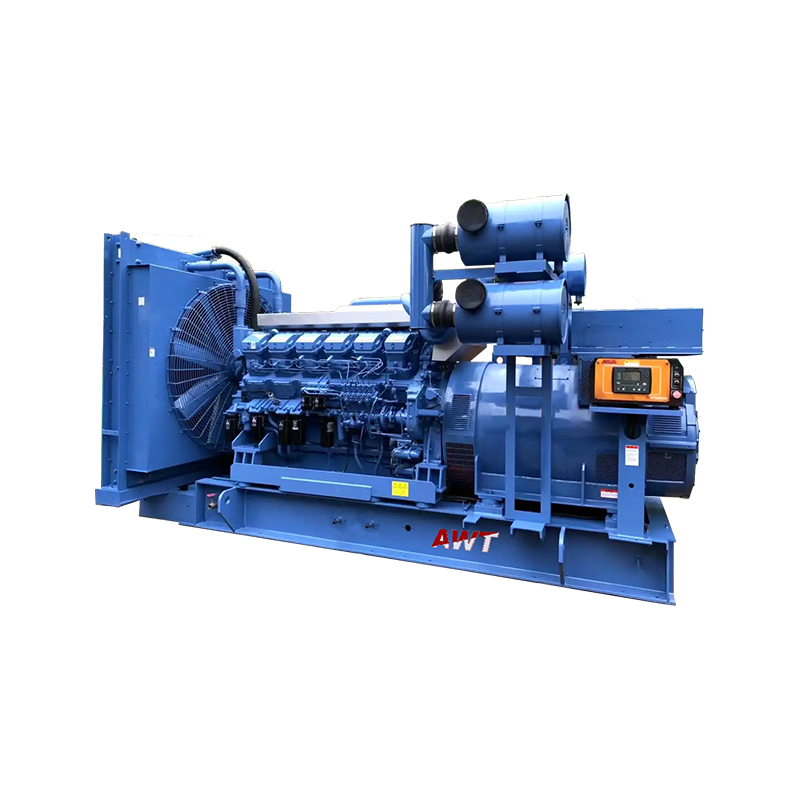
 SDEC-Powered Diesel Generator Sets by Rating BandCheck the model table for prime and standby ratings within your selected band, with SDEC engines and open, silent, trailer or container structures.View Product →
Power Range: Matching the Four Bands to Real Loads
The catalogue is organised into four bands, 10-100 kVA, 100-400 kVA, 400-1000 kVA and 1000-2500 kVA, and the correct band follows from a load list rather than from a rule of thumb about building size. A band is a starting point for configuration; the exact rating inside the band depends on duty class and site conditions.
| Power band | Typical load profile | Typical engine configuration | Format usually specified |
| 10-100 kVA | Lighting, small pumps, site offices, telecom shelters, single-machine backup | Three- and four-cylinder, naturally aspirated or turbocharged | Open or trailer |
| 100-400 kVA | Production lines, cold storage, retail and hotel standby, water pumping | Four- and six-cylinder, turbocharged, often charge-air cooled | Open or silent |
| 400-1000 kVA | Multi-line plants, hospitals, wastewater treatment, small data rooms | Six-cylinder and V-configuration, charge-air cooled | Silent or container |
| 1000-2500 kVA | Heavy process plants, large infrastructure, parallel operation | V-configuration, charge-air cooled, frequently multi-set | Container or plant-room open set |
Two practical notes on band selection. First, SDEC-driven sets are specified most often in the small and mid bands, where a four- or six-cylinder industrial engine is a natural fit; if your load sits near the top of a band, confirm the exact model, its aspiration type and its rating class from the engine data sheet instead of assuming the band ceiling applies to every engine in the range. Second, the alternator and control panel are the cheapest items to upgrade at order stage and the most expensive to retrofit later, so they are worth fixing at the same time as the rating.
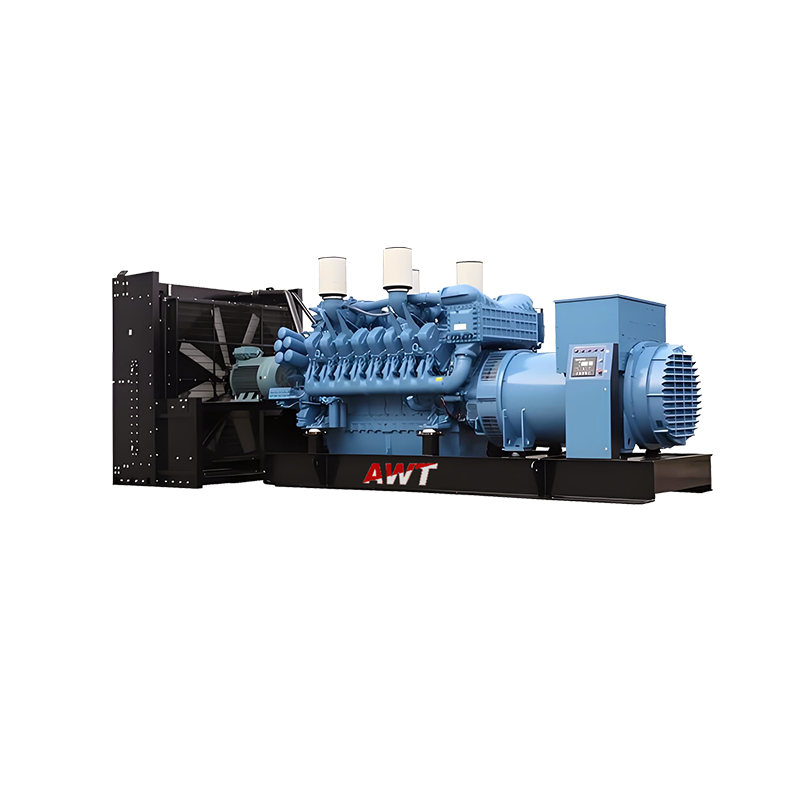
 100–400 kVA Universal Diesel Generator SetsReview this mid-power series for prime and long-duration standby duty, with engine brand options and controllers that support ATS, remote monitoring and paralleling.View Product →
ISO 8528 Ratings: One Engine, Three Different Outputs
ISO 8528-1 defines three rating classes that share the same hardware but not the same output figure: Emergency Standby Power (ESP), Prime Power (PRP) and Continuous Power (COP). If expected running hours exceed 200 per year, or the load includes a step the set must survive without tripping, ESP is the wrong class.
| Rating class | Load definition | Overload allowance | Typical specification practice |
| ESP | Output available for the duration of a utility outage | None | Standby sites running fewer than 200 hours per year |
| PRP | Output available for an unlimited number of hours with a varying load | 10% for one hour in every 12 | Prime duty, rental fleets, sites with seasonal grid instability |
| COP | Output available for an unlimited number of hours at a constant load | None | Base-load plants, cogeneration, continuous process supply |
Specify ESP when
- The set runs only during grid failure
- Annual running stays under 200 hours
- Average load stays near 70% of the rating or below
- No single load step exceeds what the set accepts
Specify PRP when
- The set is a primary source for part of each day
- Annual running exceeds 200 hours
- Sustained load sits above 70% of the rating
- A 10% overload must be tolerated for one hour in twelve
A 500 kVA ESP rating is not a 500 kVA machine. Choose the rating class first and size the set second; reversing that order is the most frequent cause of overloaded generators on industrial sites.
Derating and Load Acceptance: Where the Site Changes the Number
Engine output figures are quoted at ISO 3046-1 reference conditions of 100 kPa barometric pressure, 25 degrees Celsius intake air temperature and 30% relative humidity, and output falls as site conditions move away from that baseline.
- Altitude. Lower air density means less oxygen in each cylinder charge and less cooling capacity through the radiator. The size of the loss depends on aspiration method, charge-air cooling and rated speed, so the manufacturer derating curve for the specific engine is the only reliable source.
- Ambient temperature. Radiator and alternator sizing both reference a design ambient. A set configured for 40 degrees Celsius cannot be assumed to hold its rating at 50 degrees Celsius in a poorly ventilated plant room.
- Intake and exhaust restriction. A loaded filter or an undersized exhaust run adds back pressure and cuts available power before any electrical limit is reached.
- Fuel quality. Sulfur content drives lubricant alkalinity and oil drain interval. National diesel standards such as GB 19147 in China now cap sulfur in the low parts-per-million range, and fuel outside the engine maker stated limit shortens service intervals.
- Load step class. ISO 8528-5 grades transient performance from G1 to G3 according to the load step the set can accept, which is a separate question from steady-state capacity.
The two figures that decide whether a set starts your largest motor are the locked-rotor kVA of that motor and the load-step acceptance class of the generating set. A 90 kW induction motor started direct-on-line can draw five to eight times its full-load current for several seconds; a set sized only on running kW will trip or stall on the first start.
Structural Format: Open, Silent, Container or Trailer
The four formats differ in acoustic treatment, weather protection and transport method, not in electrical output. The same engine and alternator can be supplied as an open set, a canopy set, a containerised unit or a trailer-mounted unit, so the decision is driven by where the set will stand and who will hear it.
| Format | Construction | Where it fits | What to watch |
| Open | Engine and alternator on a steel base frame, no enclosure | Indoor plant rooms with acoustic treatment | Room ventilation and exhaust routing must be designed; the set itself contains no noise |
| Silent | Base frame inside an acoustically lined canopy | Sites with noise limits, urban or residential locations | Canopy airflow, radiator sizing and service access through removable panels |
| Container | Set inside a containerised enclosure with doors and lifting points | Outdoor, remote or unattended locations, rapid deployment | Footprint, lifting plan, cable entry positions and ventilation louvre area |
| Trailer | Set on a road-towable chassis with lights and brakes | Temporary and rotating sites, events, construction | Towing regulations, axle load and speed limits vary by country |
Where an indoor plant room is available, an open set usually gives the lowest cost per kVA because the building carries the acoustic duty. Where the set stands outdoors, a containerised or canopy unit removes the need for a separate enclosure, and the trade-off is a larger footprint and heavier lifting requirement. A detailed comparison of enclosure types and their application limits is covered in this guide to container type versus open type diesel generator sets.
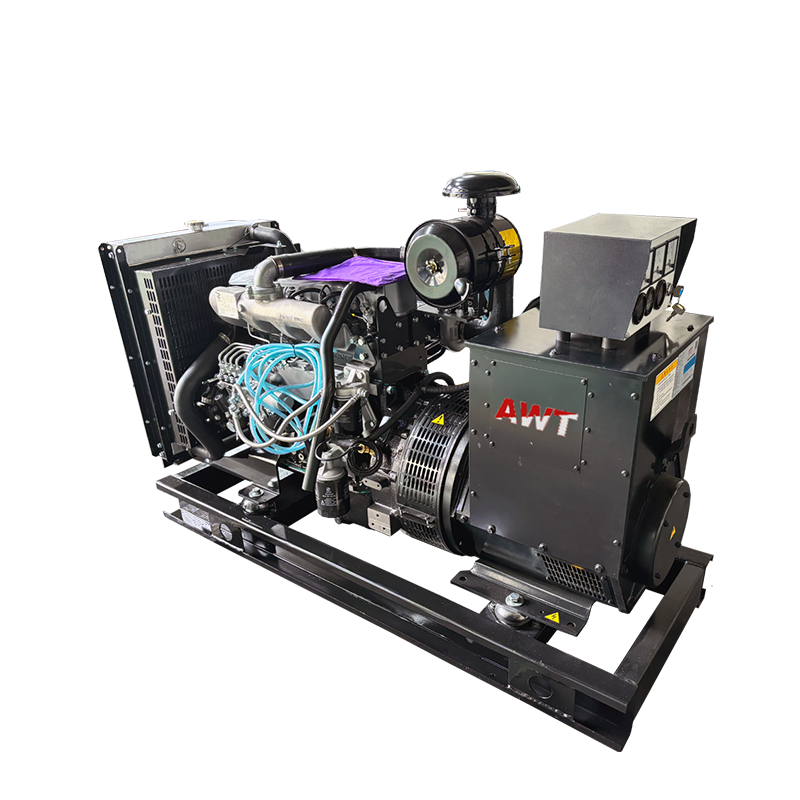
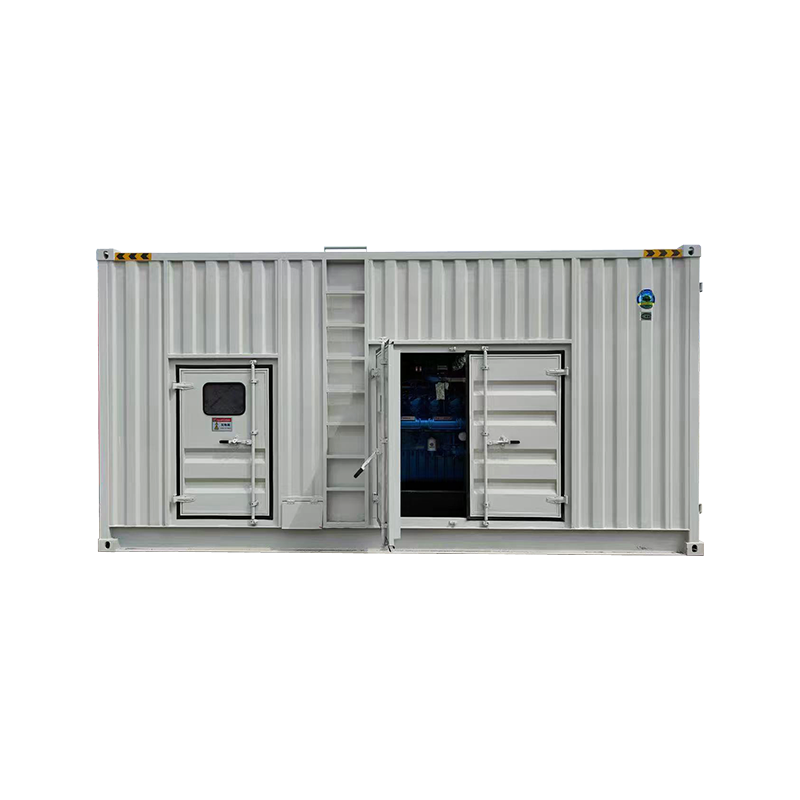 Container Type Diesel Generator Sets for Harsh SitesConsider this integrated 20ft or 40ft container package when outdoor or remote sites need silencing, weather protection, and factory-assembled power up to 2500 kVA.View Product →
Industrial Applications and a Six-Step Sizing Sequence
Land-use diesel generator sets are specified for three application groups: factories, infrastructure projects and emergency power supply. Each group produces a different load profile, and the profile rather than the industry name decides the rating.
- Build the load list in kW and kVA, separating continuous, intermittent and standby loads.
- Identify the largest motor, its starting method and its starting current multiplier.
- Choose the ISO 8528 rating class from annual running hours and overload requirements.
- Apply derating for site altitude, design ambient temperature and intake restriction.
- Select the structural format and confirm ventilation, exhaust routing and service access.
- Confirm alternator, control panel, protection settings and the scope of installation and commissioning.
Step two is where industrial projects most often go wrong, because a load list built from nameplate kW understates the starting demand of motors, compressors and chillers. Step six matters commercially: the supplier scope should state clearly whether installation, cabling, fuel system and commissioning are included, since these items are frequently assumed by the buyer and excluded by the seller. Application notes for specific sectors are grouped on the industries page.
What to Check Before You Place the Order
Ask for seven documents before signing; a product datasheet alone will not tell you whether the set meets the load.
- Engine data sheet stating the rating basis, the ISO 8528 class and the derating curve for altitude and ambient temperature.
- Alternator data sheet with the IEC 60034-1 rating, insulation class and temperature rise.
- Factory load-bank test record showing the load steps applied and the transient voltage and frequency recovery.
- Control panel description with protection settings and the generator circuit breaker rating.
- Wiring diagrams, terminal layout and an operation and maintenance manual in the language your technicians use.
- Spare parts list with lead times for filters, belts, sensors and the control module.
- Warranty terms separating parts from labour, plus a defined installation and commissioning scope where the supplier installs the set on site.
A load-bank test record is the only document that shows the set carrying a load rather than an engine being capable of it on paper. Ask for the recorded load steps and the transient recovery figures, not a summary sheet.
Practical Answers Before You Specify
What power range do SDEC-powered generator sets cover?
The product catalogue is organised into four bands, 10-100 kVA, 100-400 kVA, 400-1000 kVA and 1000-2500 kVA, inside a stated design range of 1 kVA to 2,500 kVA. SDEC engines are specified most often in the small and mid bands; for any load above 400 kVA, confirm the exact engine model, its ISO 8528 rating class and its derating curve from the data sheet rather than assuming the band ceiling applies.
Does altitude or high ambient temperature reduce generator output?
Yes. Engine ratings are stated at ISO 3046-1 reference conditions of 100 kPa, 25 degrees Celsius and 30% relative humidity, and output falls as altitude rises and intake air gets hotter. The correct method is to take the manufacturer derating curve for the specific engine, apply the site highest expected ambient temperature and elevation, and size the set from the derated figure. Turbocharged and charge-air-cooled engines lose less than naturally aspirated units, but no diesel engine holds its reference rating at 2,000 m elevation.
Which ISO 8528 rating class should a standby generator use?
Use ESP when the set runs only during grid outages, stays under 200 hours a year and carries an average load below roughly 70% of the rating. Choose PRP when the set carries a varying load for unlimited hours, when annual running exceeds 200 hours, or when a 10% overload for one hour in twelve must be tolerated. COP applies when the set supplies a constant load as the primary source.
What documentation should arrive with the generator set?
At minimum: the engine data sheet with rating basis and derating curve, the alternator rating to IEC 60034-1, the factory load-bank test record, the control panel protection settings, wiring diagrams, an operation and maintenance manual, and a spare parts list with lead times. Where the supplier also installs the set, the contract should state the commissioning scope and the acceptance test conditions in writing.