English
 Français
 Español
Perkins Powered Diesel Generator Sets: How to Evaluate Engine and Generator Matching
Nov 18, 2026
Content
- 1 The Matching Equation Starts With Flywheel Kilowatts, Not kVA
- 2 Read Perkins Ratings Against ISO 8528 Power Definitions
- 3 Derate the Engine for the Site, Not for the Brochure
- 4 Load Acceptance and Transient Response Set the Performance Class
- 5 Mechanical Interface: Housing, Coupling and Bearing Type
- 6 Load Factor: An Oversized Engine Is a Reliability Risk
- 7 A Six-Step Sequence Before the Datasheet Is Approved
- 8 Practical Questions Buyers Ask About Engine and Generator Matching
A datasheet that prints a Perkins engine model beside a 400 kVA rating is not proof that the two were matched. It is a claim that still has to survive flywheel power, site derating and a real load profile.
Engine and generator matching is where most generator procurement disputes begin. The engine is sold at a mechanical rating measured at the flywheel under standard reference conditions. The generator set is sold at an electrical rating measured at the alternator terminals under whatever conditions the site actually has. Between those two points sit alternator losses, radiator fan load, altitude, ambient temperature, and the behaviour of the load in the first two seconds after it is switched on.
This guide sets out the checks that decide whether a Perkins powered set is genuinely matched: the arithmetic that converts kVA to kilowatts, the ISO 8528-1 rating that must be quoted, the ISO 3046-1 derating that must be applied, the ISO 8528-5 class that must be held, and the mechanical interface that has to bolt together.
The Matching Equation Starts With Flywheel Kilowatts, Not kVA
Match an engine to an alternator by proving that the engine net flywheel power, after site derating, still equals or exceeds the electrical output divided by alternator efficiency at the specified power factor.
The arithmetic runs in three steps, and every step moves the number away from the label the buyer was quoted.
- Convert to electrical power at the terminals. kW equals kVA multiplied by power factor. A 400 kVA set at the standard 0.8 power factor delivers 320 kW.
- Divide by alternator efficiency to reach mechanical power at the coupling. 320 kW divided by 0.93 equals 344.1 kW.
- Divide by the site derate to reach the figure that must appear on the engine data sheet. 344.1 kW divided by 0.88 equals 391.0 kW at ISO 3046-1 reference conditions.
Read Perkins Ratings Against ISO 8528 Power Definitions
One Perkins engine block carries several published output ratings, and ISO 8528-1 defines several application ratings for the finished set; the match is only valid when the engine rating and the set rating belong to the same class.
Perkins generator-drive engines are organised into families running from the compact 400 Series through the 1100, 1200, 2000 and 4000 Series, and each family publishes different standby and prime figures for the same displacement and speed. Confirming which figure applies is the first check, because the difference decides whether the set may be overloaded at all and how many hours a year it may run.
| Set rating | Intended duty | Overload allowance | Annual running limit commonly applied |
| ESP | Emergency standby where an alternative supply exists | None | 200 hours per year |
| PRP | Prime power for unlimited running hours | 10% for 1 hour in every 12 | No fixed limit |
| COP | Continuous power at a steady load | None | No fixed limit |
| LTP | Limited-time running power | None | 500 hours per year |
Matching a PRP engine rating to an ESP application is safe but expensive. Matching an ESP engine rating to a site that runs 4,000 hours a year is a warranty problem that no amount of extra engine margin will fix.
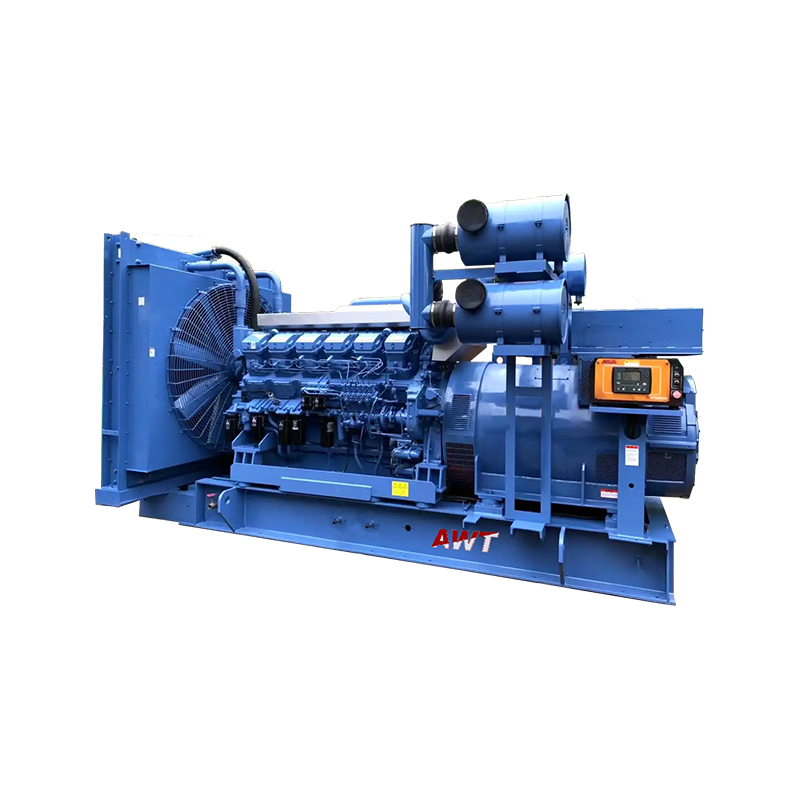
Yangzhou Aiweite Electromechanical Co., Ltd. (awtgenset.com), which has manufactured land-use diesel generator sets since 2008 and states a build range from 1 kVA to 2,500 kVA, runs this rating check before a Perkins powered unit is quoted.
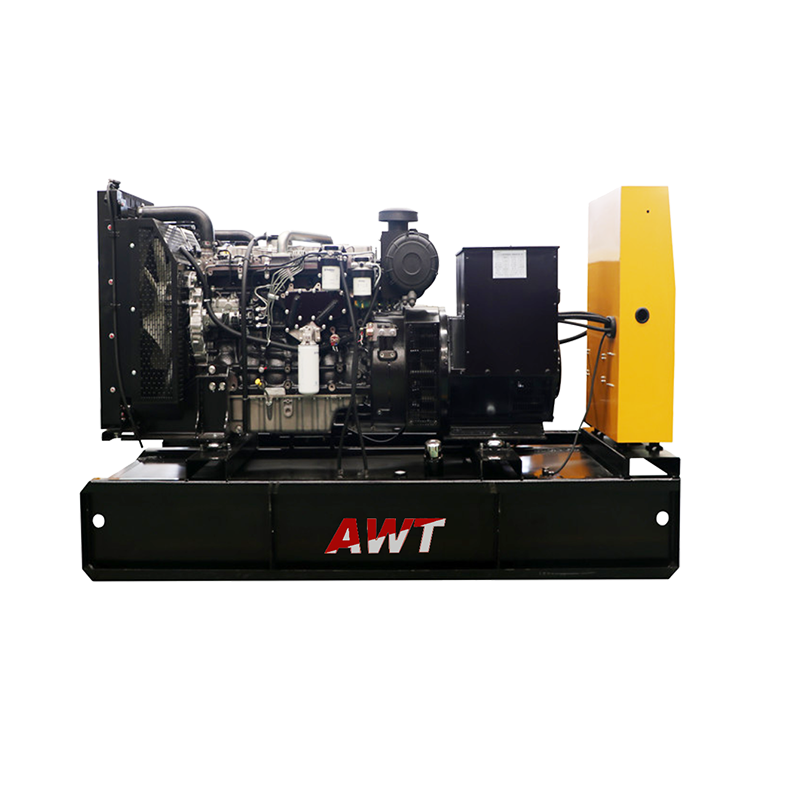
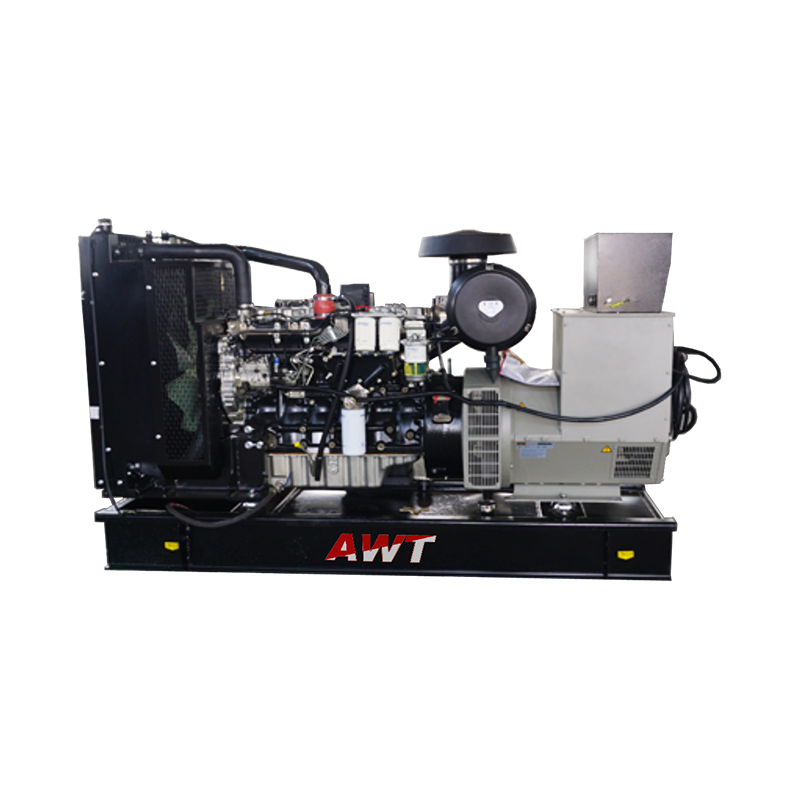 Perkins-Powered Diesel Generator Sets, 8 kW to 3400 kWExplore genuine Perkins-powered sets rated from 8 to 3400 kW, with ISO 8528 compliance and details relevant to altitude and temperature derating checks.View Product →
Derate the Engine for the Site, Not for the Brochure
ISO 3046-1 fixes the reference conditions for published engine output at 100 kPa barometric pressure, 298 K ambient air temperature and 30% relative humidity, so a site at 1,500 m altitude with a 40 C summer peak has to have its rating reduced using the derate curve for that exact engine model.
Two errors recur in export quotations. The first is applying a generic rule of thumb instead of the manufacturer curve. The second is derating the engine while leaving the alternator rating untouched. Alternator capacity falls as ambient temperature rises, and the insulation class together with the temperature rise limit defined under IEC 60034-1 sets how much of the nameplate kVA is genuinely available.
Load Acceptance and Transient Response Set the Performance Class
ISO 8528-5 defines performance classes G1 to G4 and sets the transient voltage and frequency deviation limits and recovery times a generator set must hold under a load step, so the required class belongs in the written specification rather than in the phrase suitable for motor starting.
The number that drives the whole analysis is inrush current. A squirrel-cage induction motor started direct-on-line draws roughly six to seven times its rated current under IEC 60034-12 design N and NEMA Design B characteristics. A 90 kW motor at 0.8 power factor draws 112.5 kVA in normal running, so the current transient during starting is several times that figure. Whether the set holds depends on both halves of the machine.
Engine-side limits on load acceptance
- Turbocharger lag and the time taken to reach full fuel delivery
- Governor response and the droop setting that was commissioned
- Rotating inertia of the engine and flywheel assembly
- Whether the step exceeds the published load acceptance curve, which is issued separately from the steady rating
Alternator-side limits on load acceptance
- Subtransient reactance, which sets the depth of the voltage dip
- Short-circuit ratio and excitation system response speed
- Winding temperature rise under repeated starting cycles
- Voltage regulator recovery time measured against the required ISO 8528-5 class
Oversizing the engine alone does not correct a voltage dip caused by an alternator with high subtransient reactance. Both halves have to be selected against the same load step, at the same power factor, in the same class.
Mechanical Interface: Housing, Coupling and Bearing Type
A single-bearing alternator bolts directly to an SAE J617 flywheel housing and is driven from the engine flywheel through a flexible coupling disc, so three dimensions must agree before the set leaves the factory: housing size, flywheel size and coupling bolt pattern.
SAE 3, SAE 4 and SAE 5 housings cover the majority of industrial generator-drive engines, with 11.5 in and 14 in flywheels used across the mid and large ranges. A two-bearing alternator carries its own bearings and connects through a close-coupled coupling or a cardan shaft, which tolerates more alignment variation and simplifies replacement, but adds a second bearing set and a longer footprint on the baseframe.
- Housing size and flywheel size agreed between the engine rear face and the alternator drive end
- Coupling disc rated against the engine peak torque rather than its steady torque
- Alignment measured and recorded against the coupling supplier tolerance before the baseframe is grouted
- Torsional vibration analysis completed for the combined engine, coupling and alternator inertia where the engine builder requires it
- Radiator fan and charge-air cooler load confirmed as included or excluded from the engine rating that was matched
A match drawing showing housing, flywheel, coupling and baseframe together is the document that settles this section. If a supplier cannot produce one, the mechanical match has not been checked.
Load Factor: An Oversized Engine Is a Reliability Risk
Sustained running below roughly 30% of rated load causes incomplete combustion in a diesel engine, which appears as wet stacking: unburned fuel and carbon accumulating in the exhaust manifold, turbocharger and cylinder head.
The design target is a load profile that keeps the set between about 50% and 80% of its prime rating for most of its running hours, with short peaks above that band. Adding engine margin on top of an already generous alternator rating pushes the operating point below the efficient band and is paid for later in injector cleaning, exhaust fouling and shorter overhaul intervals.
Load profiles differ sharply by application. A data centre standby set may accumulate 50 running hours a year, while a factory using a set for prime power may accumulate 6,000. The same 400 kVA set can be correctly matched in one case and wrongly matched in the other, which is why the application segment has to be part of the sizing conversation rather than an afterthought.
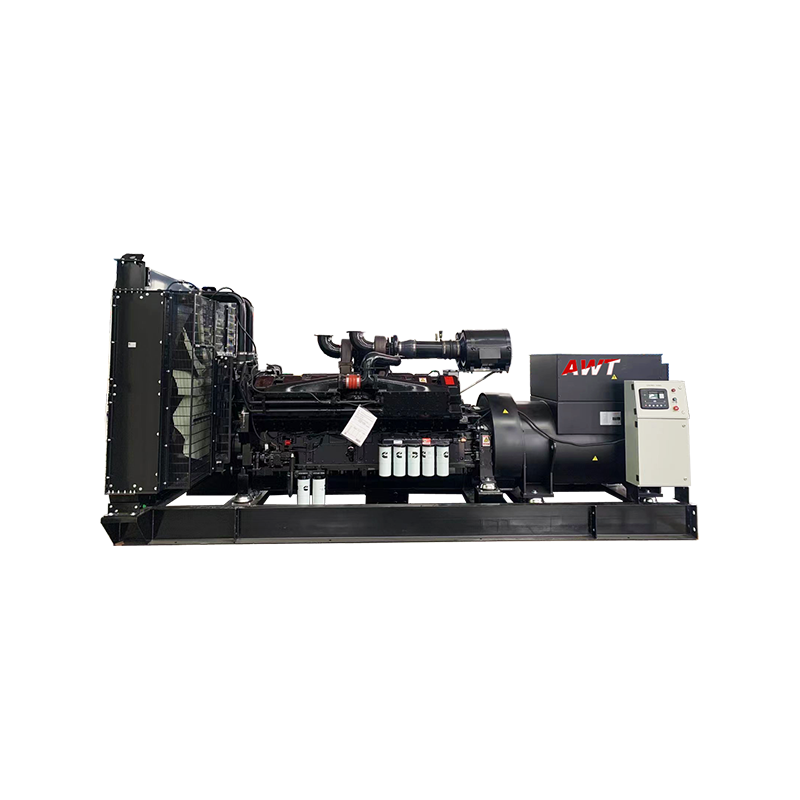
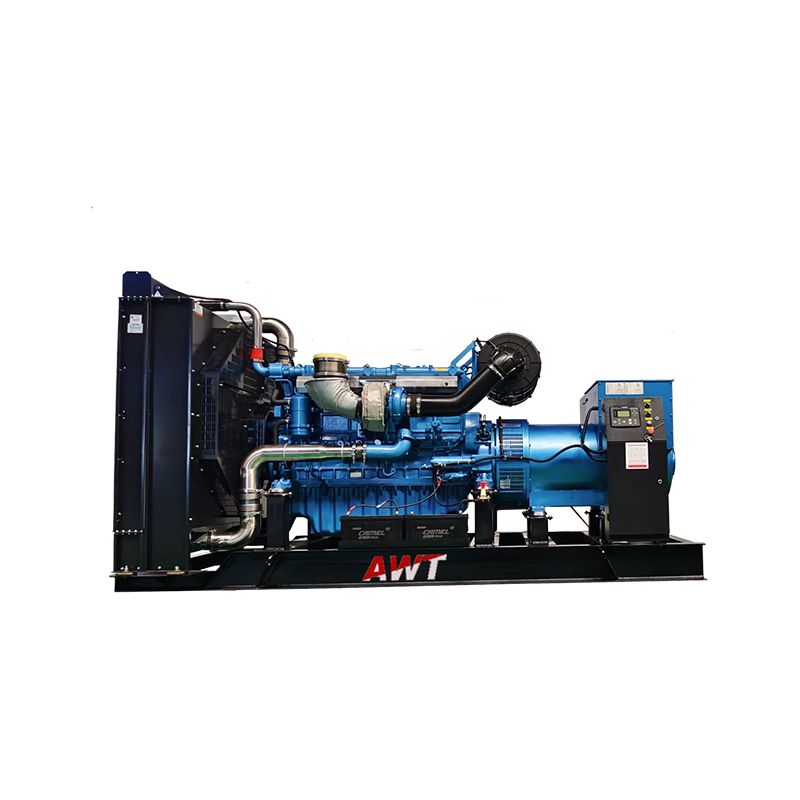 400 kVA to 1000 kVA Universal Diesel Generator SetsReview this heavy-duty series for prime or standby duty, with multiple engine platforms, intelligent controls and formats suited to load-profile-based sizing.View Product →
A Six-Step Sequence Before the Datasheet Is Approved
Run these six checks in order. The sequence turns a matching decision from brand preference into a set of figures that a third party can audit.
- Fix the set rating as ESP, PRP, COP or LTP under ISO 8528-1 and write the annual running limit beside it.
- Convert the kVA rating to kW at the stated power factor.
- Divide by alternator efficiency taken from a test report prepared under IEC 60034-2-1, not from a marketing figure.
- Apply the derate curve for the exact engine model at the site altitude and maximum ambient temperature.
- Check the required ISO 8528-5 class against the largest motor start, using the actual starting method and the calculated apparent power demand.
- Confirm the SAE housing and flywheel interface, coupling rating and baseframe layout on a match drawing.
The same six checks apply at every rating, but the cost of an error scales with size. On a 1,250 kVA set at 0.8 power factor, the illustrative 12% derate moves the required engine rating by about 147 kW, which can change the engine family, the baseframe and the shipping weight. Procurement specifications for the 1,000 to 2,500 kVA band set out what a data sheet has to state before two quotes can even be compared.
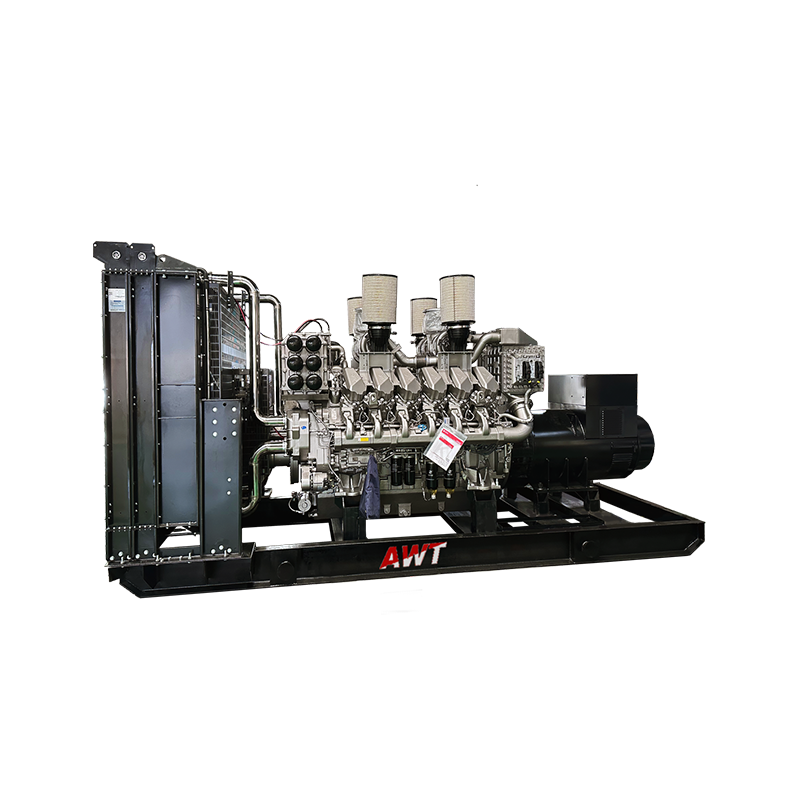
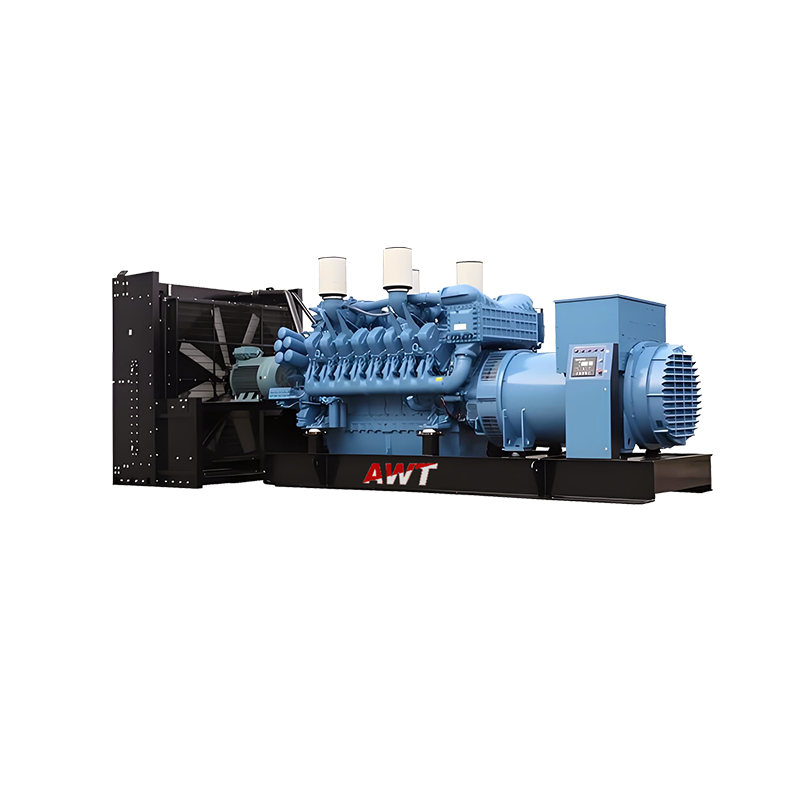
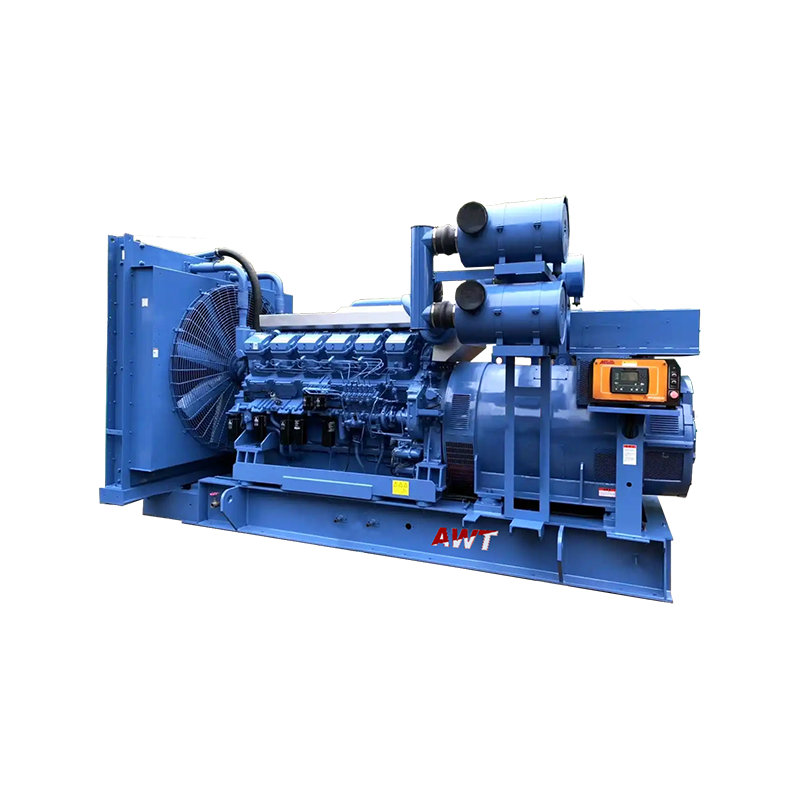 1000 kVA to 2500 kVA Universal Diesel Generator SetsCompare this ultra-large series for prime and emergency power, with heavy-duty engines, parallel operation and specifications relevant to site-derated sizing.View Product →
Practical Questions Buyers Ask About Engine and Generator Matching
How much margin should the engine carry above the alternator rating?
Size the engine so its derated flywheel power equals or exceeds the electrical output divided by alternator efficiency, then add margin only for the defined load step. For a 400 kVA set at 0.8 power factor and 93% alternator efficiency, that is 344.1 kW at the coupling before any site derating, not 320 kW and not an arbitrary 20% on top.
Does a larger engine always improve motor starting?
No. Voltage dip during a direct-on-line start is governed mainly by the alternator subtransient reactance and the excitation system, while frequency recovery is governed by the engine and governor. A larger engine bolted to an unchanged alternator will not correct a dip caused by the alternator, so both components have to be selected against the same starting duty and the same ISO 8528-5 class.
Which documents should be on the table before approval?
Request six items: the engine technical data sheet showing the rating in kW at ISO 3046-1 reference conditions; the derate curve for altitude and ambient temperature; an alternator test report giving efficiency measured under IEC 60034-2-1; the declared ISO 8528-5 class; a match drawing showing SAE housing, flywheel and coupling; and the torsional vibration check where the engine builder requires one.
Can a Perkins standby rating be used for continuous power?
No. An ESP rating carries no overload allowance and a commonly applied limit of 200 running hours per year, so a site that operates for thousands of hours needs a PRP or COP rating. Quoting a standby figure for continuous duty is the single most common mismatch found in imported generator specifications.