English
 Français
 Español
Open Type Diesel Generator Sets: How to Select Configuration for Industrial Applications
Nov 20, 2026
Content
- 1 What the Open Type Configuration Includes
- 2 Size the Load Before You Choose a Frame
- 3 Match the Rating Category to the Duty Cycle
- 4 Configure the Engine, Alternator and Control Package
- 5 Apply Site Conditions and Plant Room Constraints
- 6 Lock Down Testing, Documentation and Acceptance
- 7 Where Open Type Sets Fit in Industrial Projects
- 8 Selection Questions That Decide the Order
An 800 kW open type diesel generator set rated at ISO 3046-1 reference conditions of 25 degrees Celsius, 100 kPa and 30 percent relative humidity does not deliver 800 kW at 2,000 m altitude and 40 degrees Celsius ambient. Apply 1 percent loss per 100 m above 1,000 m and 2 percent per 5 degrees Celsius above 30 degrees Celsius, and the same set is left with about 86 percent of nameplate output, or roughly 688 kW.
Configuration selection for an industrial application starts with that correction, not with a frame size. Open type sets are the lowest first-cost way to buy a given engine and alternator combination, and in exchange the buyer inherits the plant room, the ventilation, the exhaust route and the fuel system. The sequence below, from load list to rating category to engine package to acceptance test, is the order that keeps a project out of trouble.
What the Open Type Configuration Includes
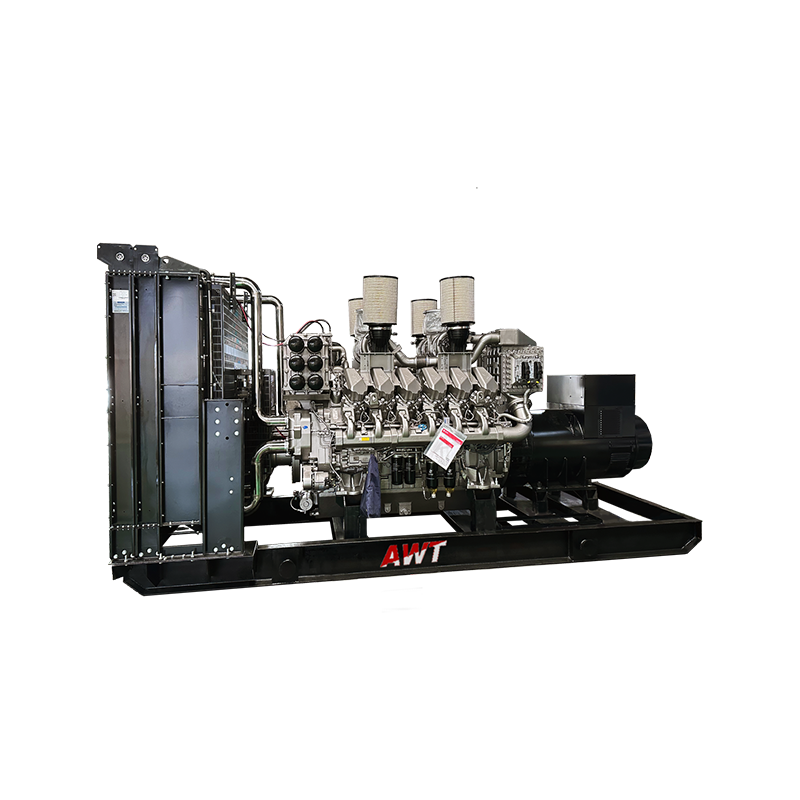
An open type diesel generator set is a complete generating unit assembled on a fabricated steel base frame: engine, alternator, radiator, coupling, control panel and main circuit breaker arrive mounted, aligned and wired, but with no canopy around the assembly.
Open type, also written open frame or open skid: a generator set supplied without acoustic enclosure or weatherproof canopy, intended for indoor installation where the site provides ventilation, exhaust routing, fuel storage and protection from the weather.
That single omission transfers scope to the buyer. A typical open type package assumes the site will provide:
- an inlet louvre sized for radiator air flow plus combustion air
- ducting that discharges radiator air outside the room
- exhaust routing with a silencer inside the engine maker's back pressure limit
- a foundation or anti-vibration mounts rated for operating weight
- fuel storage and pipework beyond the day tank
- power cabling, protection and earthing in the plant room
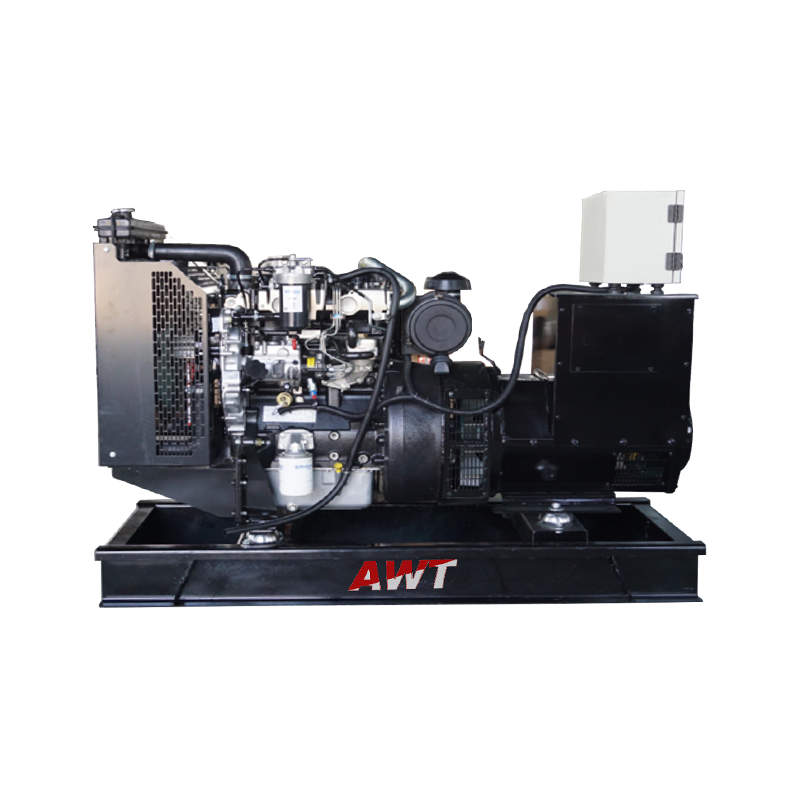
 Open Type Diesel Generator Sets for Generator RoomsReview this open-frame series before sizing a generator room; it offers maintenance access and cooling but has noise and weather-protection limitations.View Product →
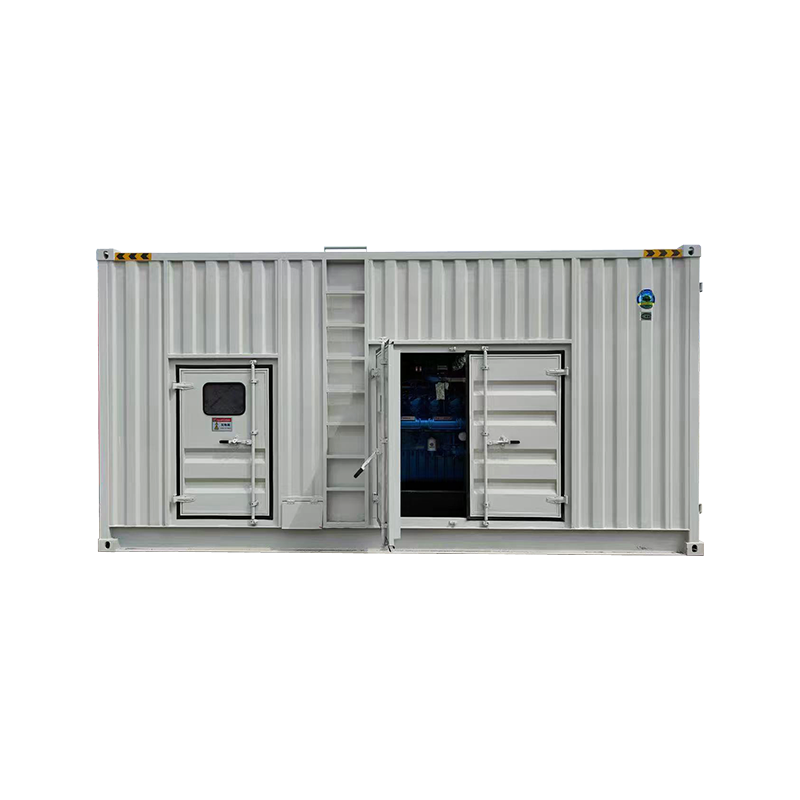
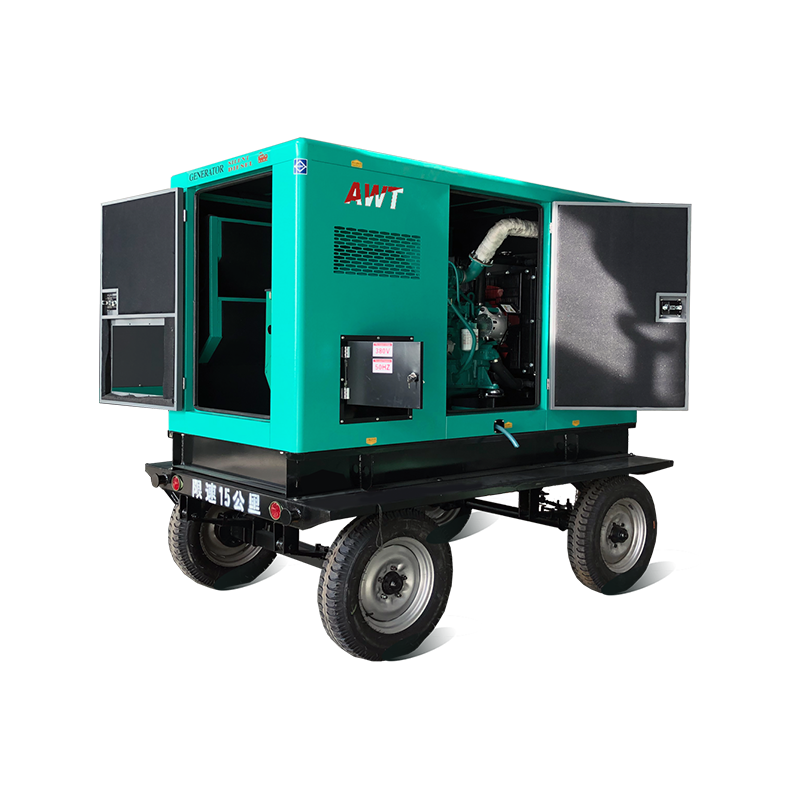
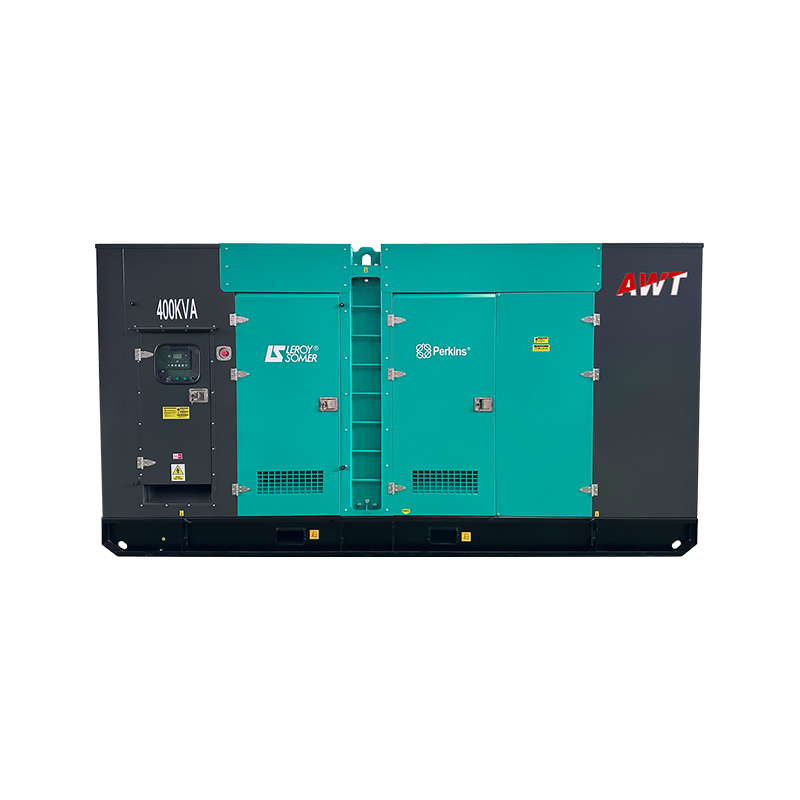
The trade-offs between an open skid and a silenced canopy are set out in this comparison of open type and silent type diesel generator sets; fix the room dimensions only after reading it. The three structural families sold by generator manufacturers differ on exactly the points above.
Open type
- no enclosure
- room does the acoustic work
- fastest service access
Silent type
- acoustic canopy
- attenuation from enclosure datasheet
- indoor or sheltered outdoor
Container type
- ISO footprint enclosure
- weatherproof and transportable
- highest cost per kVA
Size the Load Before You Choose a Frame
Sizing starts with a load list in kW and kVA at 0.8 power factor, adds the largest motor start, and only then selects a frame size and rating category.
Two numbers drive the decision. The steady-state running load sets the engine rating; the largest step load sets the transient performance the set must hold. A direct-on-line induction motor draws roughly 6 to 8 times its rated current during starting, and in a factory that start is often the largest single event in the load profile.
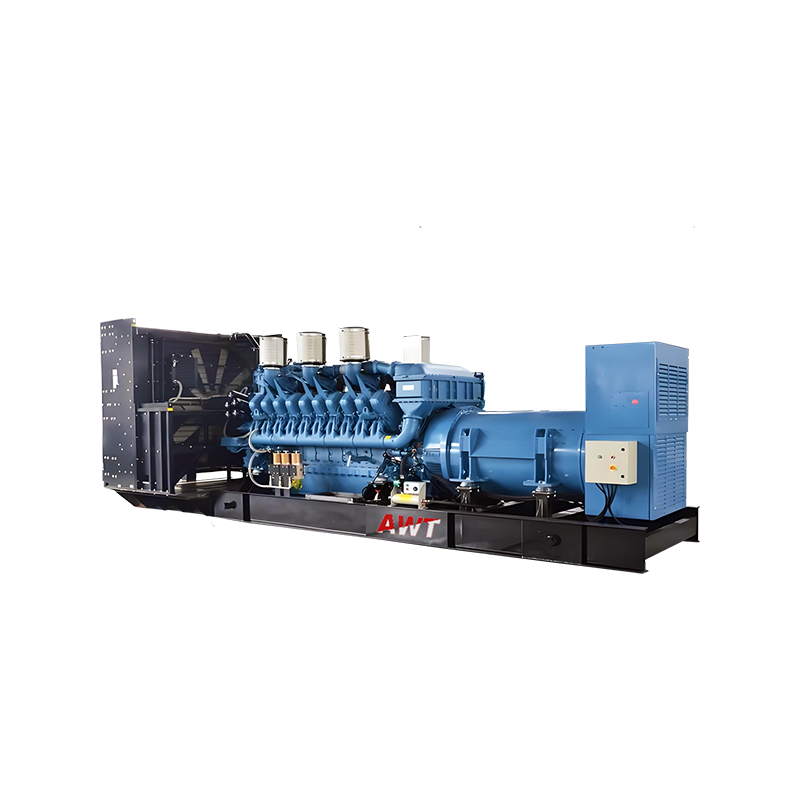
 400kVA to 1000kVA Universal Diesel Generator SetsThis heavy-duty series suits continuous prime and standby duty in high-load applications; compare its rating basis and load profile before quotation.View Product →
Industrial design practice keeps the normal running load between 60 and 80 percent of the prime rating. That band leaves headroom for step loads, holds combustion temperatures in a healthy range and reduces the risk of wet stacking on lightly loaded units. Verify the rating basis before comparing quotations, because a 500 kW set quoted at ESP and a 500 kW set quoted at PRP are different machines at similar prices.
Match the Rating Category to the Duty Cycle
ISO 8528-1 defines four rating categories for reciprocating engine generating sets, Emergency Standby Power (ESP), Limited-Time Running Power (LTP), Prime Power (PRP) and Continuous Power (COP), and the category on the nameplate governs how the set may be loaded.
| Rating category | Duty | Overload allowance | Typical application |
| ESP | standby when mains fails | none | emergency power, control rooms |
| LTP | limited running hours | none, 500 h per year | seasonal or peak demand |
| PRP | variable load, unlimited hours | 10 percent for 1 h in 12 | factories, infrastructure |
| COP | constant load, unlimited hours | none | continuous process supply |
Running an ESP-rated set as a prime power machine voids the rating basis. The 10 percent overload allowance belongs to PRP and applies for 1 hour in every 12; it does not transfer to ESP or LTP.
Configure the Engine, Alternator and Control Package
The configuration decisions that shape everything else are the engine make and rating, the alternator winding and excitation, and the control panel interface with the plant automation system.
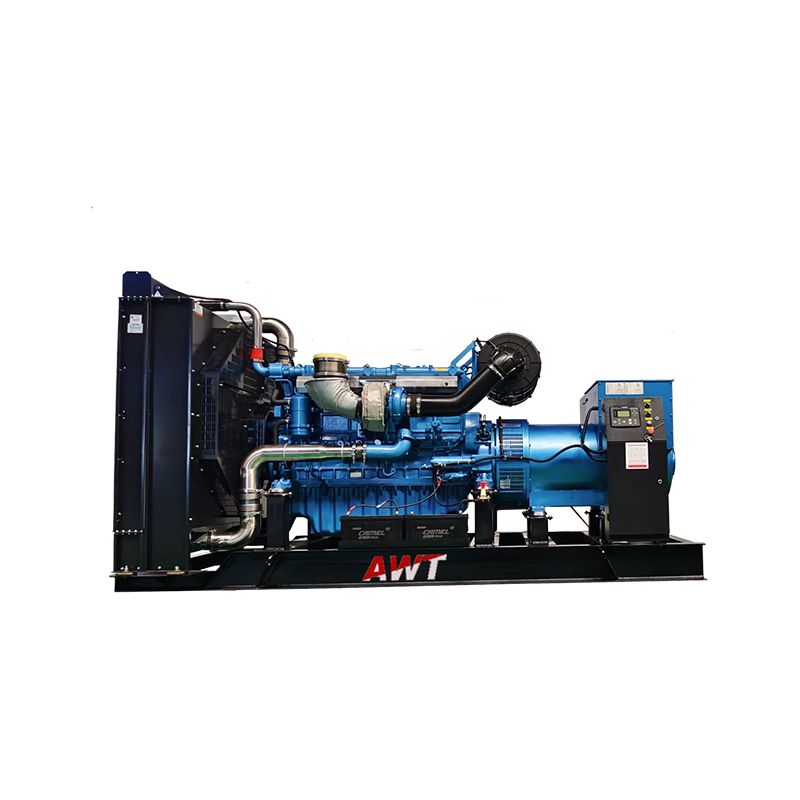
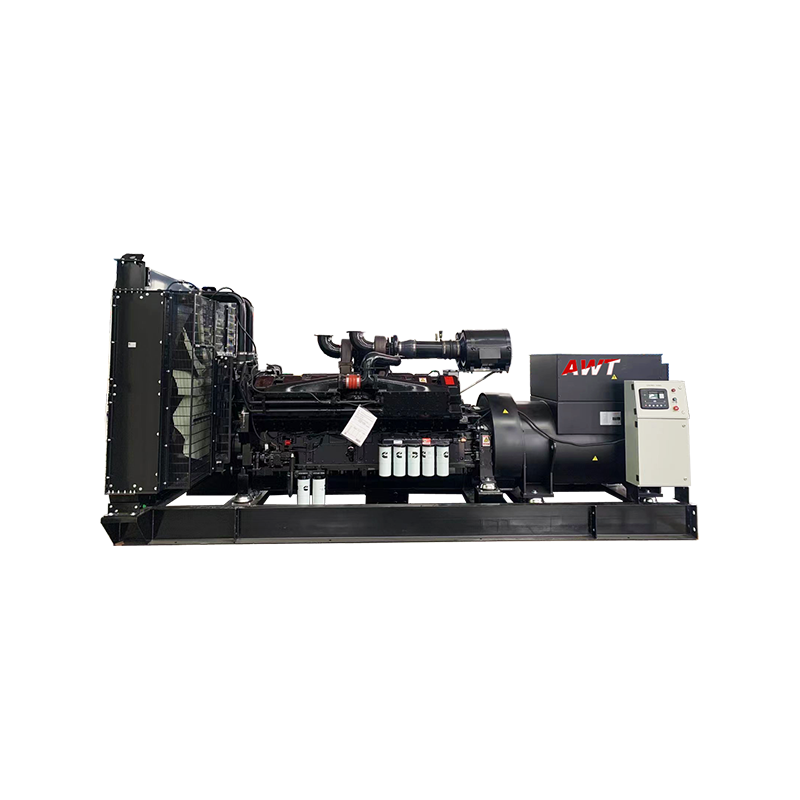 Cummins Powered Diesel Generator Sets by Yangzhou AiweiteEngine choice often turns on local service and spare-parts support; this Cummins-powered series spans standby, prime and continuous duties across multiple applications.View Product →
Brand is a service question as much as a technical one. Yangzhou Aiweite Electromechanical Co., Ltd. has built land-use diesel generator sets since 2008 across a stated range of 1 kVA to 2,500 kVA, using Baudouin, Cummins, Mitsubishi, MTU, Perkins, SDEC, Volvo, Weichai and Yuchai engines, so the engine decision is normally settled by spare parts availability and local service rather than by catalogue specifications.
Apply Site Conditions and Plant Room Constraints
Altitude above 1,000 m and ambient temperature above 30 degrees Celsius both reduce usable engine power, so the specification needs a corrected rating rather than the catalogue rating.
The plant room is part of the machine. The radiator must draw its air flow through an inlet louvre of adequate free area and discharge hot air outside the room, with combustion air supplied through a separate path. Exhaust back pressure has to stay within the limit stated for the engine, because excessive back pressure raises exhaust temperature and reduces available power. Set the acoustic target at a measured point, since an open set relies on wall mass, louvre type and duct lining to control noise at the boundary.
If the room cannot move the radiator air flow, the effective rating falls no matter what the nameplate says. Ventilation sizing belongs in the specification, not in a post-commissioning change order.
Lock Down Testing, Documentation and Acceptance
A load bank test at 25, 50, 75 and 100 percent load, plus the overload step allowed by the rating category ordered, is the minimum evidence to require before shipment.
- Confirm nameplate data against the purchase order: rating category, power in kW and kVA at 0.8 power factor, voltage, frequency, engine model and serial number.
- Witness load bank testing at each load step, recording voltage, frequency and temperature stabilisation, plus the overload run for the category ordered.
- Verify protection setpoints, automatic transfer switch interface signals, remote start and stop, and alarm annunciation.
- Collect the documentation pack: test report, single line diagram, wiring diagram, operation and maintenance manual, spare parts list and alternator test data to IEC 60034-1.
- Agree preservation, packing and shipping terms, because an open set travels without a canopy and corrosion protection is not automatic.
Where Open Type Sets Fit in Industrial Projects
Open type sets suit projects where a plant room already exists or is being built, and where acoustic treatment, ventilation and fuel storage can be handled by the facility rather than by an enclosure.
The industries overview groups the sectors that order these units, from manufacturing plants to infrastructure projects and emergency power duties.
Selection Questions That Decide the Order
Is an open type generator set suitable for outdoor installation?
No. An open type set has no weatherproof canopy, so rain, dust and direct sun reach the alternator, control panel and wiring. If the unit must stand outdoors, order a container type or silent type set, or build a room. When a room is used, keep the set's radiator air path separate from the combustion air path and drain cable entries.
How much derating should be applied for altitude and temperature?
Use the engine manufacturer's curve for the exact model. A workable planning estimate is 1 percent per 100 m above 1,000 m plus 2 percent per 5 degrees Celsius above 30 degrees Celsius, measured against ISO 3046-1 reference conditions of 25 degrees Celsius and 100 kPa. At 2,000 m and 40 degrees Celsius that leaves about 86 percent of nameplate output, so a 1,000 kW requirement needs a set rated near 1,160 kW.
Which standards govern ratings and performance classes?
ISO 8528-1 defines the ESP, LTP, PRP and COP rating categories, ISO 8528-5 defines the G1 to G4 performance classes for steady-state and transient voltage and frequency deviation, and IEC 60034-1 covers the alternator. Ask for the test report to state which category and class were verified.
What causes disputes on an open type order?
Four items account for the majority: the rating category quoted, the derated output at site conditions, the ventilation assumptions, and the boundary of supply between the set and the plant room. Write all four into the purchase order, together with day tank autonomy in hours, before the deposit is paid.