English
 Français
 Español
MTU Powered Diesel Generator Sets: High-Power Applications and Configuration
Nov 11, 2026
Content
- 1 What Defines an MTU Powered Diesel Generator Set
- 2 Power Ratings Decide the Duty, Not the Label
- 3 High-Power Applications That Justify an MTU Platform
- 4 Configuration Considerations for High-Power MTU Sets
- 5 Sourcing, Testing and Handover for High-Power Projects
- 6 Direct Answers on MTU Genset Selection
- 6.1 Is a 2,000 kVA MTU powered set enough for a 1,600 kW continuous load?
- 6.2 How much output does an MTU set lose at altitude or in high ambient temperatures?
- 6.3 Can MTU powered diesel generator sets be paralleled for N+1 redundancy?
- 6.4 How much fuel storage does a 2,500 kVA set need for 12 hours of autonomy?
ISO 8528-1 defines what a diesel generator set power rating actually means. ISO 8528-5 defines how the set must behave during a load step. NFPA 110 gives Level 1 emergency systems in the United States 10 seconds from utility loss to accepting the load. MTU powered diesel generator sets are frequently specified against all three, because they occupy the power band, roughly 400 kVA to 3,000 kVA, where those numbers stop being theoretical and start deciding project sign-off.
This guide covers what an MTU powered set is, which platform suits which duty, and the configuration decisions that determine whether a high-power installation passes its commissioning load test on the first attempt.
What Defines an MTU Powered Diesel Generator Set
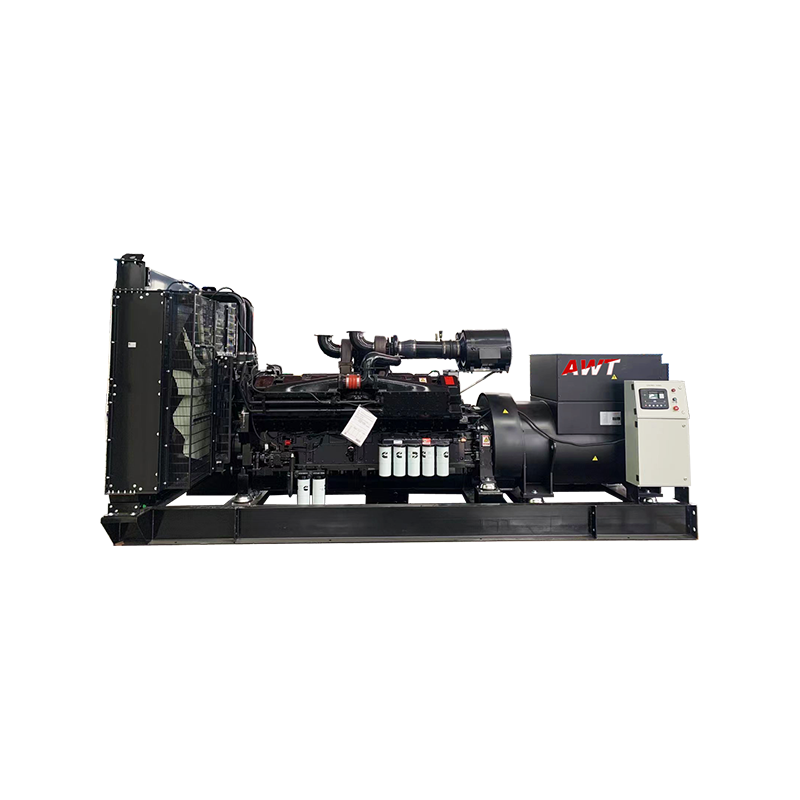
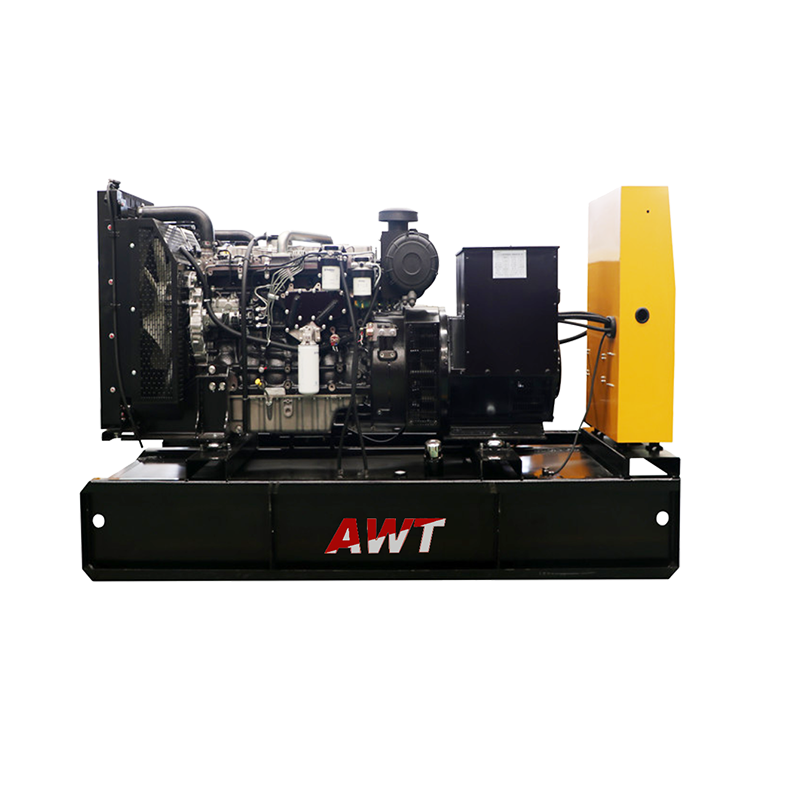
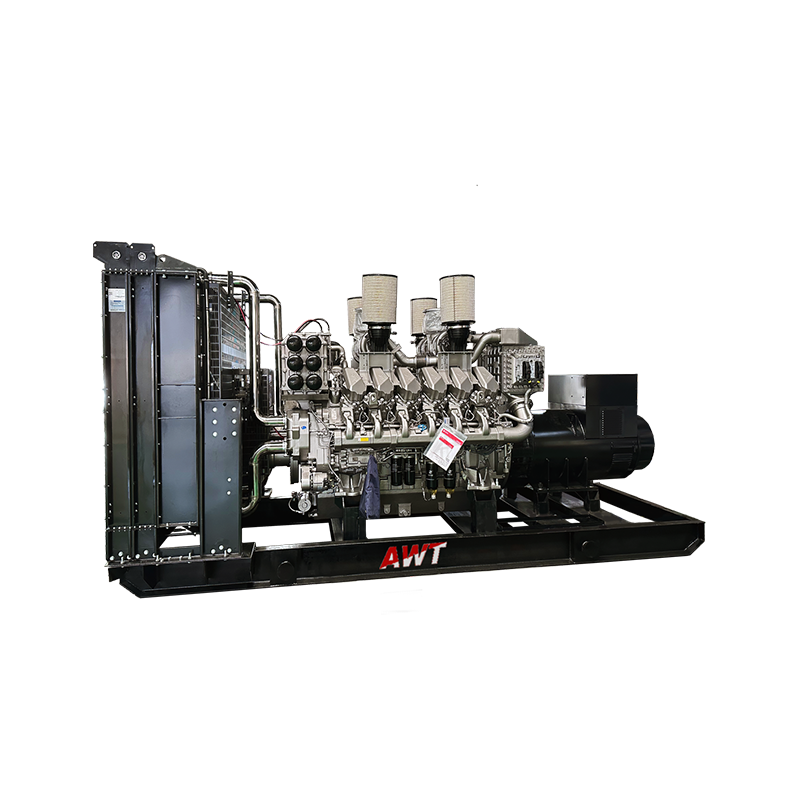
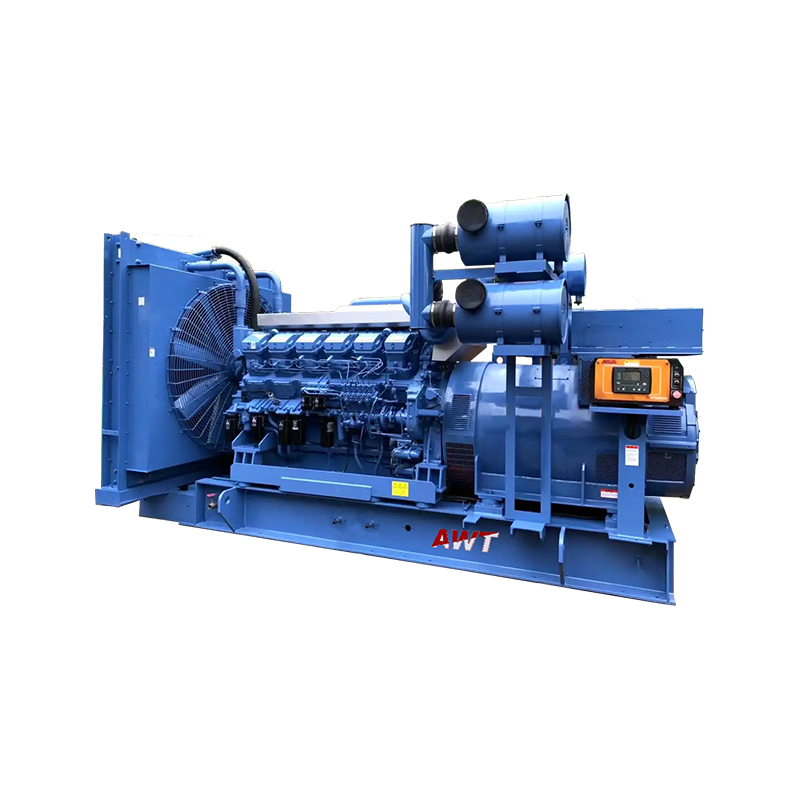
An MTU powered diesel generator set uses an mtu diesel engine built by Rolls-Royce Power Systems as its prime mover, most commonly from the Series 1600 or Series 4000 platform, coupled to a synchronous alternator and packaged with matched cooling, exhaust, fuel and control systems rated to ISO 8528-1.
The engine is the reason the platform gets specified. Engines in this class use common-rail injection, four-valve cylinder heads and an electronic management unit that talks to the set controller over a CAN bus. That interface is what allows the machine to be tied into a building management system or a paralleling scheme without an extra gateway box bolted onto the panel.
mtu Series 1600
- Six, eight and twelve cylinder variants in the family
- Approximately 400 to 1,000 kVA at 50 Hz
- Compact frame suited to basement plant rooms and rooftop containers
- Common choice for hospitals, commercial towers and small data rooms
mtu Series 4000
- Eight, twelve, sixteen and twenty cylinder configurations
- Approximately 1,000 to 3,000 kVA at 50 Hz
- High block-load acceptance for chiller plants and UPS systems
- Reference platform for data centre standby and heavy prime power
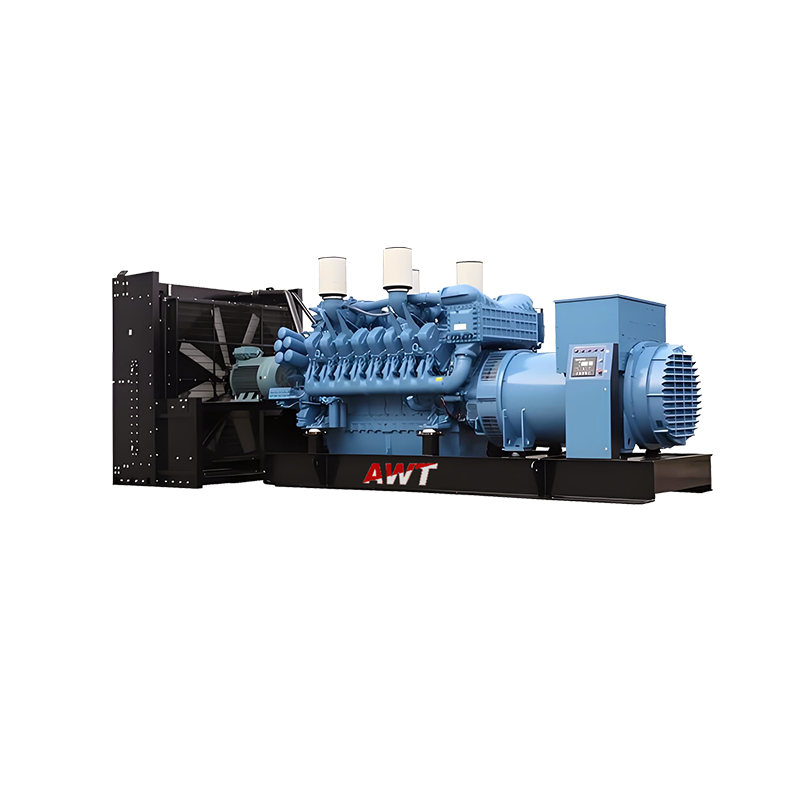 MTU Powered Diesel Generator SetsComplying with ISO 8528 and GB/T 2828 industry standards, these gensets are equipped with authentic MTU high-end industrial engines, high-precision full-copper brushle...View Product →
Because the engine platform fixes the footprint, the fuel burn and the service interval, the choice between Series 1600 and Series 4000 is normally settled before the alternator and enclosure are discussed at all.
Power Ratings Decide the Duty, Not the Label
Three ISO 8528-1 ratings cover nearly every MTU powered project: Emergency Standby Power (ESP), Prime Power (PRP) and Continuous Power (COP). Each one carries its own running-hour ceiling, load factor and overload allowance, and mixing them up is the most expensive paperwork error in high-power procurement.
| Rating | Running hours | Average load factor | Overload allowance | Typical duty |
| ESP | Up to 200 hours per year | 70 percent of the ESP figure | None permitted | Utility outage backup for data centres, hospitals and offices |
| PRP | Unlimited | 70 percent of the PRP figure | 10 percent for 1 hour in every 12 | Remote sites, mining, construction, seasonal plants |
| COP | Unlimited | 100 percent at constant load | None permitted | Base-load process plants, cogeneration, district energy |
ISO 8528-1:2018 also introduced Limited-Time running Power (LTP), capped at 500 hours per year, which some projects use to cover short seasonal peaks without moving up a frame size.
Sequence the decision correctly. Pick the ISO 8528-1 rating from the duty cycle, apply site derating, then size the alternator against the largest starting current in the installation. Reversing that order is the single most common reason a set starts reliably and still cannot pick up load.
The commercial consequence is blunt. An engine stamped 2,000 kVA ESP is not a 2,000 kVA prime power machine. Run it as a base-load unit and it will reach overhaul far earlier than the published interval, and the warranty conversation that follows is difficult to win.
High-Power Applications That Justify an MTU Platform
MTU powered sets are specified where the load is large, the transfer must be immediate, or the site has no dependable grid: data centres above 1 MW, acute-care hospitals, airports, water treatment plants, mines and oil and gas facilities.
Data centres are the clearest case. Colocation halls typically run machines in the 2,000 kVA to 3,000 kVA class in N+1 or 2N arrangements, and the governing test is rarely the nameplate figure. It is the step response: ISO 8528-5 G3 performance, a 10-second NFPA 110 Level 1 start, then a load bank run at 100 percent of design load before the hall is signed over.
Hospitals follow the same 10-second rule for the life safety branch under NFPA 99 and NFPA 110, with the equipment branch picking up behind it. Water treatment and pumping stations add a different problem: large induction motors draw five to seven times their full-load current at start, which is an alternator and excitation question long before it becomes an engine question.
Remote industrial sites invert the logic completely. Mines, quarries, pipelines and island grids run these sets as prime power, so fuel logistics, service access and parts availability matter as much as the load profile. Load profiles differ enough between these sectors that selection usually starts from the industry rather than from a kilowatt figure, even though the engine platform underneath may be identical.
Configuration Considerations for High-Power MTU Sets
Six configuration decisions decide whether a high-power MTU set performs as specified: the ISO 8528-1 rating, alternator reactance, cooling capacity, enclosure and acoustic treatment, fuel autonomy, and the control and paralleling scheme.
- Define the load profile: steady-state demand in kW, the largest single motor start, and the order in which loads return after transfer.
- Choose the ISO 8528-1 rating from the duty cycle rather than from the quotation sheet.
- Size the alternator against starting current and the voltage dip the site can tolerate.
- Confirm radiator, combustion air and room ventilation for the real site ambient and altitude.
- Select the enclosure format and the acoustic target at the same time, not in two separate purchase orders.
- Specify controls, protection and paralleling before the switchgear is ordered.
Alternator reactance and motor starting
Alternators in this class are normally supplied with a subtransient reactance between 10 and 15 percent. Lower reactance means a shallower voltage dip when a motor starts, but a larger and more expensive frame. A 2,000 kVA set feeding a 600 kW chiller motor started across the line will show a dip governed almost entirely by that reactance value, not by the engine.
Cooling, combustion air and altitude derating
Engine performance data is published at ISO 3046-1 reference conditions: 25 C charge air coolant temperature, 100 kPa barometric pressure and 30 percent relative humidity. Radiators are separately sized for a site ambient that is often 40 C or 50 C. Because a generator room behaves like a heat engine in reverse, the ventilation air needed to reject radiator, alternator and exhaust heat is a design input rather than an afterthought. As a planning figure, above 1,000 m elevation allow roughly 1 percent of engine output per 100 m of additional height, then confirm the exact curve for the model from the manufacturer's data.
Exhaust, acoustic treatment and enclosure format
An open set in a plant room can exceed 100 dB(A) at one metre. A containerised or silent set is typically specified to 65 to 75 dB(A) at seven metres, which is the difference between an acoustic enclosure that satisfies a permit and one that triggers complaints. Containerised units also simplify transport and site assembly for outdoor installations.
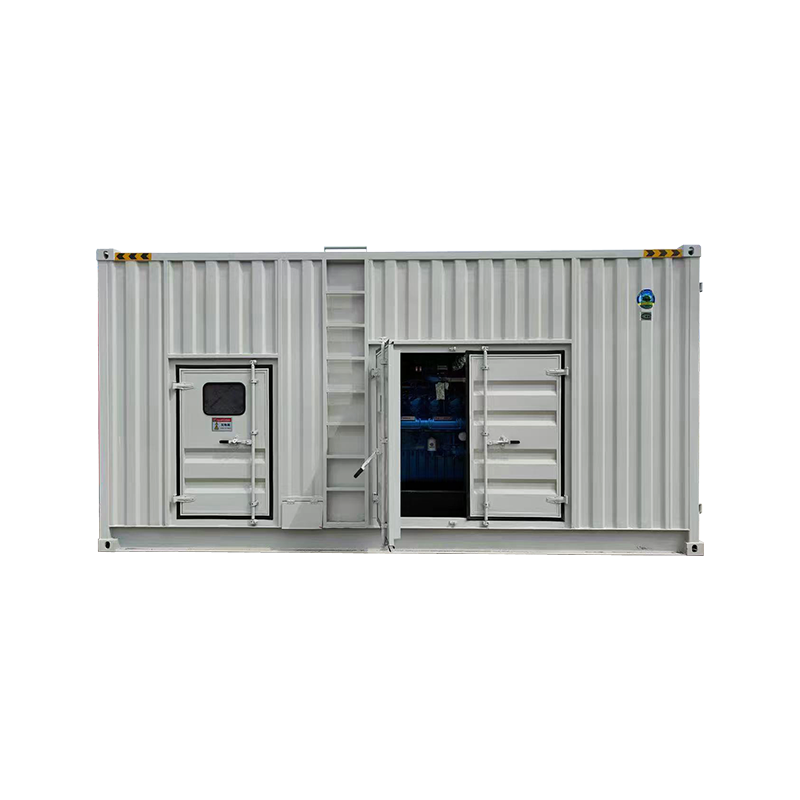 Container Type Diesel Generator SetsComplying with ISO 8528 industrial standards, container gensets adopt standard 20ft/40ft container shells based on heavy-duty open-type units. Pre-equipped with comple...View Product →
Fuel, autonomy and day tank sizing
Large diesels consume roughly 0.20 to 0.22 kg of fuel per kWh at full load. For a 2,000 kVA set at 0.8 power factor that means about 380 to 420 litres per hour, so an eight-hour autonomy requirement implies usable tank volume above 3,000 litres, plus an unusable heel and a day tank sized for at least one hour of full-load running.
Controls, protection and paralleling
Paralleling two or more sets requires matched governors and voltage regulators specified for load sharing from the outset. Typical project requirements call for active load sharing within plus or minus 5 percent of each machine's rating and reactive sharing within plus or minus 10 percent, with the first set online inside the 10-second emergency window.
Sourcing, Testing and Handover for High-Power Projects
Yangzhou Aiweite Electromechanical Co., Ltd., trading as AWT Genset, has manufactured and installed land-use diesel generator sets since 2008 and builds MTU powered sets inside a 1 kVA to 2,500 kVA range.
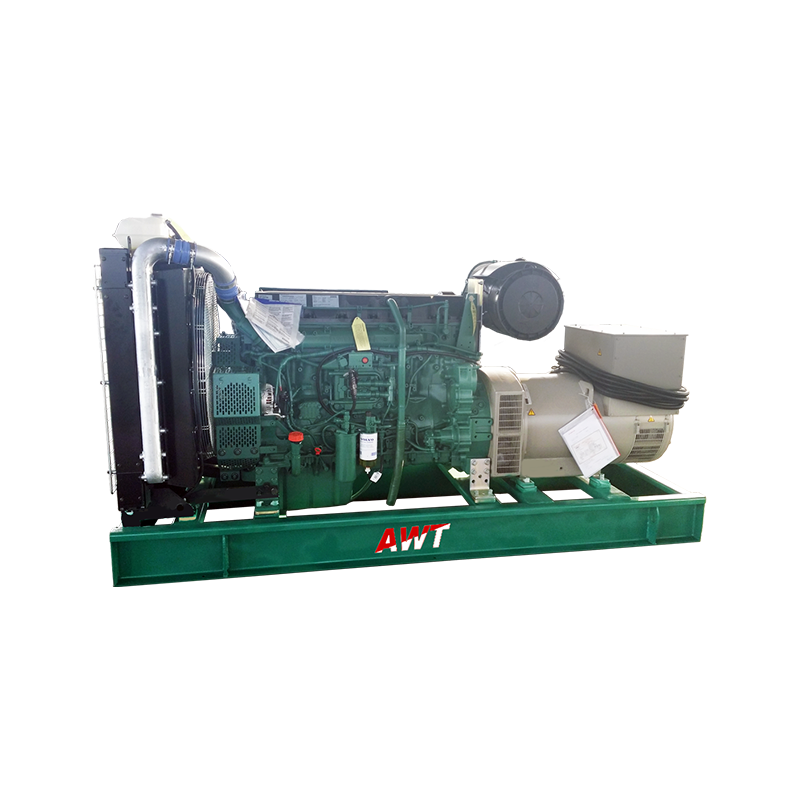
The company packages around multiple engine brands, including Baudouin, Cummins, Mitsubishi, MTU, Perkins, SDEC, Volvo, Weichai and Yuchai, which means the engine platform can be chosen on duty rather than on what happens to be on the floor that month. Sets are supplied in open, silent, container and trailer formats, and installation support is part of the scope rather than an optional extra.
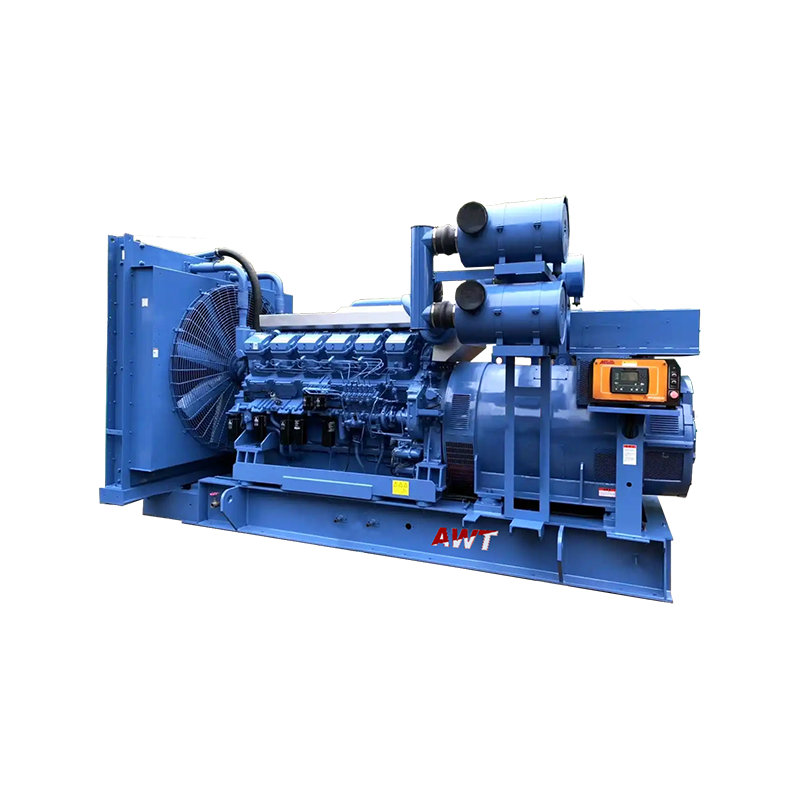 1000kVA – 2500kVA Universal Diesel Generator SetsCompliant with ISO 8528 and GB/T 2828 international standards, these ultra-high-power gensets adopt premium heavy-duty industrial engines, large-capacity full-copper a...View Product →
For brand owners and contractors who need machines delivered under their own label, OEM and ODM production runs alongside standard supply, which keeps the engine choice and the nameplate independent of each other.
- Resistive load bank run at 100 percent of rated load, held for the duration written into the specification
- Overload check at 110 percent for one hour in twelve where the rating permits it
- Start and load acceptance sequence timed against the 10-second NFPA 110 window
- Waveform quality measured to IEC 60034-1, with total harmonic distortion below 5 percent and below 3 percent for data centre work
- Full protection trip test, including overcurrent, earth fault and coolant temperature shutdowns
Handover documentation should include the tested performance report, wiring and outline drawings, the commissioning record and an operations manual for the specific engine and alternator pairing. On a 2,000 kVA set, missing drawings cost more to reconstruct later than they cost to produce at the factory.
Direct Answers on MTU Genset Selection
Is a 2,000 kVA MTU powered set enough for a 1,600 kW continuous load?
No. A 1,600 kW load at 0.8 power factor equals exactly 2,000 kVA, leaving zero margin, and ESP ratings under ISO 8528-1 are limited to about 200 hours per year with a 70 percent average load factor. Continuous work at that level requires a COP-rated machine or the next frame size up.
How much output does an MTU set lose at altitude or in high ambient temperatures?
Engine ratings are declared at ISO 3046-1 reference conditions of 25 C charge air coolant, 100 kPa and 30 percent relative humidity. Above 1,000 m, about 1 percent of output per 100 m is a realistic planning allowance, and any site above 40 C ambient should be checked against the derating curve for the exact model rather than an assumed figure.
Can MTU powered diesel generator sets be paralleled for N+1 redundancy?
Yes. Paralleled operation is routine, provided governors, voltage regulators and controllers are specified for load sharing from the start. Typical requirements are active load sharing within plus or minus 5 percent of each set's rating and reactive sharing within plus or minus 10 percent, with the first machine accepting load inside the 10-second NFPA 110 window.
How much fuel storage does a 2,500 kVA set need for 12 hours of autonomy?
At roughly 0.20 to 0.22 kg per kWh and about 0.84 kg per litre, a 2,500 kVA set running at 80 percent load burns close to 380 litres per hour, so 12 hours requires approximately 4,600 litres of usable capacity. Add the unusable heel of 5 to 10 percent of tank volume, and size the day tank for at least one hour of full-load running.