English
 Français
 Español
Cummins Powered Diesel Generator Sets for Industrial and Commercial Systems Guide
Nov 04, 2026
Content
During a 2025 industrial campus expansion, a procurement team rejected a generator bid because the supplier could not document ISO 8528 continuous power (COP) ratings for the Cummins engine platform it proposed. That documentation gap, not price, reshaped the shortlist. Cummins powered diesel generator sets anchor industrial and commercial specifications because the engine range, from the 3.9 L QSB to the 60 L QSK, maps cleanly onto defined duty classes. The deciding factor is whether the set builder converts engine output into tested alternator power and publishes derate data. This guide covers engine families, sizing procedure, enclosure trade-offs, and compliance checks that make a specification defensible.
Cummins Engine Families Used in Generator Sets
Cummins generator sets for industrial and commercial duty are built around five engine families - QSB, QSX, KTA, QST30, and QSK - with continuous ratings from 20 kVA to 2,500 kVA under ISO 8528-1 COP definitions.
Each family occupies a defined power band that dictates the alternator match, the base frame design, and the service interval. QSB engines with 3.9-6.7 L displacement serve the 20-250 kVA segment: telecom shelters, commercial buildings, and light manufacturing. QSX, an 11.9 L in-line six, covers 250-500 kVA with 500 h oil change intervals in continuous service. KTA19 and KTA38 handle 400-1,100 kVA, the primary heavy industrial band for compressors and crushers. QST30, a 30 L V12, provides 500-1,000 kVA and tolerates high-cyclic load steps for pumping and municipal duty. QSK engines from 23 L to 60 L extend to 2,500 kVA and power containerised prime-power plants.
| Engine family | Displacement | Continuous rating band | Typical duty |
| QSB | 3.9-6.7 L | 20-250 kVA | Commercial, telecom, light industrial |
| QSX | 11.9 L | 250-500 kVA | Data centres, mid-size factories |
| KTA | 19-38 L | 400-1,100 kVA | Heavy industrial, mining support |
| QST30 | 30 L | 500-1,000 kVA | Pumping, high-cyclic loads |
| QSK | 23-60 L | 1,000-2,500 kVA | Container power plants, infrastructure |
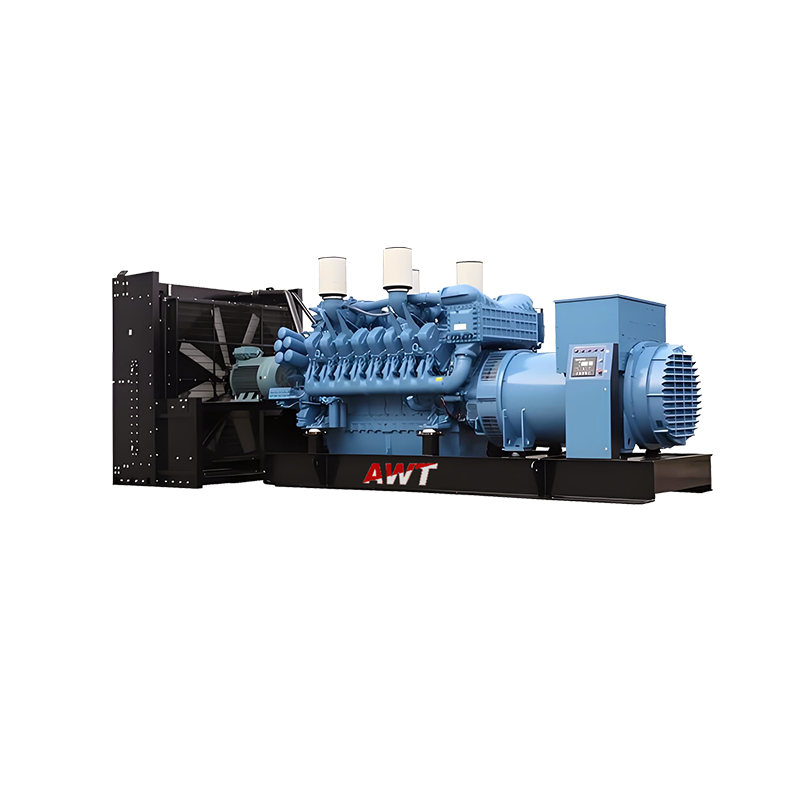
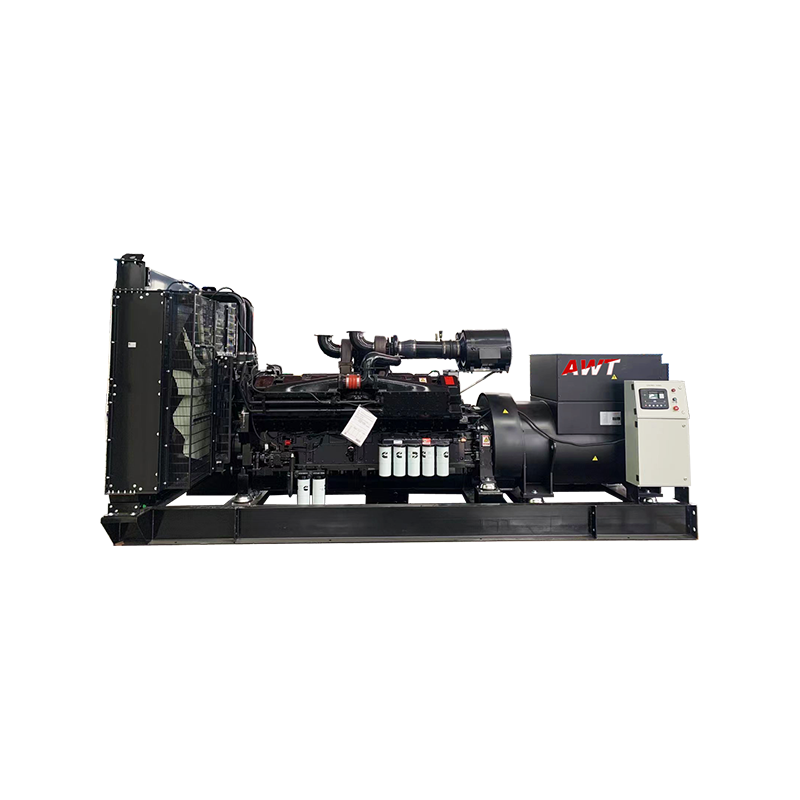 Cummins Powered Diesel Generator Sets for 8–3750 kW ApplicationsThis product family covers a wide power range with genuine Cummins engines, brushless alternators, and intelligent controls. The preceding paragraph details engine displacement bands from QSB to QSK, making this the core lineup for matching duty profiles across industrial and commercial sectors.View Product →
Sizing Procedure for Industrial and Commercial Loads
Sizing starts with the worst-case running demand in kVA, adds the starting kVA of the largest motor or rectifier load, then applies altitude and temperature derates to the engine-alternator pair.
Kilowatts describe real power consumed; kVA describes total demand, including reactive power from induction motors, variable-frequency drives, and battery chargers. Industrial loads commonly operate at power factors between 0.5 and 0.95, so a set sized on kW alone can trip within minutes once motors start. The load inventory must be compiled in kVA, and the margin must reflect operating patterns, not nameplate sums.
- Inventory every connected load and classify it as continuous, standby, or starting duty.
- Sum the continuous kVA and add 10-25% spare capacity for future expansion.
- Identify the single largest starting load; across-the-line motor starting draws 6-7 times running current for 3-10 seconds.
- Apply derates per ISO 3046-1: roughly 1% per 100 m above 1,000 m altitude and 2% per 5°C above 40°C ambient.
- Match the final value to the set's COP rating, not ESP, and confirm the alternator is rated for the full engine output at site ambient.
Key concept: ISO 8528-1 defines five running modes - COP, PRP, LTP, ESP, and DP. COP is the only mode that supports unlimited running hours at a 70% average load factor.
Load profiles vary by industry sector: a water utility runs high cyclic load steps, while a cold chain warehouse runs a steady base load. Matching the duty profile to the sector is exactly where a configurable set beats a fixed stock model. For projects in the 400-1,000 kVA band, a universal industrial set with Cummins power covers most factory and commercial scenarios without custom engineering.
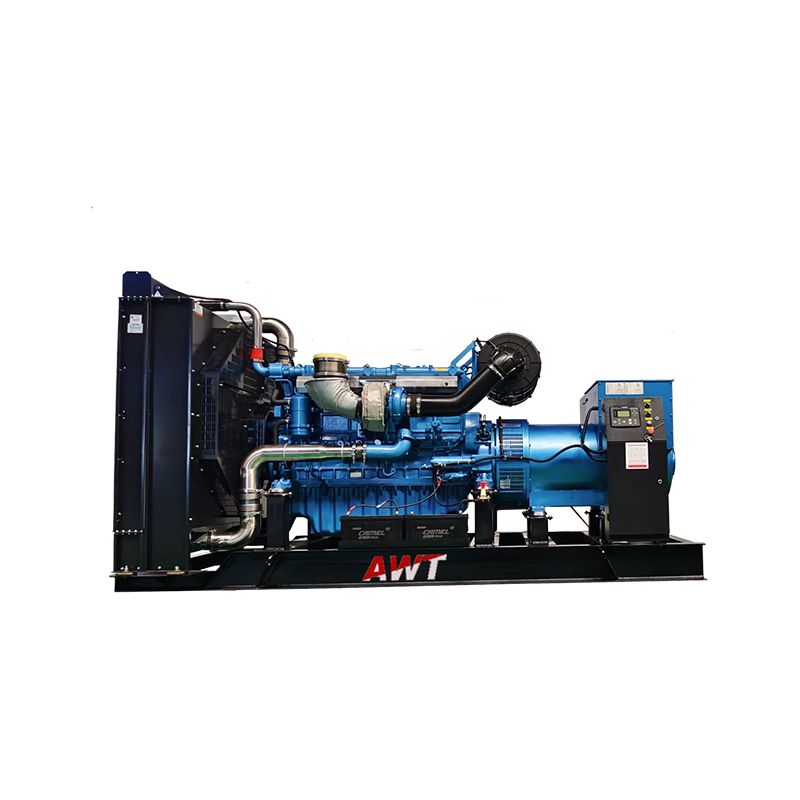 400–1000 kVA Universal Industrial Diesel Generator SetsDesigned for heavy industrial and commercial projects, these sets support continuous full-load operation with robust engines and alternators. The context notes that configurable sets beat fixed stock models for 400–1,000 kVA loads, making this series a practical fit for factories and mixed-load facilities.View Product →
Enclosure Configurations: Open, Silent, Container, Trailer
Enclosure choice is driven by installation position, local noise limits, and deployment speed, not by engine size.
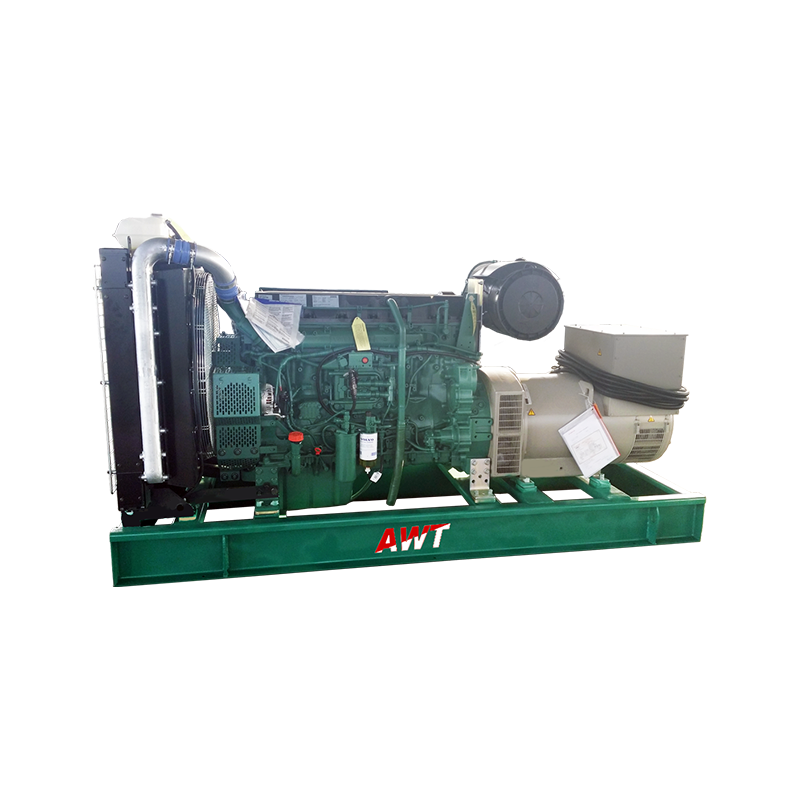
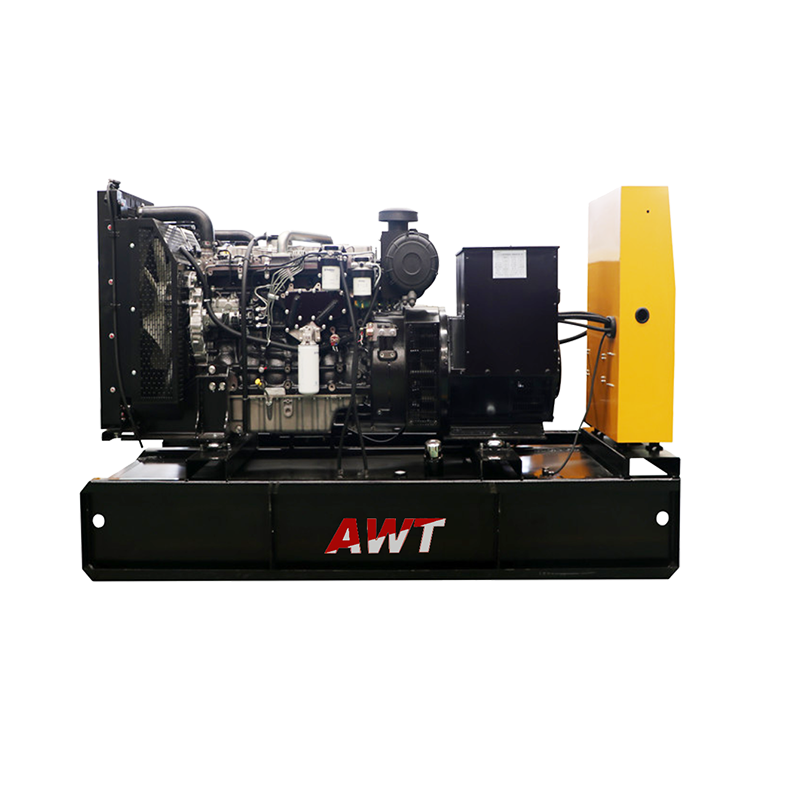
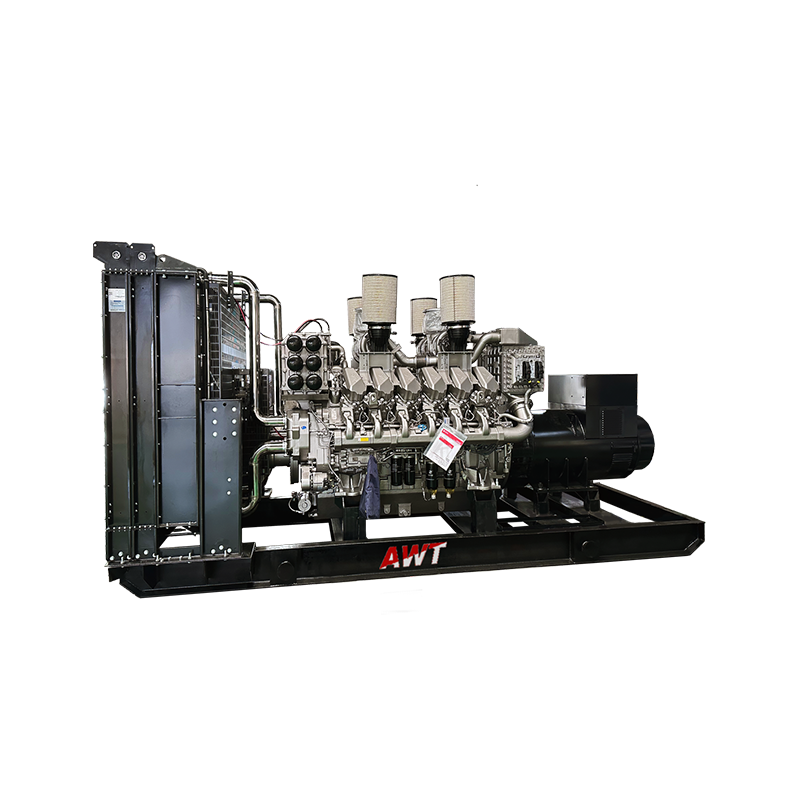
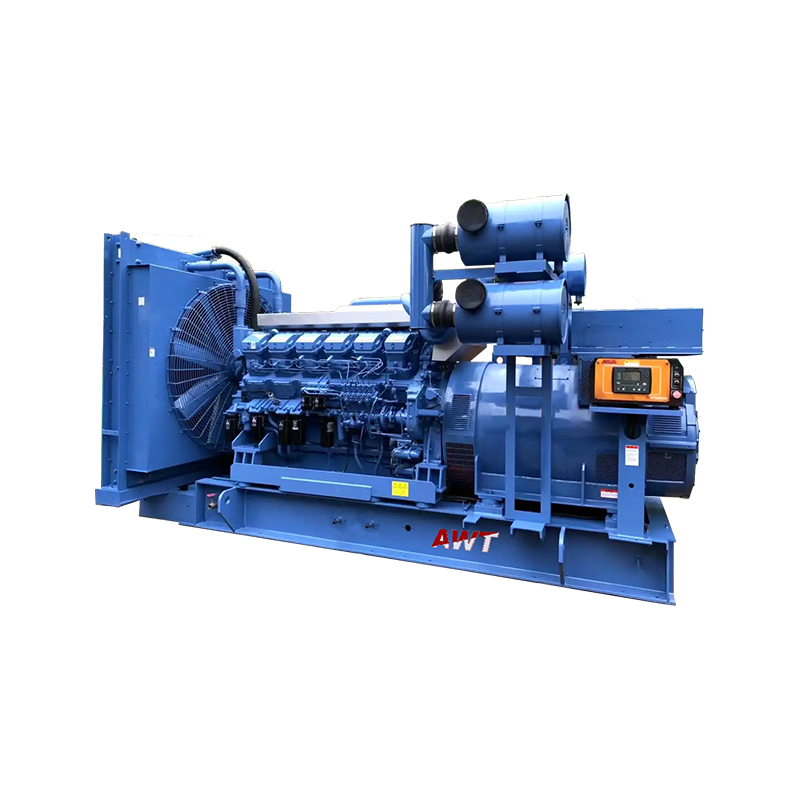
An open-type set is the lowest-cost configuration for a machine room with a concrete foundation, ventilation louvres, and no restrictive noise limit. A silent-type enclosure wraps the set in acoustic panels and is the default for rooftop or roadside installations where site limits sit between 65 and 75 dB(A) at 1 m. Container-type sets integrate the generator, fuel tank, and switchgear into a 20 ft or 40 ft ISO module for rapid relocation. Trailer-type sets add a road-legal chassis for mobile power, events, and temporary construction supply.
Open type
Silent type
Container type
Trailer type
Industry quotations place a silent enclosure 15-25% above open-type pricing for the same engine-alternator pair, while a containerised build runs 30-40% higher. The premium buys site flexibility: a silent set removes machine-room construction, and a container removes the site foundation entirely.
For sites with strict noise compliance or limited footprint, silent-type configurations are the usual answer; the acoustic canopy also protects the control panel and alternator from weather exposure.
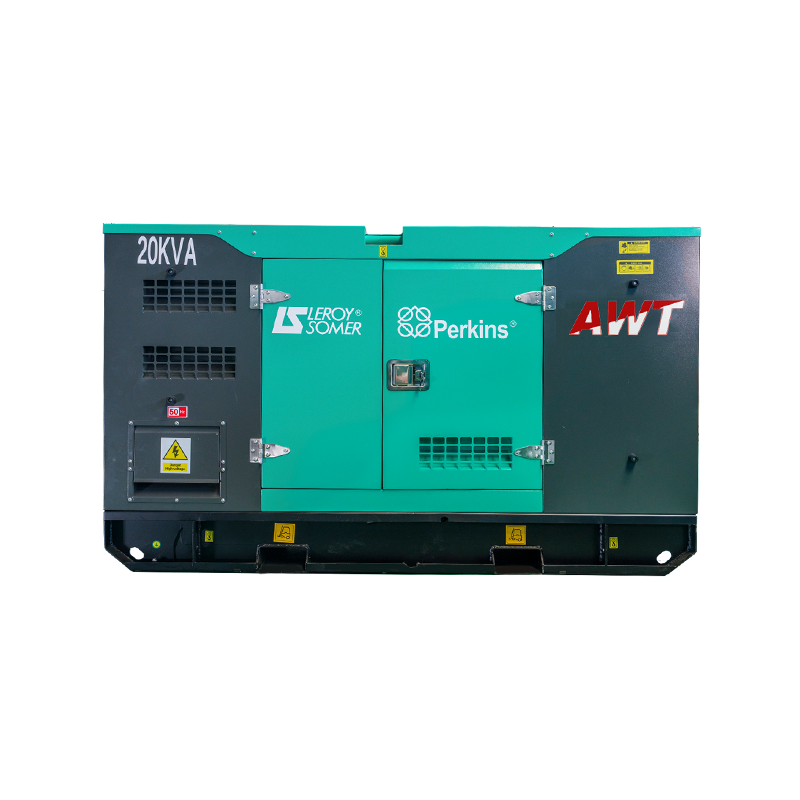 Silent Canopy Diesel Generator Sets with Low Noise OperationThese enclosed gensets feature soundproof canopies that keep noise within 75 dB(A) at one meter while providing weather and dust protection. The surrounding paragraphs discuss noise compliance and footprint constraints, so this option suits urban sites with strict limits and limited space.View Product →
Standards, Compliance Checks, and Documentation
A defensible Cummins genset specification must satisfy ISO 8528 performance classes, ISO 3046-1 derating conditions, and the regional grid or life-safety code that applies at the installation site.
ISO 8528-5 sorts sets into four performance classes - G1, G2, G3, and G4 - based on frequency and voltage response under sudden load steps. G2 suits general commercial loads such as lighting and resistive heating. G3 is the practical floor for industrial process lines, data centres, and medical equipment because recovery after a 60% load step is tighter. G4 is reserved for loads that tolerate almost no deviation, such as imaging and precision manufacturing systems.
| Standard | Scope | Procurement check |
| ISO 8528-1 | Rating definitions | COP, PRP, LTP, ESP values on the datasheet |
| ISO 8528-5 | Performance classes G1-G4 | Voltage and frequency response on a 60% load step |
| ISO 3046-1 | Derating conditions | Altitude and temperature correction factors |
| IEC 60034-1 | Alternator performance | Temperature rise, voltage regulation, winding class |
| NFPA 110 | Emergency systems (North America) | Level 1 or 2 classification; monthly 30 min exercise at 30% load |
Key concept: ISO 8528-5 class G3 is the contractual minimum for industrial systems with electronic loads; G2 is acceptable only for resistive and simple motor circuits. A supplier that cannot state the performance class of its Cummins set is not ready for a documented tender.
Documentation is the second half of compliance. A complete tender package must include:
- Cummins engine datasheet and alternator OEM datasheet
- Set arrangement drawing and wiring schematic
- Load test certificate from an actual run at 100% load for at least 2 h
- Nameplate copy showing the ISO 8528 rating mode
Brands and distributors that need private-label specification or custom control panels can route this through the OEM/ODM programme instead of adapting a stock model.
Questions Procurement Teams Ask Before Ordering a Cummins Set
Purchasing decisions rest on three inputs: the power rating mode, the alternator excitation system, and the documentation that must arrive with the shipment.
Can a Cummins generator set run at full load continuously?
Yes, if the set is rated for continuous operating power (COP) per ISO 8528-1. COP allows unlimited running hours at an average load factor of 70% over a 24 h window and sustained 100% output for no more than 500 h per year. If the quote lists only emergency standby power (ESP), the set is not designed for 24/7 process load.
Which alternator excitation should be specified for critical loads?
For industrial and commercial systems, specify a brushless synchronous alternator with an AVR. For loads that produce voltage dips, a permanent magnet generator (PMG) excitation source is the safer choice. PMG excitation maintains voltage support across a wider overload envelope and is standard on G3-compliant sets above 250 kVA.
What emission certification should a Cummins set carry?
The exhaust certificate must match the installation region: EU Stage V for Europe, US EPA Tier 4 for North America, and China Stage III for domestic projects. Cummins QSX and QSK engines are produced in multiple emission configurations, so the same model number can carry different certificates depending on the export bill of materials.
How long does a standard Cummins-powered set take to build?
For a standard open or silent set with a common engine-alternator combination, typical production lead time is 15-30 days after specification sign-off. Containerised and trailer-mounted builds normally run 35-60 days because structural steelwork and switchgear integration follow their own schedule.