English
  Français
  Español
 Cummins Powered Diesel Generator Sets: Key Specifications for Industrial Power
Oct 15, 2026
Content
- 1 Understand Prime, Standby and Continuous Ratings First
- 2 Power Range and Voltage Configuration
- 3 Engine, Alternator and Cooling System Specifications
- 4 Enclosure Types and Installation Formats
- 5 Control Systems, Paralleling and Protection
- 6 Sourcing, OEM and Project Delivery
- 7 Specification Questions for Industrial Buyers
Two quotations for a 500 kVA Cummins-powered generator set can look identical on the first page and still deliver different capacity, reliability, and compliance. The engine platform may be the same; what changes is the rating definition, the alternator class, and the control panel scope. For industrial buyers, those three specification sheets decide whether a set becomes a reliable power asset or a recurring maintenance problem.
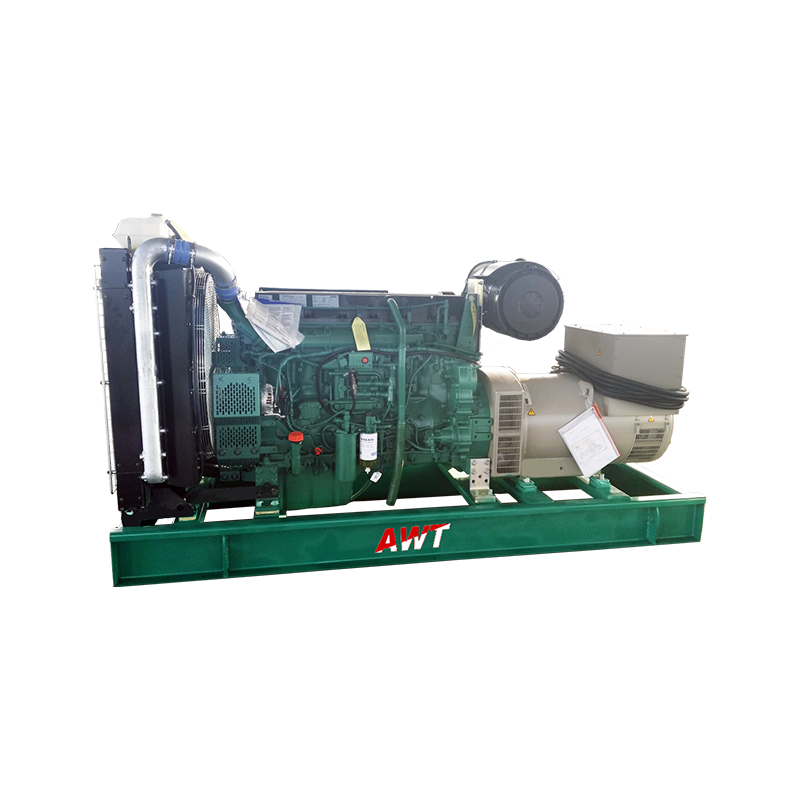
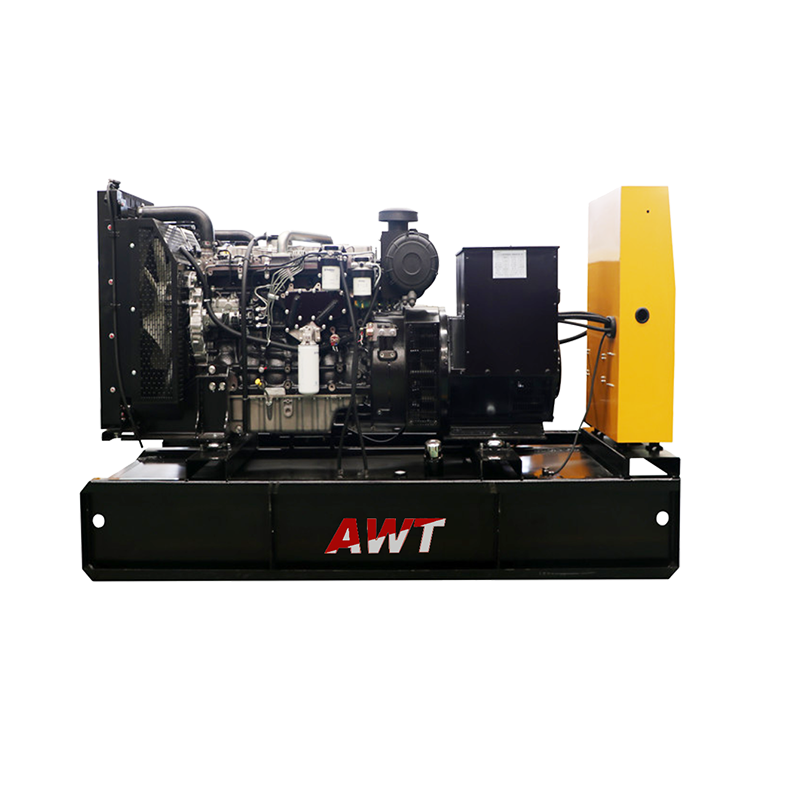
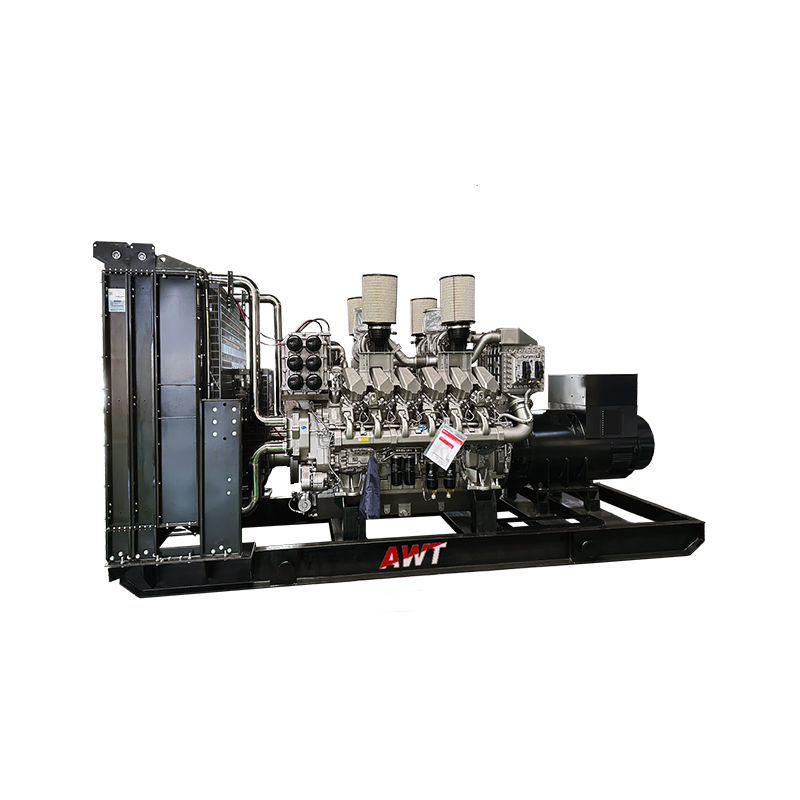
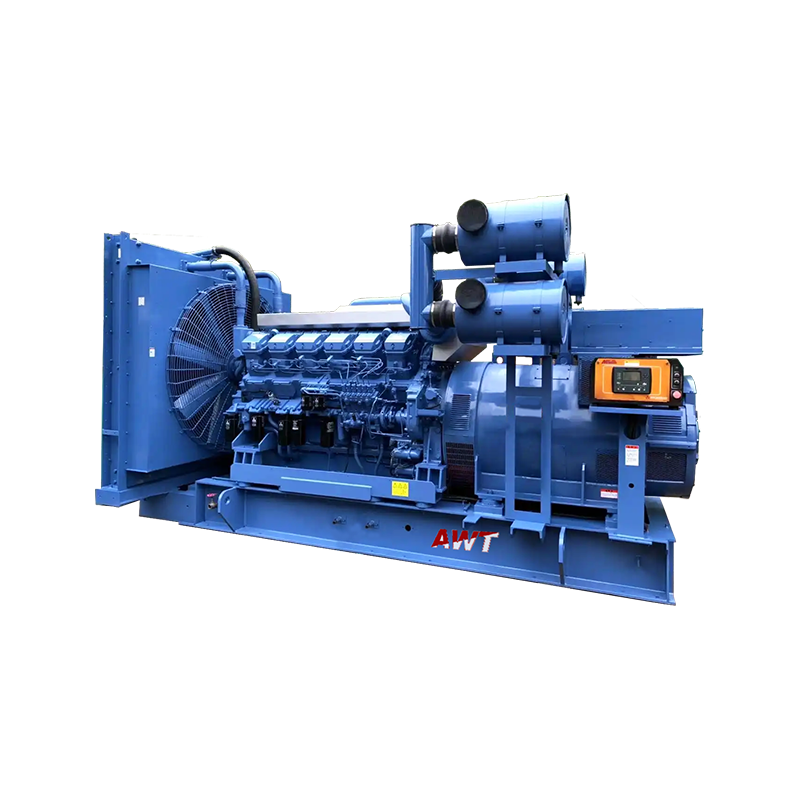
Yangzhou Aiweite Electromechanical Co., Ltd., a diesel generator set manufacturer established in 2008, builds Cummins-powered sets from 10 kVA to 2,500 kVA for industrial power applications, including factories, infrastructure projects, and emergency power supply. This guide covers the specifications that matter: ISO 8528 rating definitions, power range and voltage, engine and alternator parameters, enclosure formats, control systems, and sourcing.
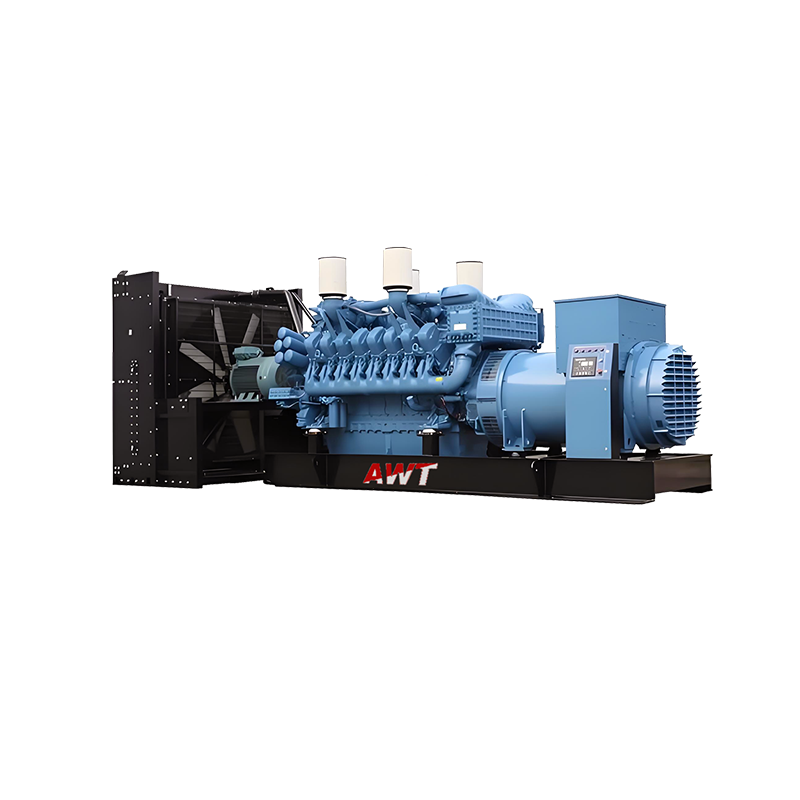
 Cummins-Powered Diesel Generator Sets from 10 kVA to 2,500 kVAThis section defines ISO 8528 ratings and covers engine, alternator, and control system specs, useful when comparing standby, prime, and continuous power outputs.View Product →
Understand Prime, Standby and Continuous Ratings First
ISO 8528-1 defines three generator set ratings (standby ESP, prime PRP, and continuous COP), and each produces a different kVA number on the same engine package.
The standby rating covers emergency power with limited annual running hours. The prime rating covers variable industrial loads with unlimited running time. The continuous rating assumes a constant load for unlimited hours. A common specification mismatch is quoting prime kVA for a standby-only application, which oversizes the set, or quoting standby kVA for a continuous load, which overstresses the engine and alternator.
| Rating | Duty profile | Overload | Load limit | Typical kVA |
| Standby (ESP) | Emergency, max 500 hours per year | None | 70% average | 500 kVA |
| Prime (PRP) | Unlimited hours, variable load | 10% for 1 h in 12 h | 70% average | 455 kVA |
| Continuous (COP) | Unlimited hours, constant load | None | 100% constant | 410 kVA |
Power Range and Voltage Configuration
Cummins-powered industrial sets typically cover 10 kVA to 2,500 kVA, with low-voltage or medium-voltage output options selected by site load and cable distance.
Standard low-voltage configurations are 400/230 V at 50 Hz and 480 V at 60 Hz, three-phase four-wire. Medium-voltage options at 6.3 kV and 10.5 kV become economical above 1,000 kVA, or when the distance from the set to the main switchboard exceeds 200 m, because the higher voltage reduces cable cross-section and line losses. Frequency fixes engine speed: 1,500 rpm for 50 Hz and 1,800 rpm for 60 Hz, so the same engine model is re-rated when the site frequency changes.
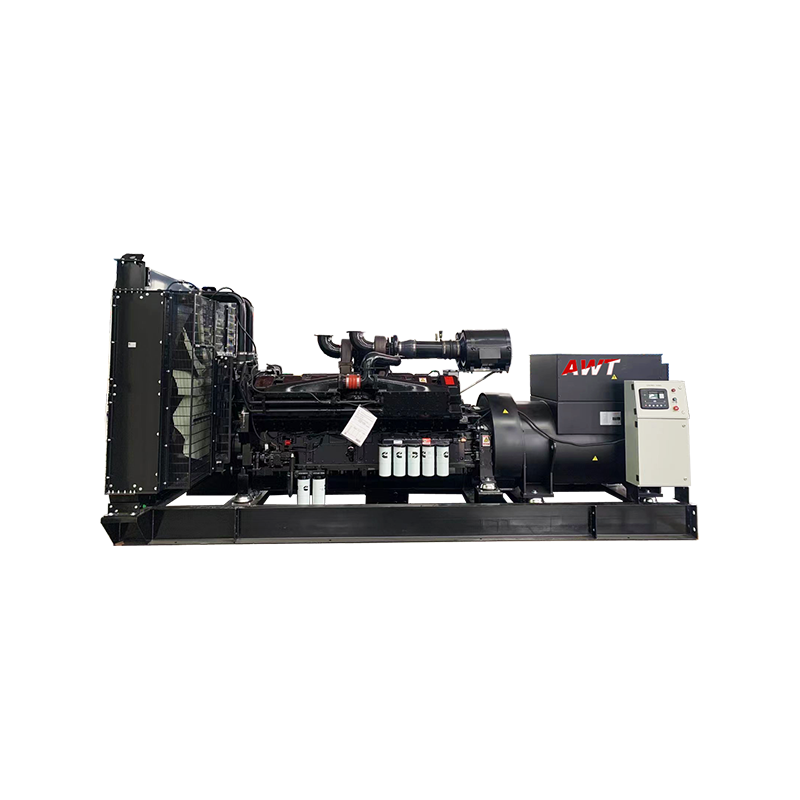
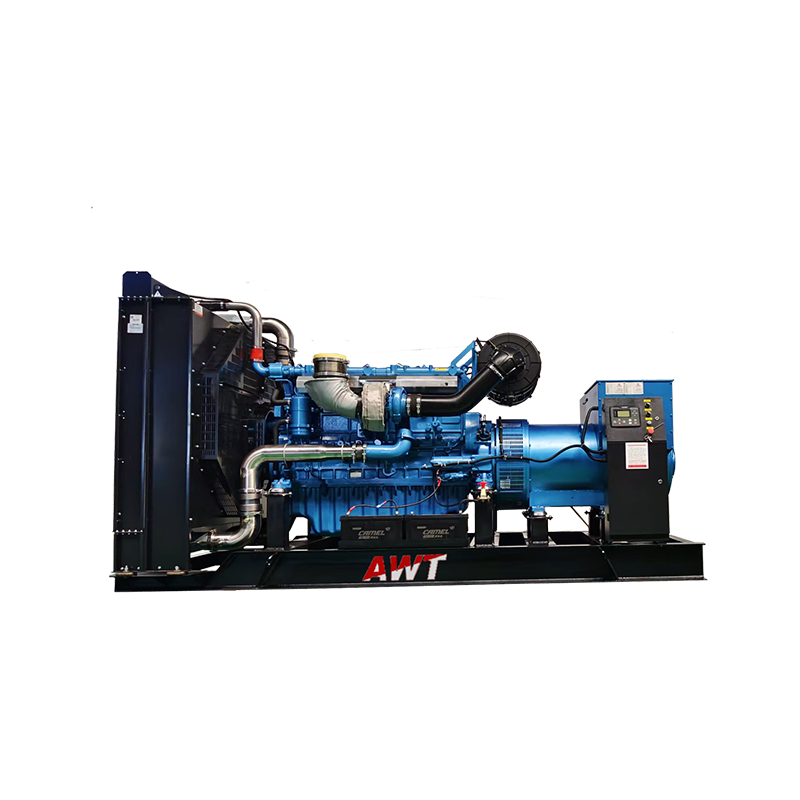 400kVA-1000kVA Universal Diesel Generator SetsHeavy-duty industrial gensets with common rail engines and full-copper alternators, suited for continuous full-load operation and complex loads as discussed in the ratings context.View Product →
Engine, Alternator and Cooling System Specifications
A Cummins-powered set's real performance is fixed by three components: the engine model's ambient and altitude rating, the alternator's insulation class and voltage regulation, and the cooling system's ambient design point.
Cummins Inc. industrial engines in the 50 to 2,000 kW class use four-stroke, turbocharged, charge-cooled designs with mechanical or electronic governing. The alternator should be a brushless, four-pole synchronous unit with class H insulation, IP23 protection, and an automatic voltage regulator holding steady-state voltage within +/-0.5%. The standard cooling system is a radiator sized for 40 degrees C ambient; sites above 40 degrees C require a larger radiator or an engine derate, typically 2 to 3 percent for each 5 degrees C above the rating point.
- Alternator: brushless, four-pole, class H insulation, IP23 enclosure, AVR +/-0.5%, subtransient reactance below 14% for motor starting
- Cooling: radiator standard at 40 degrees C ambient, 50 degrees C option with derate, coolant heater for cold-start standby duty
- Starting: 24 V DC electric start, battery and float charger, barring options on large frames
- Speed: 1,500 rpm at 50 Hz, 1,800 rpm at 60 Hz, governed to ISO 8528-5 class G2 or better
Enclosure Types and Installation Formats
Cummins-powered sets can be supplied as open, silent-canopied, containerized, or trailer-mounted units, and this choice drives both noise compliance and installation cost.
Open sets sit inside a dedicated engine room. Silent sets carry an acoustic canopy for outdoor placement. Container sets provide a weatherproof, transportable housing with an integrated day tank. Trailer sets add road mobility for temporary or rotating power.
- Lowest first cost per kVA
- Needs a ventilated machine room with combustion air and heat rejection
- Typical sound 85-90 dB(A) at 7 m
- Best for existing buildings and indoor containment
- Acoustic canopy reduces sound to 70-75 dB(A) at 7 m
- Weatherproof housing permits outdoor installation
- Larger footprint and service access clearances
- Best for rooftop, curbside, and open-yard sites
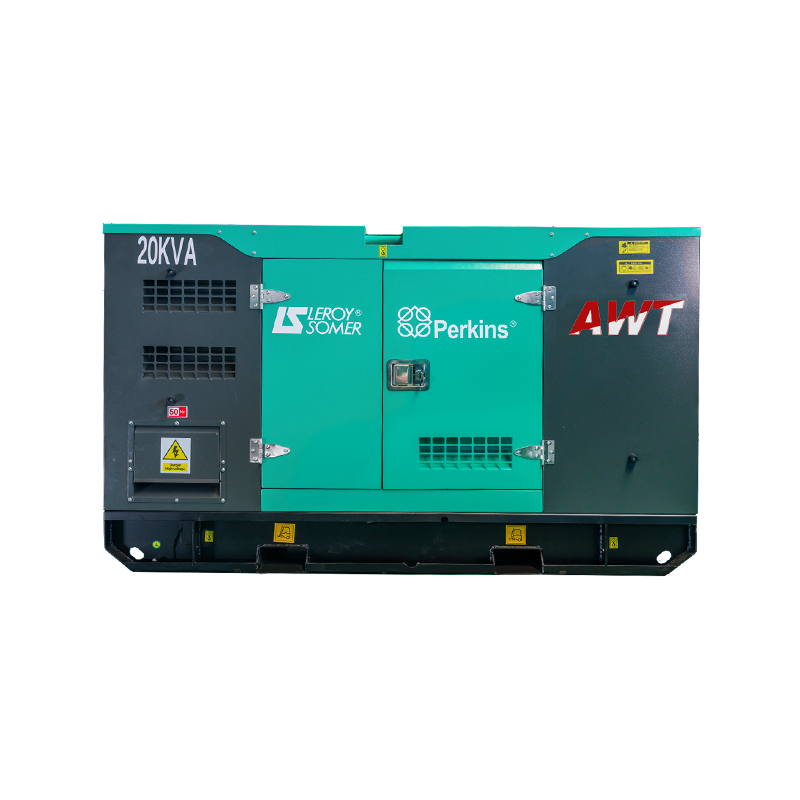 Silent Type Diesel Generator Sets with Acoustic CanopyEnclosed low-noise gensets with soundproof canopies, ideal for noise-sensitive urban sites; complements the enclosure and outdoor placement scenarios described above.View Product →
Illustrative values; actual readings depend on engine model, canopy construction, and test conditions.
| Parameter | Open | Silent | Container | Trailer |
| Sound at 7 m | 85-90 dB(A) | 70-75 dB(A) | 75-80 dB(A) | 85-90 dB(A) |
| Weather protection | Indoor only | IP54 canopy | Full container | Optional cover |
| Fuel capacity | Base tank about 8 h | Base tank about 8 h | Day tank plus external | Base tank about 8 h |
| Typical use | Machine rooms | Outdoor fixed | Site base load | Mobile or rental |
Control Systems, Paralleling and Protection
The control panel, not the engine, is where industrial automation is implemented: automatic mains failure (AMF), automatic transfer switching, paralleling, and remote monitoring all live in the controller specification.
An AMF panel starts the set on mains failure, transfers the load, and returns it automatically when mains power stabilizes. The typical starting sequence allows three cranking attempts and reaches rated voltage and frequency within 6 to 10 seconds. For multiple-set sites, paralleling requires an auto-synchronizer and load-sharing controls to keep frequency and voltage stable.
- AMF/ATS: automatic start, load transfer, and return with adjustable timers and muted exercise runs
- Paralleling: auto synchronizer, true RMS load sharing, reverse-power protection
- Communications: RS485 Modbus, dry contacts for SCADA, remote start-stop signals
- Protection: low oil pressure, high coolant temperature, overspeed, overcurrent, short circuit, under/over voltage, reverse power
Sourcing, OEM and Project Delivery
Yangzhou Aiweite Electromechanical Co., Ltd. supplies Cummins-powered sets from 10 kVA to 2,500 kVA and supports OEM and ODM programs with factory-direct specification, custom control design, and multi-brand engine integration.
The company has manufactured and installed diesel generator sets since 2008, covering open, silent, container, and trailer formats. Its portfolio also includes Perkins-, Volvo-, MTU-, Weichai-, and Yuchai-powered sets, so a fleet can standardize on one controller platform and one service partner across engine brands. For projects that need site installation, the manufacturing scope extends to delivery, positioning, cabling, and commissioning support.
Specification Questions for Industrial Buyers
What is the difference between standby and prime rating in kVA?
Standby (ESP) is for emergency duty up to 500 hours per year with no overload capability. Prime (PRP) allows unlimited running hours with a 10% overload for 1 hour in 12. On the same engine-alternator package, a 500 kVA standby set is typically rated 455 kVA prime and 410 kVA continuous under ISO 8528-1.
What voltage options are available on Cummins-powered sets?
Standard low-voltage outputs are 400/230 V at 50 Hz and 480 V at 60 Hz, three-phase four-wire. Medium-voltage configurations at 6.3 kV and 10.5 kV suit sets above 800 kVA or long cable runs. Custom voltages are available on request, but they change alternator and protection settings.
What noise level can a silent-type Cummins set achieve?
A silent canopy typically achieves 70 to 75 dB(A) at 7 m when tested under ISO 8528-10 conditions. Open sets without an enclosure typically register 85 to 90 dB(A) at 7 m, and containerized sets fall between, around 75 to 80 dB(A).
Can a prime-rated set run continuously?
A prime-rated (PRP) set can run unlimited hours with variable load, provided the average load stays at or below 70% of the prime rating and the 10% overload for 1 hour in 12 is never exceeded. Follow the manufacturer's service schedule, with oil changes typically every 250 to 500 operating hours depending on load factor.