English
 Français
 Español
Cummins Powered Diesel Generator Sets: How to Select the Right Power Output
Oct 21, 2026
Content
- 1 Know What a Generator Set Power Rating Actually Means
- 2 Build a Complete Load Profile Before You Calculate
- 3 Calculate kVA with Starting Current Included
- 4 Apply Derating for Altitude and Temperature
- 5 Plan the Load Acceptance Sequence
- 6 Match the Structure Type to the Installation Site
- 7 Common Sizing Mistakes That Cause Field Failures
- 8 Sizing Questions That Come Up During Procurement
A food processing plant in northern Mexico installed a 150 kVA generator set powered by a Cummins Inc. diesel engine in March 2024. During commissioning, an engineer switched on a 75 kW refrigeration compressor; voltage sagged below 80% of nominal, and the controller tripped on under-voltage. The sizing study had summed only running kW values and ignored locked-rotor current. Selecting the right output for a Cummins-powered set requires a load profile, ISO 8528-1 ratings, starting-current checks, and site derating.
Know What a Generator Set Power Rating Actually Means
ISO 8528-1 defines three distinct output ratings for a generator set - standby, prime, and continuous - and the rating determines how many hours per year and at what load factor the set can run without damage. Choosing the wrong rating produces either premature engine failures or unnecessary capital cost. The nameplate "power" of a set is not a single number: the same physical unit can be rated 220 kVA standby and 200 kVA prime.
Yangzhou Aiweite Electromechanical Co., Ltd., a generator set manufacturer operating since 2008 and covering 1 kVA to 2,500 kVA, rates its Cummins-powered sets under the same ISO 8528-1 framework.
| Rating | Load profile | Annual hours | Overload | Typical application |
| Standby (ESP) | Variable, up to 80% of rated as base load | Up to 500 | 10% for 1 h per 12 h | Emergency backup power |
| Prime (PRP) | Variable, 70% base load, 100% peak | Unlimited | 10% for 1 h per 12 h | Construction, mining, remote sites |
| Continuous (COP) | Constant, 70-100% of rated | Unlimited | None | Base-load industrial power |
Build a Complete Load Profile Before You Calculate
A valid power-output calculation starts with a load profile that lists every connected device as running kVA, starting kVA, and duty cycle; summing nameplate kW alone cannot predict transient voltage behavior. The profile must cover the worst operating case, not the average day, so the set can survive the largest simultaneous start that can occur.
Build the profile in five steps:
- Inventory every load with its nameplate kW
- Convert kW to kVA using each device's operating power factor
- Identify the starting current of every motor
- Define duty cycles for intermittent loads
- Identify the largest single load step that can be switched in at once
Motor loads dominate the calculation. NEMA MG-1 specifies that a Design B induction motor draws 6 to 7.5 times full-load current during across-the-line starting, so the load profile must capture motor data separately from resistive loads.
When the application covers factories, infrastructure projects, and emergency power, the profile should be validated against every duty cycle the site can produce.
Calculate kVA with Starting Current Included
The minimum set rating equals the running kVA of all loads plus the difference between starting kVA and running kVA of the largest motor, checked against the NFPA 110 transient voltage dip limit of 20%.
Three-phase running kVA is kW divided by power factor. Three-phase starting kVA is locked-rotor current times line voltage times 1.732, divided by 1,000.
Example: a packaging line has 60 kW of connected machinery at 0.85 power factor, or 71 kVA running, plus one 45 kW air compressor with direct-on-line starting. The compressor draws 53 kVA running and 334 kVA during a start at 6.3 times full-load current. The calculation is 71 + (334 - 53) = 352 kVA. A 350 kVA set has no margin, so the correct selection is the next standard rating, a 400 kVA set.
Reduce the Starting Multiplier to Downsize the Set
A star-delta starter limits starting current to 2.5 to 3.5 times full-load current; a soft starter produces 3.0 to 4.5 times; a variable frequency drive produces 1.0 to 1.5 times. For the 45 kW compressor, a soft starter cuts the required set rating from 352 kVA to about 230 kVA, a reduction of about 35%.
For a calculated requirement between 100 kVA and 400 kVA, the product range organizes universal sets in a 100-400 kVA band with 10-15% reserve for future load growth.
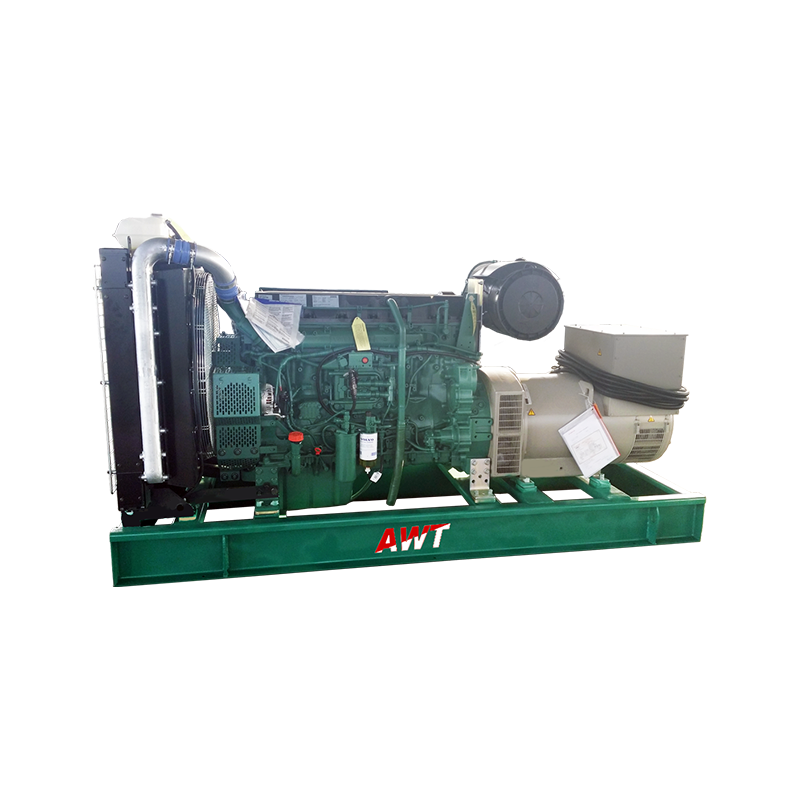
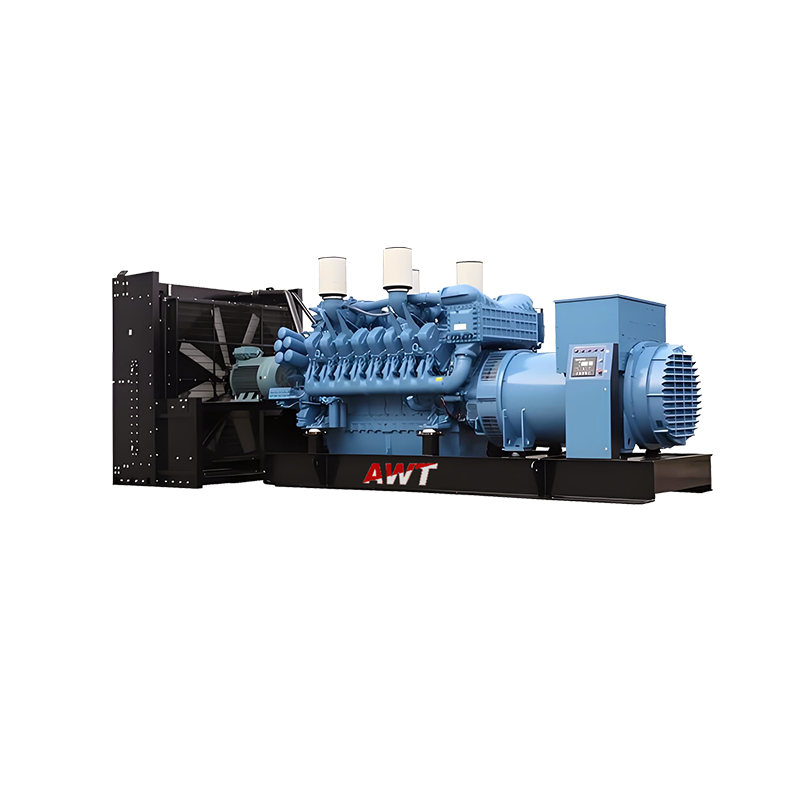
 100-400 kVA Universal Diesel Generator Sets for Mid-Range PowerThis mid-power series covers the calculated 100-400 kVA band with reserve capacity, but at high altitude and temperature the output must be derated. Check the specifications to confirm the corrected kVA meets your site conditions.View Product →
Apply Derating for Altitude and Temperature
Above the manufacturer's reference site - commonly 1,000 m altitude and 40 degrees C ambient - a turbocharged diesel generator set loses about 3% of rated output for each additional 300 m of altitude and about 2% for each additional 5 degrees C of temperature. A 350 kVA set installed at 1,600 m and 45 degrees C can deliver only about 92% of its rated output, or 322 kVA.
| Site condition | Approximate output factor | Net output of a 350 kVA set |
| 1,000 m / 40 degrees C (reference) | 100% | 350 kVA |
| 1,300 m / 40 degrees C | 97% | 340 kVA |
| 1,600 m / 40 degrees C | 94% | 329 kVA |
| 1,600 m / 45 degrees C | 92% | 322 kVA |
For the derated requirement, match the corrected kVA to a standard power band and confirm the engine-alternator pair against the manufacturer's data sheet. Yangzhou Aiweite arranges its Cummins-powered line in four bands from 10 kVA to 2,500 kVA, so a derated figure can be matched to the next higher standard set.
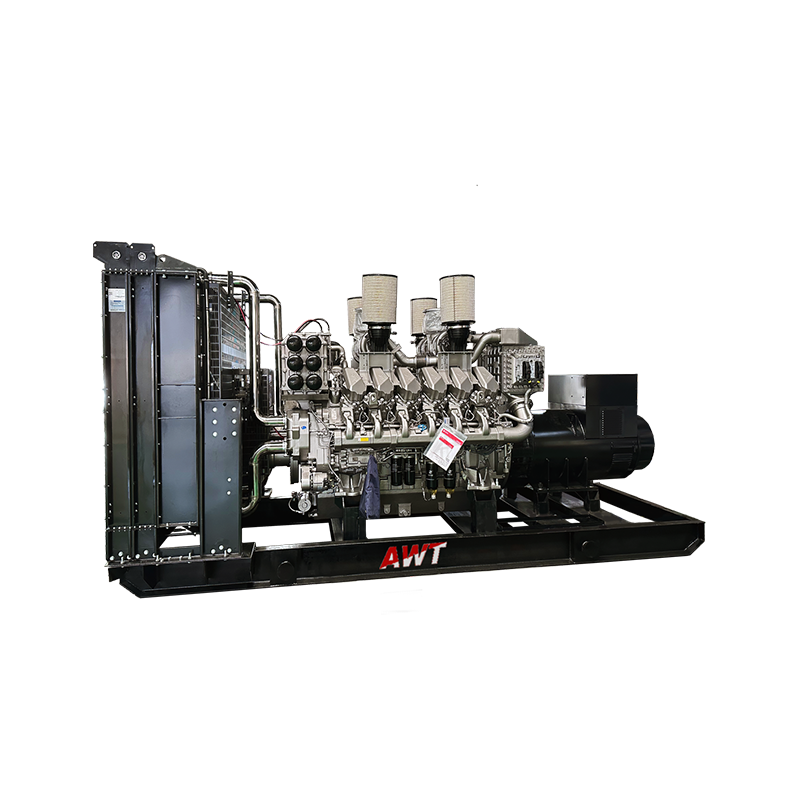
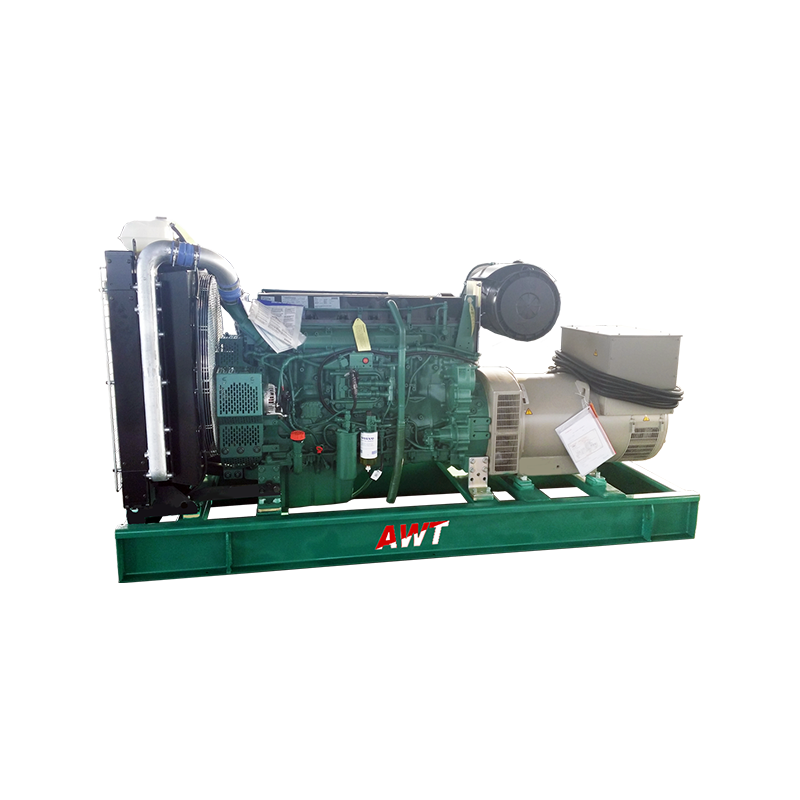
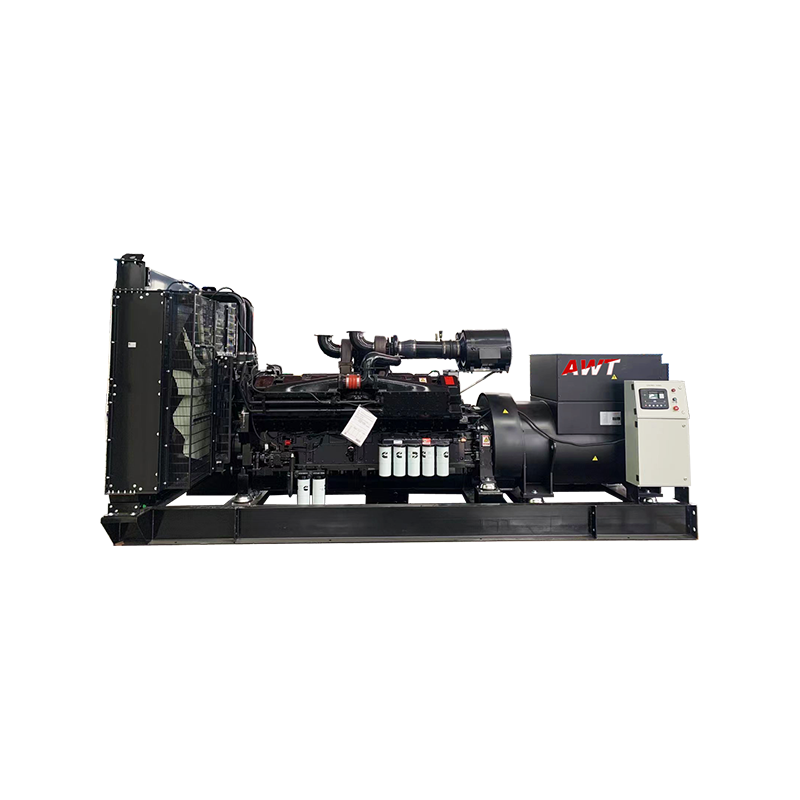 Cummins Powered Diesel Generator Sets with Multiple Power BandsAfter derating the required kVA, this Cummins-powered line offers standard sets from 10 to 2,500 kVA in four bands, making it straightforward to select the next higher unit that matches the corrected output.View Product →
Plan the Load Acceptance Sequence
Load must be applied in controlled steps, not in one block; starting the largest motor first, after voltage and frequency stabilize, keeps the transient voltage dip below the NFPA 110 limit of 20%.
- Start the set unloaded and wait 10 to 15 seconds for the governor and automatic voltage regulator to stabilize.
- Close the contactor of the largest motor first, then add smaller loads.
- Allow 5 to 10 seconds for voltage and frequency to recover before the next step.
- Step in the remaining loads in descending kVA order.
Match the Structure Type to the Installation Site
The enclosure type - open skid, silent canopy, container, or trailer - does not change the required kVA rating, but a compact acoustic enclosure raises component temperatures and can reduce long-term output by 2% to 3% at the same ambient condition. The derating is small but matters at the top of the power band.
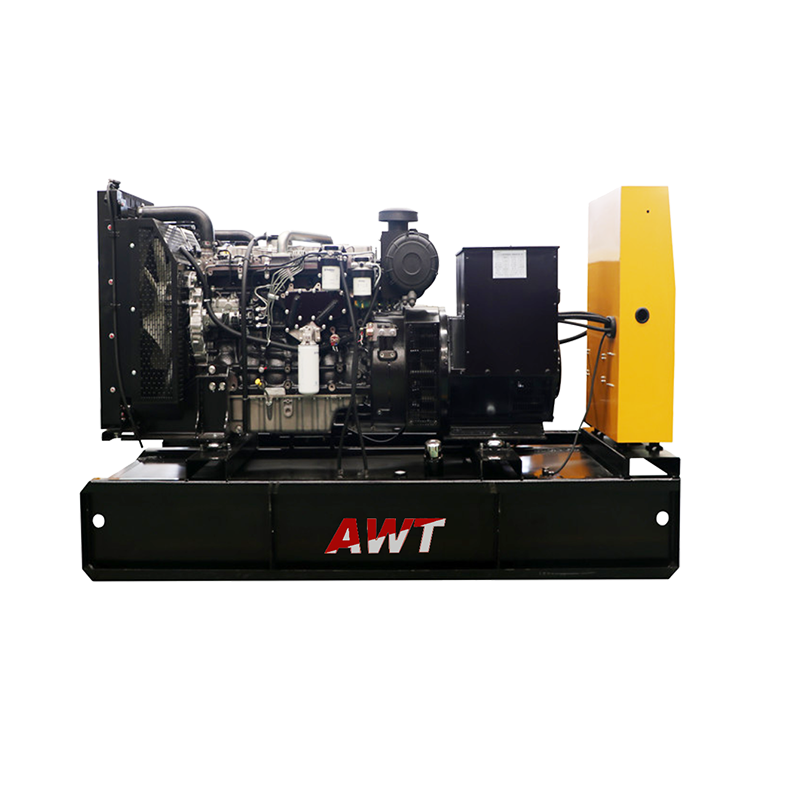
Silent-type sets suit noise-sensitive sites such as hospitals and urban industrial parks; open-type sets belong in dedicated machine rooms; container-type sets provide weatherproof modular outdoor power; trailer-type sets serve rental fleets and mobile projects. The structural differences between open-type and silent-type units affect maintenance access, cooling flow, and enclosure noise, so choose the structure after confirming the kVA class, not before.
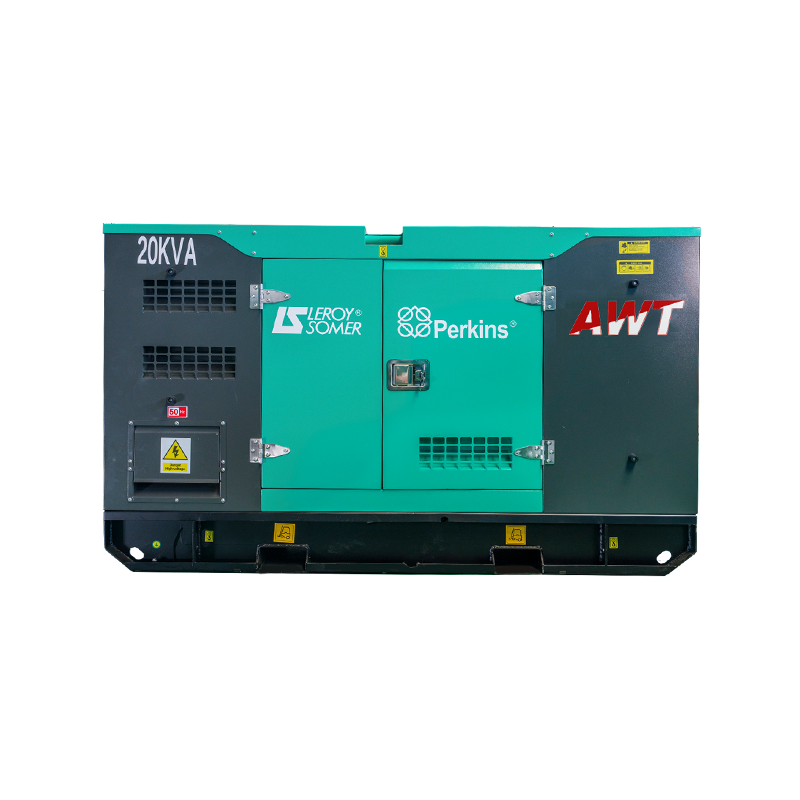 Silent Type Diesel Generator Sets for Noise-Sensitive SitesFor hospitals, urban parks, or other noise-sensitive locations, these enclosed low-noise gensets are the appropriate structure. They provide dustproof and weatherproof operation while keeping sound within urban limits.View Product →
Common Sizing Mistakes That Cause Field Failures
Five sizing errors lead to premature generator failures and nuisance trips; the calculation method above prevents all of them.
- Sizing from running kW only, with no starting-current check for the largest motor.
- Mixing kW and kVA figures without applying power factor.
- Using a standby rating for an application that runs more than 500 hours per year.
- Omitting altitude and temperature derating in highland or hot climates.
- Leaving no capacity reserve; 10% to 15% above the calculated minimum is a practical floor.
Sizing Questions That Come Up During Procurement
What is the difference between kW and kVA in generator sizing?
kW measures real power consumed by the load; kVA measures apparent power. The alternator is rated in kVA, and the diesel engine is rated in kW. At a power factor of 0.8, a 200 kVA set delivers 160 kW of real power, so a 200 kW load at the same power factor needs a 250 kVA set.
How much of a Cummins-powered set's rated power can be used continuously?
Under ISO 8528-1, a prime-rated set runs an unlimited number of hours per year, but base load should stay at or below 70% of the prime rating. A continuous-rated set is designed for constant loads of 70% to 100% of its rating. A standby-rated set should not exceed 500 hours of operation per year.
Does a soft starter reduce the required generator size?
Yes. A soft starter limits motor starting current to 3.0 to 4.5 times full-load current, compared with 6.0 to 7.5 times for direct-on-line starting. In the 45 kW compressor example, the required set rating drops from 352 kVA to about 230 kVA, a reduction of about 35%, which moves the selection to a smaller power band.
What voltage dip limit should the sizing target?
NFPA 110 sets a 20% voltage dip limit for emergency power systems when rated load is applied in a single step. Data-center specifications often require 15%, so the project specification must be confirmed before the alternator size is finalized.