English
  Français
  Español
 400-1000 kVA Universal Diesel Generator Sets for Manufacturing Facilities Guide
Sep 21, 2026
Content
- 1 Why 400-1000 kVA Defines the Working Core of Factory Power
- 2 Sizing a Universal Diesel Generator Set for a Production Line
- 3 Open, Silent, Container, and Trailer Sets: Structure Decides Installation
- 4 Engine Brand Sets the Long-Term Cost of the Generator Set
- 5 Fuel, Runtime, and Installation Reality Checks
- 6 Frequently Asked Questions About 400-1000 kVA Generator Sets
A plant engineer in a metal fabrication facility watches the utility supply dip twice a week during the summer shift. The line has two 90 kW CNC machines, two 75 kW air compressors, and a 250 kW furnace that starts only when the CNC line is idle. The continuous running load is about 330 kW, and with a motor-start allowance and 15 percent margin, the sizing lands at 500 kVA - not 400 and not 630 - exactly in the 400-1000 kVA band.
This guide explains how procurement teams and plant engineers should evaluate 400-1000 kVA universal diesel generator sets for manufacturing facilities: how the range is defined, how to size it, which structure fits the site, and how the engine brand changes long-term cost.
The same universal platform applies to manufacturing industries, infrastructure projects, and emergency power roles, so this selection logic carries over.
Why 400-1000 kVA Defines the Working Core of Factory Power
The 400-1000 kVA band covers the capacity level where most mid-size manufacturing plants settle after adding motor loads, air compressors, lighting, HVAC, and a margin for future expansion.
At 0.8 power factor, a 400 kVA set delivers 320 kW; a 1000 kVA set delivers 800 kW. Below this band, plants quickly outgrow the unit. Above it, the economics shift to paralleling sets or medium-voltage distribution, so the band is the practical core for a single universal diesel generator set.
- 320-800 kWContinuous output across the band
- 0.8 PFStandard rating for three-phase sets
- 80-200 L/hFull-load fuel consumption
- 12+ hoursAutonomy with a standard day tank
Sizing a Universal Diesel Generator Set for a Production Line
Size a generator set by the largest motor start, not by the sum of the nameplates: the critical case is the running load plus the inrush of the biggest motor starting at the worst moment.
A motor draws five to seven times its full-load current for one to three seconds during starting, so a 90 kW motor can add hundreds of kVA instantly. A set that ignores this surge will trip its breaker or drag frequency below tolerance. The rating convention used by manufacturers, including Yangzhou Aiweite Electromechanical Co., Ltd., expresses output in kVA at a 0.8 power factor.
The table below shows a typical mid-size plant load composition and its sizing impact.
| Load type | Typical share | Starting behavior | Sizing impact |
| Three-phase induction motors | 40-60% | 5-7x full-load current for 1-3 seconds | Drives the starting case |
| Air compressors | 10-20% | Unloader or variable-speed options | Can be staged |
| Welding and CNC equipment | 10-15% | Intermittent, with harmonics | Adds to running kW |
| Lighting and HVAC | 10-20% | Low inrush except chillers | Steady base load |
| Process heaters and furnaces | 5-15% | Resistive, no inrush | Adds directly to kW |
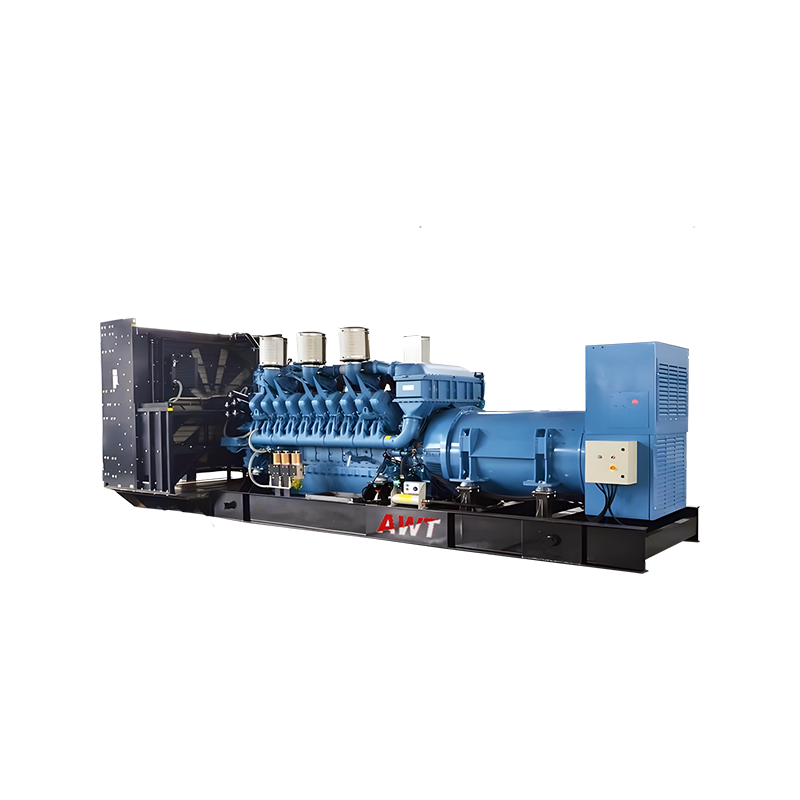
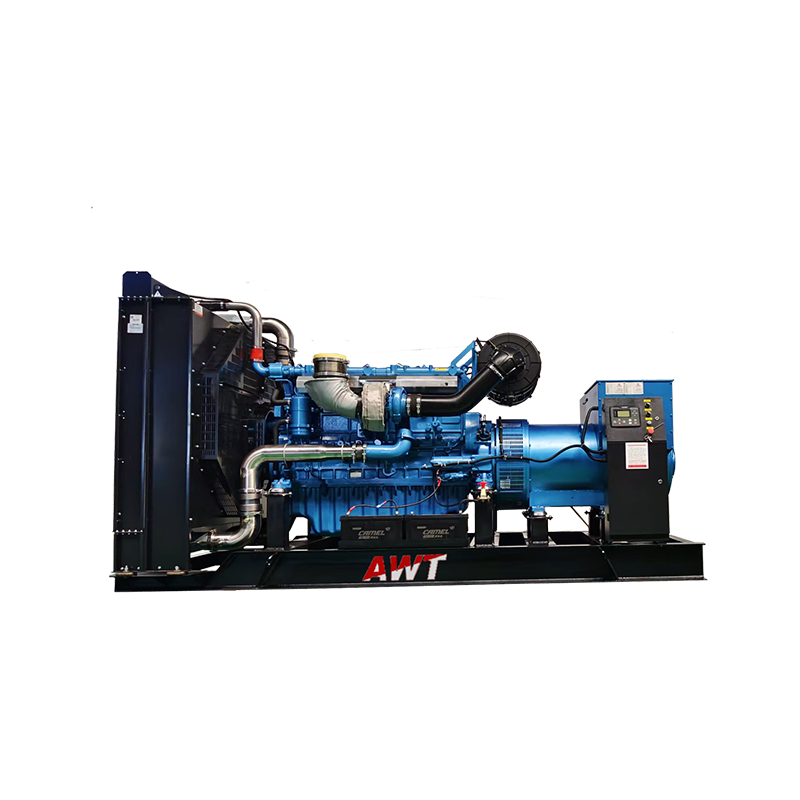 400-1000 kVA Universal Diesel Generator Sets for Heavy Industrial UseThis series is built for large-scale plants and critical infrastructure, offering overload capacity, continuous full-load operation, and compatibility with all mainstream engine brands. Its intelligent control and robust alternator handle complex mixed loads reliably.View Product →
Open, Silent, Container, and Trailer Sets: Structure Decides Installation
Structure type is an installation decision, not a power decision: it decides where the set can run, at what noise level, and at what building cost.
A universal diesel generator set comes in four structural forms, each matching a different site condition.
-
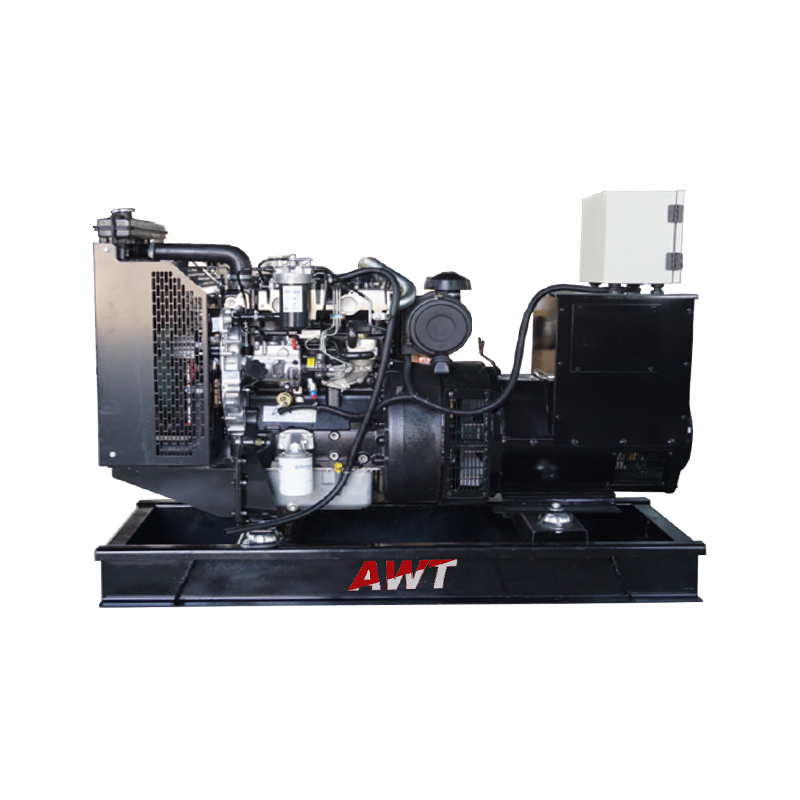
Open type
A bare set for dedicated machine rooms with its own ventilation, foundation, and acoustic treatment. Lowest initial cost, easiest maintenance access.
-
Silent type
An acoustically enclosed set for outdoor and noise-limited sites, cutting sound pressure by roughly 20-30 dB(A) versus an open set.
-
Container type
A weatherproof modular unit for outdoor exposure, crane or forklift handling, and fast deployment on plant expansion or infrastructure sites.
-
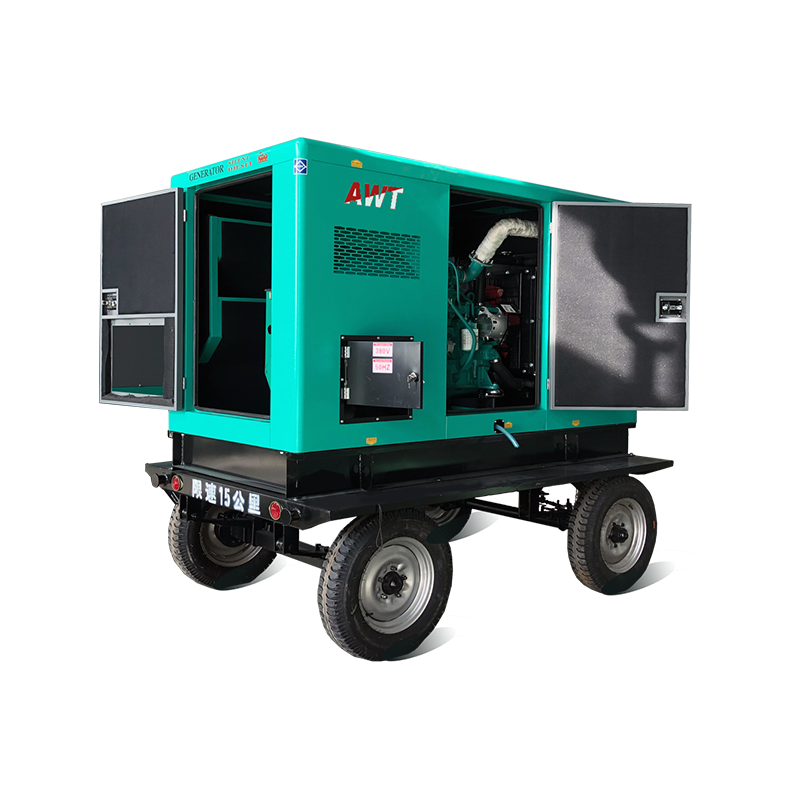
Trailer type
A road-towable unit for temporary power, emergency response, and loads that move between buildings or yards.
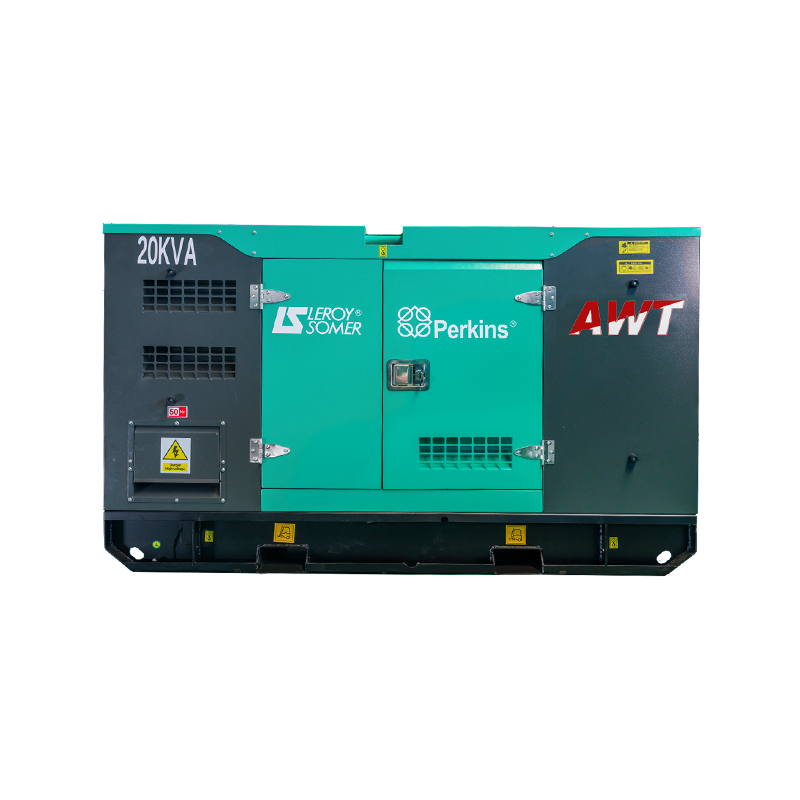 Silent Diesel Generator Sets with Low Noise and All-Weather EnclosureThese enclosed gensets suit noise-sensitive urban, commercial, and residential sites. They keep sound under 75 dB(A) at one meter, resist dust and rain, and integrate ATS, remote monitoring, and parallel operation for flexible standby power.View Product →
For a permanent factory installation, the usual choice is a silent set outdoors or an open set inside a prepared machine room. Container and trailer sets matter when the plant has no power room or one set must serve several buildings during staged construction.
Engine Brand Sets the Long-Term Cost of the Generator Set
The engine brand determines fuel consumption, parts access, service intervals, and resale value, so choose it on local support and verified service data, not on the datasheet alone.
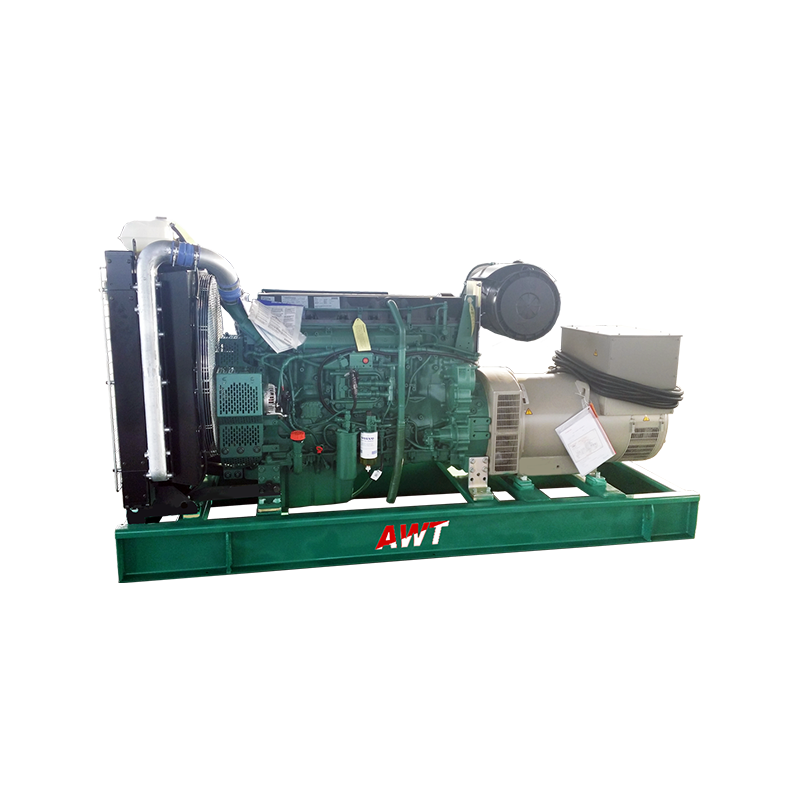
In the 400-1000 kVA segment, the engine is the core of a universal diesel generator set. Manufacturers offer multiple lines: Chinese-brand units such as Weichai, Yuchai, and SDEC; international names such as Cummins and Perkins; and heavy-duty platforms from Volvo, MTU, Baudouin, and Mitsubishi. Each family has a different fuel curve, service interval, and spare-part price.
Ask the manufacturer for these numbers before ordering:
- Fuel consumption at 75 percent load, in liters per hour, for the exact rating
- Service interval in operating hours between oil and filter changes
- Parts availability in the plant's region and the brand's authorized service network
- Ambient derating above 40 degrees Celsius and at altitudes above 1,000 meters
- Emission compliance for the project location
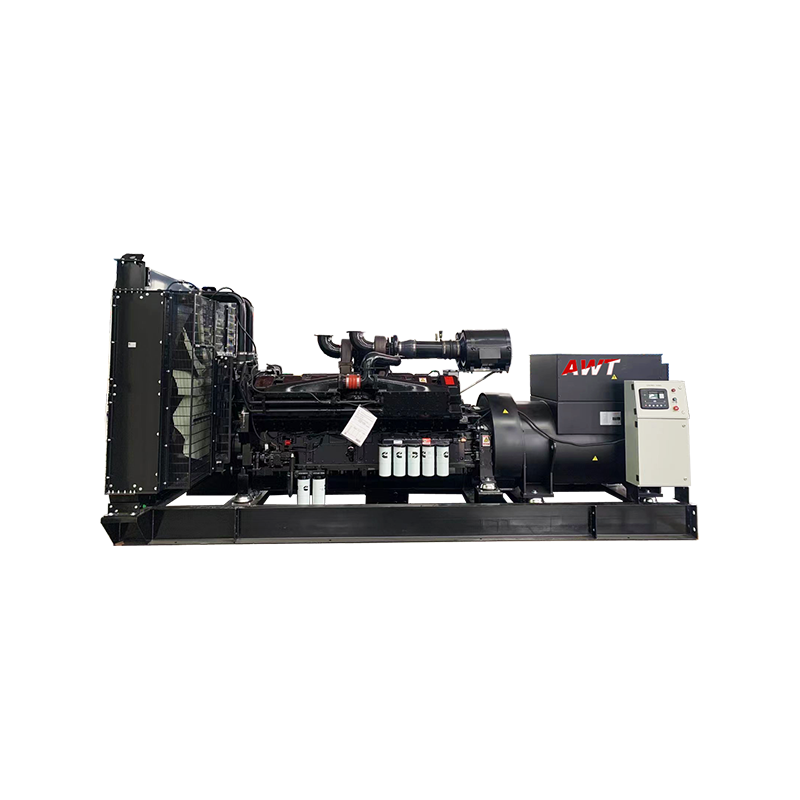 Cummins Powered Diesel Generator Sets from 8 kW to 3750 kWGenuine Cummins engines deliver high reliability and low fuel consumption across a wide power range. With long overhaul intervals, robust alternators, and intelligent controllers, they serve critical sectors like data centers, hospitals, and industrial plants.View Product →
For companies that purchase repeatedly or resell under their own brand, the same manufacturing capacity can be configured through an OEM/ODM program, giving control over labels, panels, colors, and documentation.
Fuel, Runtime, and Installation Reality Checks
A 400-1000 kVA diesel set burns roughly 80-200 liters per hour at full load, so fuel logistics, day-tank size, and ventilation often decide how long the plant can actually run.
Fuel and site preparation are the costs procurement teams underestimate. The generator is quoted once; diesel is paid for every week the plant runs. A 500 kVA set at 75 percent load uses roughly 75-95 liters per hour, more than 1,800 liters per day on one shift.
- Day tank sizing: 8-12 hours of autonomy means a 1,000-3,000 liter tank depending on set rating.
- Bulk storage: for continuous operation, add water separation, filtration, and fuel polishing.
- Combustion air: the radiator rejects heat, so the room needs fresh-air flow to keep intake temperature within engine rating.
- Foundation and exhaust: use an isolated concrete foundation and route exhaust away from intake louvers and windows.
Commissioning follows a fixed sequence, and skipping a step shows up later as a breakdown during the first load shift.
- Site inspection and ventilation calculation before ordering
- Foundation, fuel system, and exhaust installation
- Electrical connection and synchronization controls
- Load-bank test at 100 percent rating for voltage and frequency regulation
- Operator training, spare-parts handover, and documentation
Frequently Asked Questions About 400-1000 kVA Generator Sets
How many kW is a 500 kVA diesel generator set?
A 500 kVA set rated at 0.8 power factor delivers 400 kW of continuous output; kVA multiplied by 0.8 gives usable kW.
Can a 400-1000 kVA universal diesel generator set run in parallel with the grid or another set?
Yes, with a synchronization controller and the correct breaker. Paralleling lets two smaller sets share a large starting load or follow a load that changes between shifts.
What load percentage is most efficient for a diesel generator set?
Operating at 70-80 percent of rated load is the efficiency and engine-life sweet spot. Below 30 percent causes wet stacking; sustained operation above 90 percent shortens service intervals.
How long can a 400-1000 kVA set run continuously?
A set rated for continuous duty can run for days or weeks at 75-80 percent load, as long as fuel, cooling air, and oil changes follow the engine manufacturer's schedule.