English
 Français
 Español
Weichai Powered Diesel Generator Sets: Performance Specs and Application Guide
Nov 25, 2026
Content
- 1 What the Weichai Engine Contributes to a Complete Set
- 2 Matching the Engine Model to a Generator Rating
- 3 Reading the Performance Specification Line by Line
- 4 Open Frame, Silent Canopy, Container or Trailer
- 5 From Load List to a Confirmed kVA
- 6 Site Conditions That Decide Whether the Rating Holds
- 7 Procurement Points to Fix Before Signing
- 8 Buyer Questions That Come Up Before Ordering
Two quotations land on the same desk: both 250 kVA, both naming a Weichai engine, and the prices do not match. The gap almost always sits in three places, which are the engine model and the gross rating behind it, the alternator frame paired to that engine, and whether the set is declared for prime power or standby duty. Reading the engine data sheet rather than the model code is the fastest way to see which offer is the better buy.
A diesel generating set is an assembly rather than a single product. The engine is its most visible part and the part most often named in a quotation, but the kVA printed on the nameplate is produced by the engine, alternator, cooling package, control module and enclosure working together as one machine.
Yangzhou Aiweite Electromechanical Co., Ltd. has manufactured and installed land-use diesel generator sets since 2008, covering a build range from 1 kVA to 2,500 kVA, and quotes Weichai-powered sets alongside several other engine platforms. That range is wide enough that one engine family can appear in a compact standby unit and in a project-scale prime power station, which is why pairing rules matter more than the badge on the rocker cover.
What the Weichai Engine Contributes to a Complete Set
The engine supplies shaft power and nothing more; every other component of the set converts, controls, cools or protects that power before it reaches a load.
Weichai Power Co., Ltd. is headquartered in Weifang, Shandong Province, and its WP-series diesels appear in a large share of Chinese-built land generator sets. The family spans four-cylinder and six-cylinder blocks, naturally aspirated and turbocharged air paths, and mechanically governed or electronically controlled fuel systems. Two engines that share a badge can therefore differ in governor behaviour, fuel curve and emission variant.
For a buyer, the practical consequence is that engine brand alone does not settle performance. A set built on a mechanically governed four-cylinder engine holds frequency differently from one built on an electronically governed six-cylinder engine of the same rated output, and the difference becomes visible the moment a large motor starts across the line.
Matching the Engine Model to a Generator Rating
The rule that governs the pairing is that the engine's gross rating must sit above the set's declared prime rating, because the alternator, radiator fan and charging system draw power before any of it reaches the terminals.
Treat the engine data sheet as the authority rather than the model code. Two engines from the same family can carry different gross ratings, different governing systems and different emission variants, and the nameplate on the engine states which one you are buying.
| Engine family | Layout and displacement | Indicative prime rating |
| WP2.3D | Four-cylinder, 2.3 L | 25-30 kVA |
| WP4.1D | Four-cylinder, 4.1 L | 50-65 kVA |
| WP6D | Six-cylinder, approximately 6 L | 110-150 kVA |
| WP10D | Six-cylinder, 9.7 L | 225-310 kVA |
| WP12D | Six-cylinder, 11.6 L | 310-410 kVA |
| WP13D | Six-cylinder, 12.5 L | 430-560 kVA |
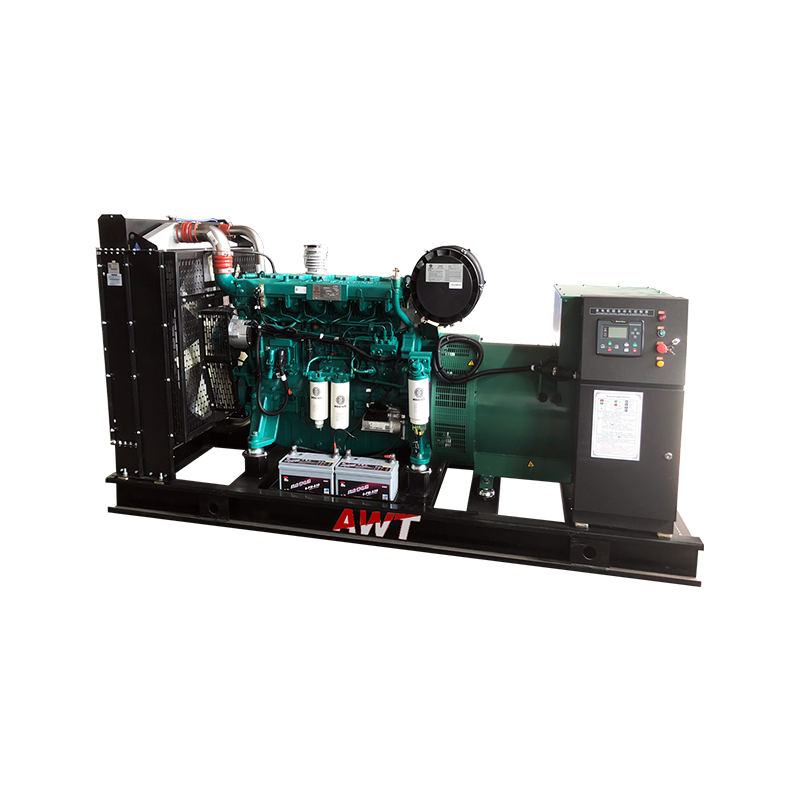
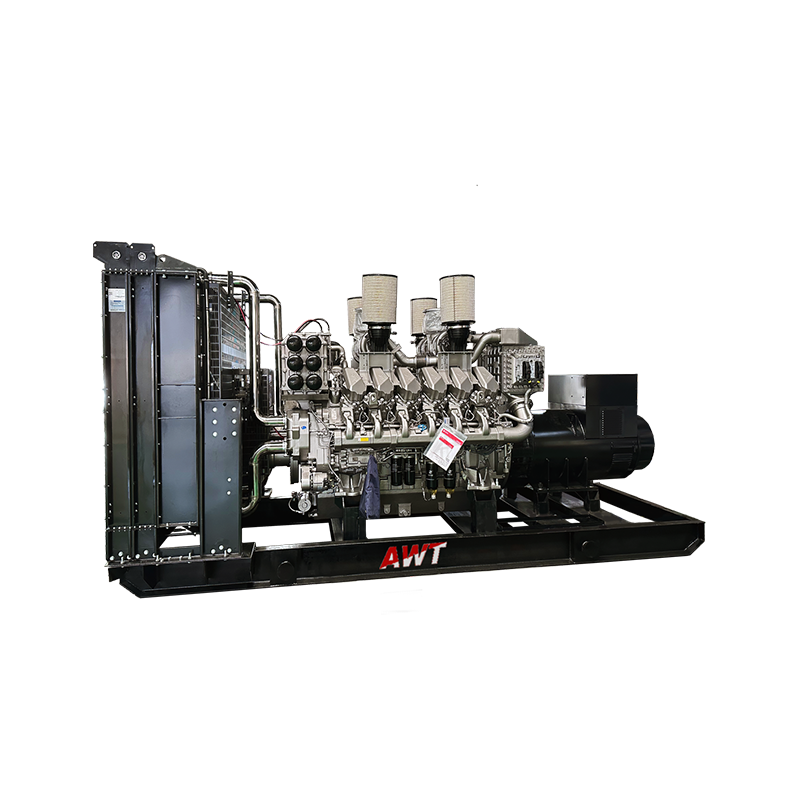
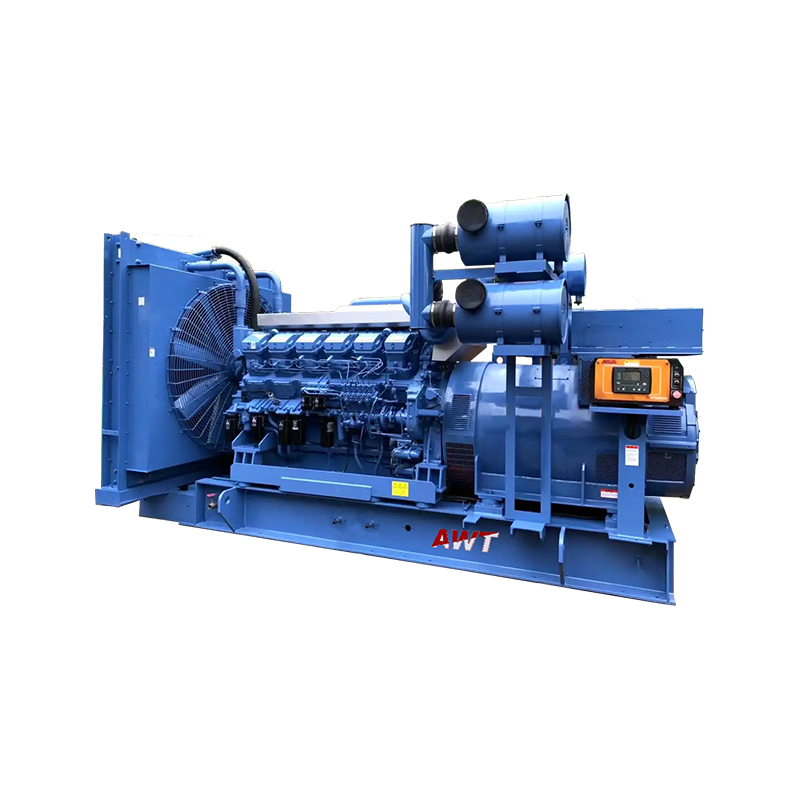
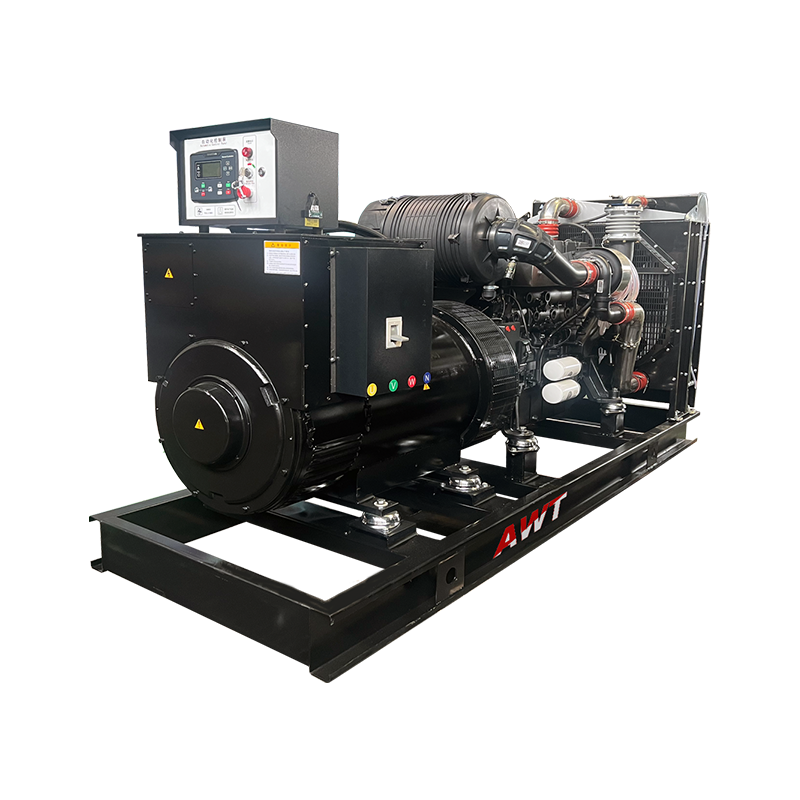 Weichai-Powered Diesel Generator Sets from 12 to 4200 kWCompare genuine Weichai engine sets with quoted outputs, then confirm engine data sheet ratings and site derating before ordering.View Product →
Those bands are starting points for a quotation, not specifications. A 250 kVA set installed at sea level in a ventilated plant room and a 250 kVA set installed at 1,800 m or in 45 degrees Celsius ambient air are not the same order, because the second one needs a larger engine to hold its declared output at the terminals.
ISO 3046-1 sets the reference conditions against which reciprocating engine ratings are declared: 100 kPa barometric pressure, 25 degrees Celsius air temperature and 30 percent relative humidity. Above roughly 1,000 m of altitude or 40 degrees Celsius ambient, available engine output falls and the set must be selected from a larger frame to keep the same kVA.
Reading the Performance Specification Line by Line
Rating definitions in ISO 8528-1:2018
ISO 8528-1:2018 defines four rating classes, and a quotation that gives a kVA figure without naming the class cannot be compared with another offer on equal terms.
| Rating class | Running hours | Overload allowance | Typical use |
| COP continuous | No limit, steady load | None | Base load and prime power plants |
| PRP prime | No limit, variable load | 10 percent for 1 hour in 12 | Main power on sites without a grid supply |
| LTP limited time | 500 hours per year | None | Backup for planned utility outages |
| ESP emergency standby | Short duration, variable load | None | Hospitals, data centres, life safety loads |
A generator set rating is the declared electrical output the complete assembly can sustain under stated site conditions for a stated duty. It is not the engine's gross shaft rating, and it is not a peak figure taken from a sales sheet.
Load acceptance class in ISO 8528-5
ISO 8528-5 groups generating sets into performance classes G1 to G4 according to the voltage and frequency deviation a set permits when a block load is applied. Commercial and light industrial standby work is normally specified at G2, G3 is used where the load cannot tolerate a wide excursion, and G1 suits general-purpose duty with tolerant loads.
Fuel consumption and the arithmetic behind it
Specific fuel consumption is quoted in grams per kilowatt-hour at a stated load point, while site teams think in litres per hour, and the conversion has to be made before two quotations can be compared.
Illustrative example: a 200 kW prime-rated set running at 75 percent load delivers 150 kW. At an assumed specific consumption of 210 g/kWh, fuel mass is 31,500 g/h; with diesel at about 835 g/L, that is roughly 37.7 L/h. The assumption is the part to confirm against the engine data sheet, not the arithmetic.
Litres per hour = (load in kW x specific consumption in g/kWh) divided by fuel density in g/L. Worked through: (150 x 210) divided by 835 = 37.7 L/h.
Ask for the consumption figure at 25, 50, 75 and 100 percent load. A single number quoted at full load hides the part-load behaviour that decides the fuel bill of a standby set which rarely exceeds half load.
Open Frame, Silent Canopy, Container or Trailer
The enclosure leaves the engine untouched but changes noise, transport, installation work and sometimes the achievable rating, because a canopy restricts airflow and raises the temperature of the air the engine breathes.
Open frame
- Lowest cost per kVA and the shortest lead time
- Requires a dedicated plant room with inlet and outlet louvres
- Service access is direct on all four sides
- Noise control depends entirely on the building
Silent canopy
- Acoustic lining brings medium sets into the 70-75 dB(A) band at 7 m
- Weatherproof and lockable for outdoor installation
- Radiator airflow must be checked against canopy inlet area
- Higher weight and a larger transport footprint
A containerised set uses an ISO 668 footprint, most often the 20 ft frame, with a CSC plate for sea freight, a fuel tank built into the base or belly, and all connections brought out to one panel. It suits projects where the set arrives as a shipping unit and is commissioned on a concrete pad without building a plant room around it.
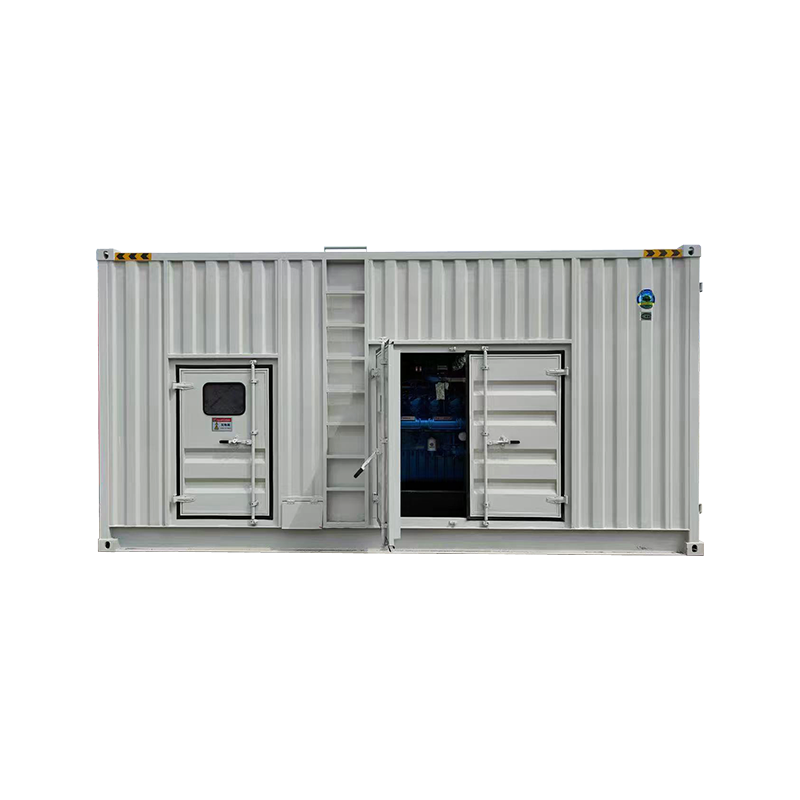 Containerized Diesel Generator Sets in 20 ft and 40 ft ShellsIntegrated ISO container sets from 10 to 2500 kVA suit harsh sites where factory-built enclosure and centralized connections simplify commissioning.View Product →
Trailer-mounted sets trade static efficiency for mobility, because the axle and hitch add cost and remove space that would otherwise carry acoustic treatment. They are chosen when the load moves between sites, not when noise is the binding constraint.
From Load List to a Confirmed kVA
A set sized at 100 percent of the connected load is undersized in practice; a margin of 20 to 25 percent above the calculated demand covers motor starting, site derating and later load growth.
- List every load in kW and kVA and mark how each one starts: direct on line, star-delta, soft starter or variable frequency drive.
- Apply a demand factor to each group, because connected load and simultaneous load are rarely the same figure.
- Add the starting kVA of the largest motor. A direct-on-line start draws roughly six to seven times running current, a star-delta start about two and a half to three times, and a drive-limited start about one and a half to two times.
- Apply the site derating for altitude, ambient temperature and enclosure type, then confirm the engine still holds headroom above the required prime output.
- Fix the rating class, the voltage and the control functions, and select the engine and alternator pair against those limits rather than against a catalogue headline.
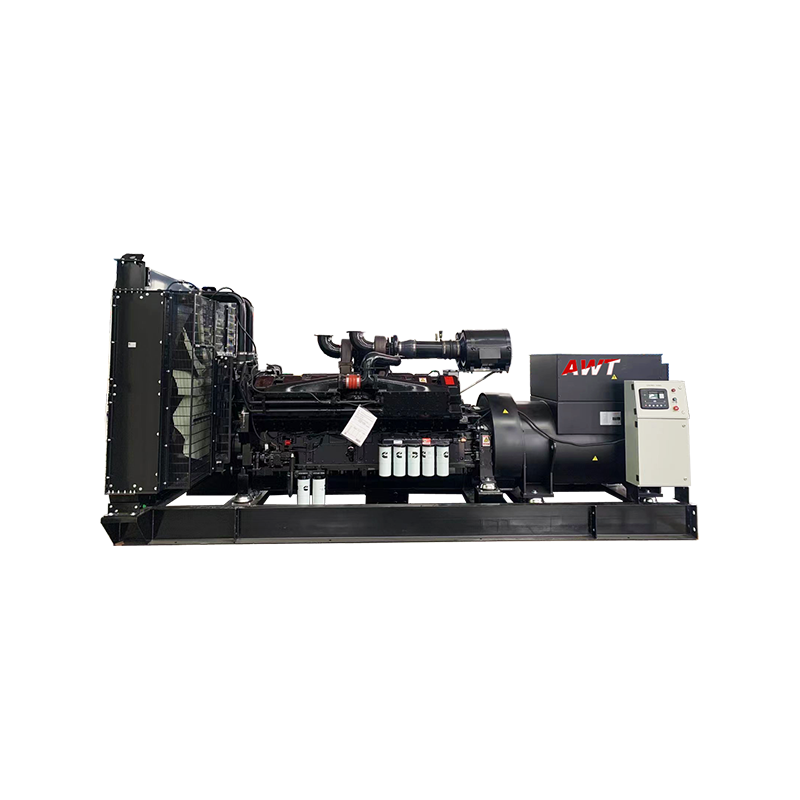
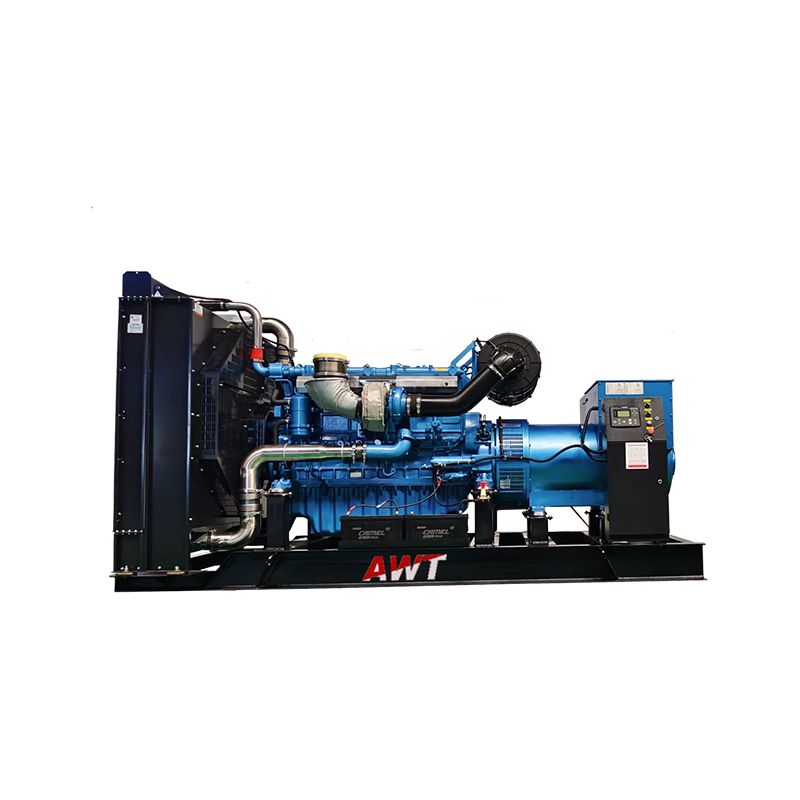 400–1000 kVA Universal Diesel Generator Sets for Heavy-Duty PowerReview heavy-duty prime and standby sets with multi-engine options, then size above connected load to allow starting and site derating.View Product →
Site Conditions That Decide Whether the Rating Holds
A set that holds nameplate rating in a factory test can lose output on site when combustion air, cooling air or exhaust back pressure sits outside the engine maker's limits.
- Combustion air: the plant room needs an inlet sized for the engine intake plus the radiator air volume, not one or the other.
- Exhaust back pressure: the engine manual states a maximum, commonly in the region of 6.7 kPa for turbocharged units, and long or undersized pipe runs exceed it.
- Radiator airflow: recirculation between hot outlet and cold inlet can raise coolant temperature even when the louvre area is generous.
- Fuel storage: a tank sized for 8 to 12 hours at rated load, with a water trap and polishing route, prevents most starting failures.
- Foundation and cable: vibration isolation and correctly sized conductors protect the set long before the first load is connected.
Sets used for factories, infrastructure projects and emergency power are grouped by application in the industries section, which helps when the same frame has to serve a construction site and a process plant with very different load profiles.
Sound levels follow the same logic as power ratings: dB(A) at 7 m is the usual reference, but the reading is only comparable when measurement conditions, load percentage and enclosure type are stated together with the number.
Procurement Points to Fix Before Signing
Six items in a generator contract decide whether the delivered set matches the quotation: rating class, engine emission variant, test report scope, sound test conditions, warranty basis and the spare parts list.
- Rating class named on the offer, with the ISO 8528-1 designation written into the purchase order.
- Engine model and emission certificate that names that exact model, not the engine family.
- Factory test records at 25, 50, 75 and 100 percent load, including voltage and frequency stability.
- Fuel consumption curve and the load points at which each figure was measured.
- Warranty expressed in running hours as well as months, since a standby set and a prime power set age at very different rates.
- Recommended spare parts for the first 5,000 running hours, priced into the comparison.
Buyers who source under their own brand can route the same configuration through the OEM and ODM programme, where the enclosure, control panel and documentation package are specified rather than chosen from a stock list.
Buyer Questions That Come Up Before Ordering
Is a Weichai engine suitable for continuous prime power?
Yes, when the engine is ordered in a continuous-rated configuration and the average load stays at or below 70 percent of the prime rating. A standby-rated engine relabelled as prime is not the same product, and the data sheet states which rating the engine was built for.
What generator rating does a WP10D engine support?
Indicatively 225 to 310 kVA of prime rating, depending on the gross rating of the specific engine model and on alternator efficiency. Confirm the engine nameplate first, then derate for altitude and ambient before that figure is repeated to an end user.
How much fuel does a 200 kW Weichai set burn per hour?
At 75 percent load and an assumed 210 g/kWh, about 37.7 L/h. Full-load consumption is higher per hour but normally lower per kWh, which is why the 75 percent point is the one worth quoting in a tender document.
Which emission standard applies to an export order?
The destination market decides. Engines sold inside China for non-road use are certified to the stages of GB 20891-2014, while sets exported to the European Union are built to the applicable EU Stage limits. Ask for the certificate that names the exact engine model.