English
  Français
  Español
 Container Type vs Open Type Diesel Generator Sets: Application Comparison Guide
Sep 14, 2026
Content
A project engineer on a remote mining site once explained why his first equipment order went wrong: he had chosen open type diesel generator sets for an outdoor pad because the price per kilowatt was lower. The units arrived, the control panels sat exposed to rain, and the temporary shelter his crew built collapsed in the first storm. Across the camp, the container type gensets the contractor recommended were craned onto a compacted gravel base and feeding the site grid within a day. That story captures the practical difference between the two configurations: a container type set is a self-contained power station, while an open type set is a machine that expects a building around it.
The short answer for your next project is this. Choose a container type set when the equipment will operate outdoors, move between sites, or run unattended for long periods. Choose an open type set when a proper generator room already exists, the first-cost budget is tight, and your technicians prefer direct access to every component. The rest of this comparison explains why, with the numbers that matter.
What Is a Container Type Diesel Generator Set?
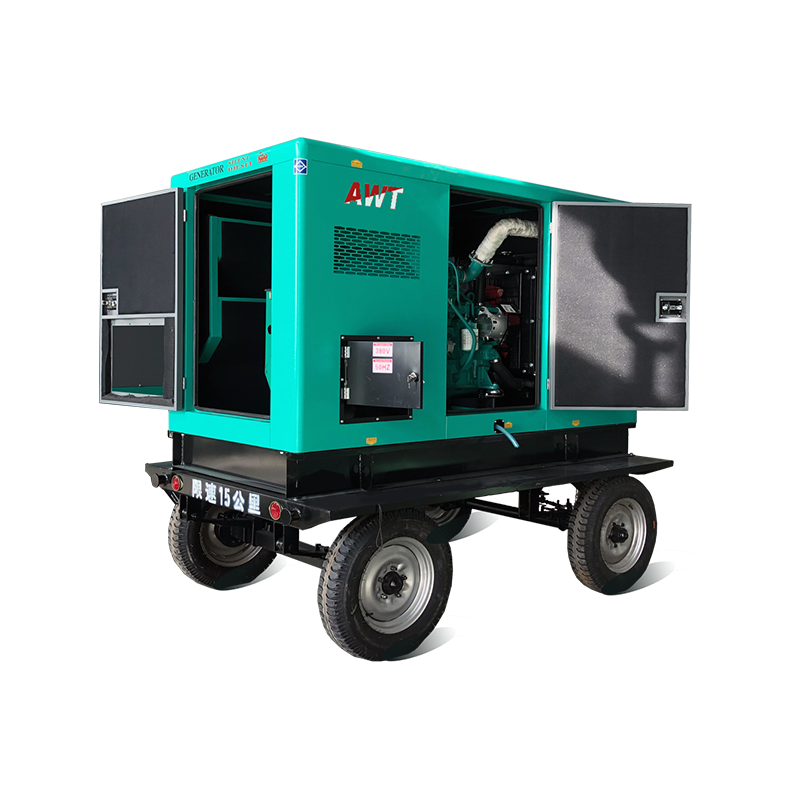
A container type diesel generator set is a complete generating system installed inside a weatherproof, acoustically treated steel enclosure. The engine, alternator, control panel, cooling radiator, fuel day tank, and fire-suppression interface are built into the container at the factory. Access doors, ventilation louvres, cable glands, and lifting points all form part of the delivered module.
Because the enclosure is engineered for outdoor service, a container set does not need a generator building. A level pad, a fuel supply, and cable connections are enough to bring it online, and commissioning typically takes one to two days. Many units follow the footprint of standard 20-foot or 40-foot ISO containers so they can be transported with ordinary lifting and container handling equipment. Standard configurations from Yangzhou Aiweite also include anti-condensation heaters, battery chargers, internal lighting, and double-door access for service, with typical noise levels of 75 to 85 dB(A) at 7 metres.
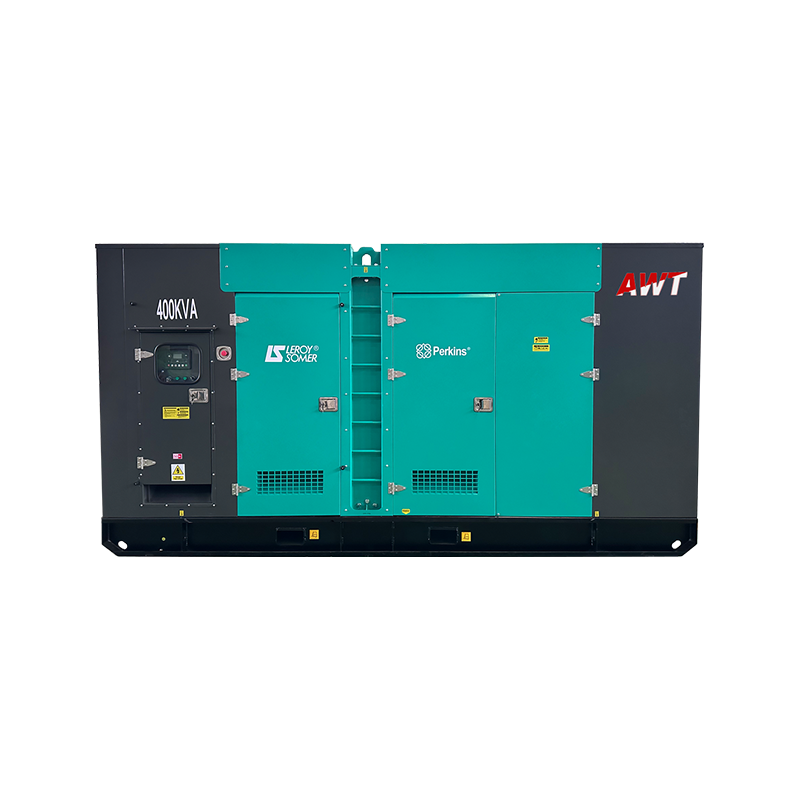
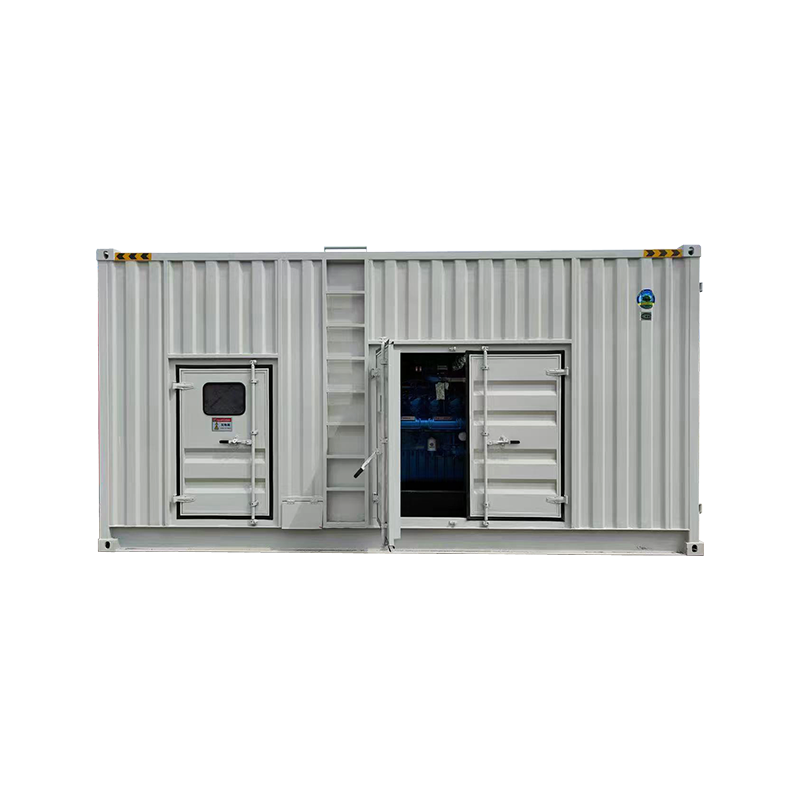 ISO-Compliant Containerized Diesel Generator Set with Full EnclosureThis fully pre-assembled container genset suits outdoor installations without a dedicated building, offering weatherproof protection and low noise. Its prefabricated design reduces site work, making it a practical choice for remote or harsh-environment projects.View Product →
What Is an Open Type Diesel Generator Set?
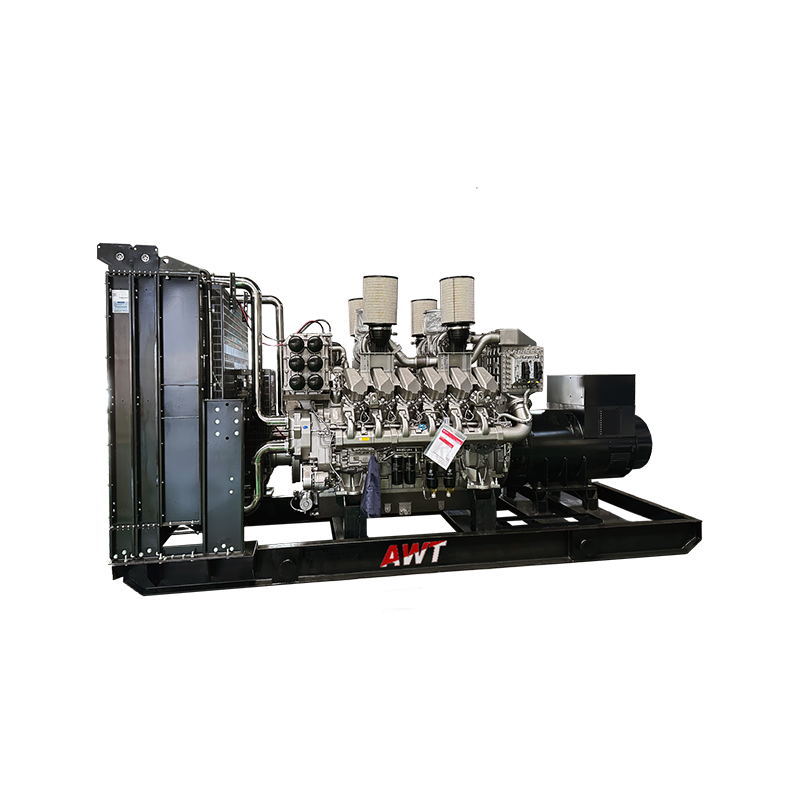
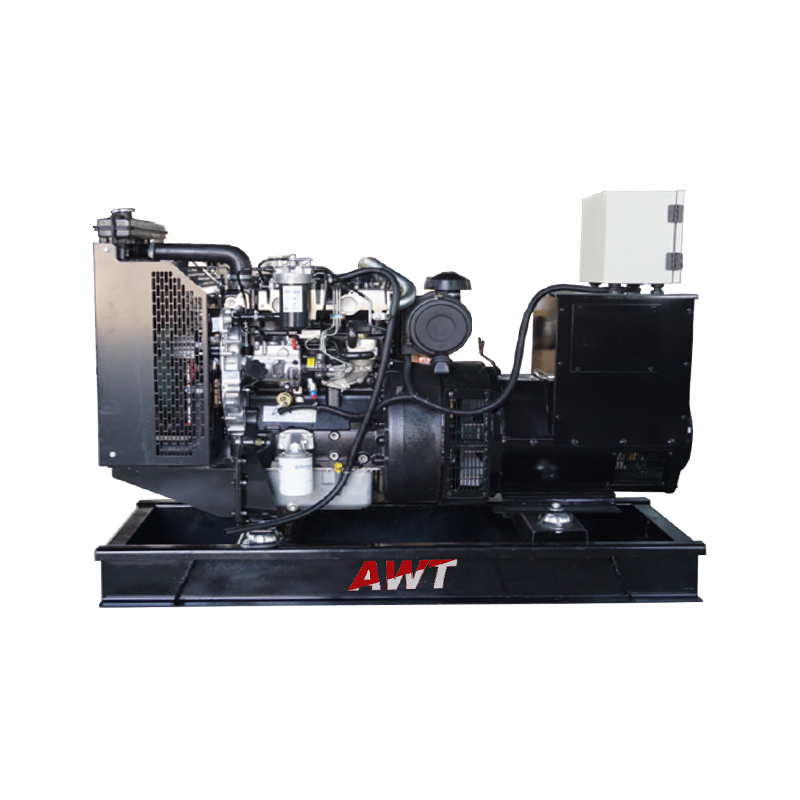
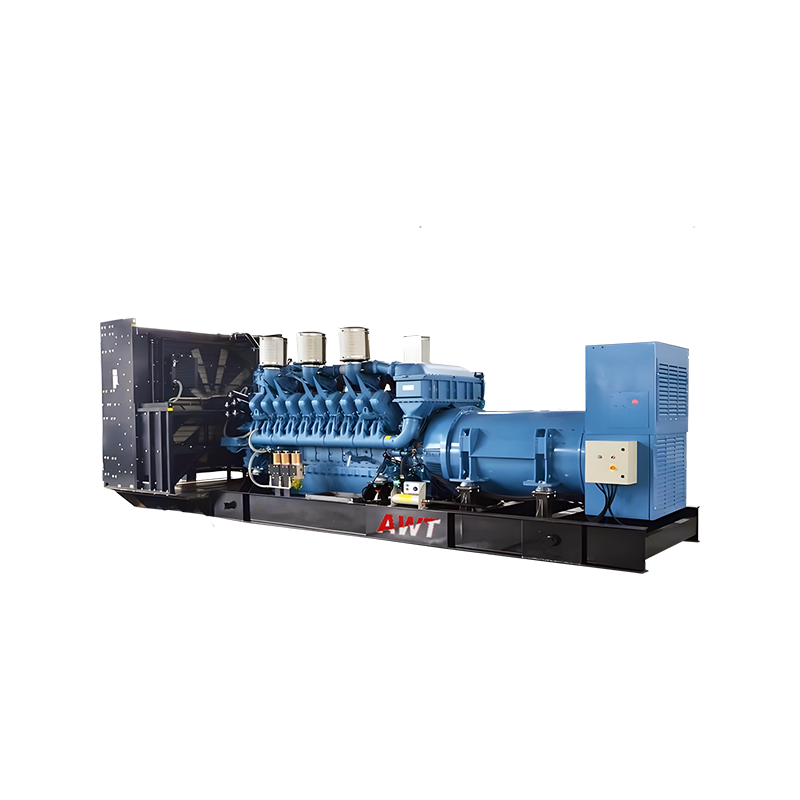
An open type diesel generator set mounts the engine, alternator, radiator, and control panel on a shared skid base frame with no enclosure. Every component is visible and within reach, which makes routine maintenance straightforward. An oil and filter change that takes 20 minutes on an open set can require significantly longer inside a container, simply because the technician needs to open doors, move panels, and work in a tighter space.
That accessibility comes with a condition. An open unit must run inside a generator room or an acoustically treated shelter that provides what the enclosure would otherwise supply: weather protection, combustion and radiator ventilation, exhaust routing, fuel storage, and noise containment. An unenclosed engine typically produces 90 to 105 dB(A) at 7 metres, so the building must provide the sound reduction if the site has a noise limit. Ventilation is just as critical; a room that cannot exhaust radiator airflow will turn a full-load test into a series of high-temperature trips. Civil work for such a room, from concrete plinth to louvre installation, usually costs more than the enclosure premium on the genset itself.
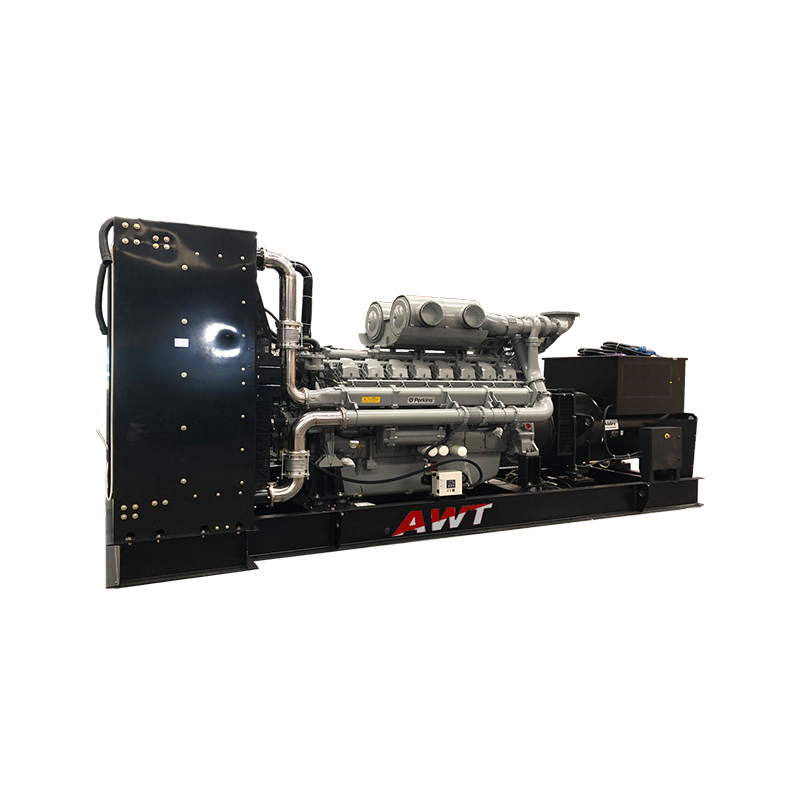 Open-Type Industrial Diesel Generator Set with Exposed Core ComponentsConstructed without an enclosure, this generator provides direct access to the engine and alternator, simplifying maintenance and reducing equipment cost. It fits sites that already have a compliant generator room with sufficient ventilation and noise control.View Product →
Container Type vs Open Type Diesel Generator Sets: Side-by-Side Comparison
The table below summarises the factors that drive application decisions. Use it as a shortlist filter, then confirm the details with the manufacturer for your specific power range and site conditions.
| Comparison factor | Container type | Open type |
|---|---|---|
| Weather tolerance | Designed for continuous outdoor exposure | No environmental protection; shelter required |
| Typical noise level | 75 to 85 dB(A) at 7 m | 90 to 105 dB(A) at 7 m |
| Building requirement | None; compacted pad is sufficient | Generator room with ventilation and exhaust |
| Civil and installation cost | Low; ready-to-run module | High; room, louvres, and silencers add cost |
| Fuel autonomy | Integrated day tank typically 8 to 24 hours | Small base-frame tank; external tank usually needed |
| Maintenance access | Good, via internal access doors | Excellent, direct access to all components |
| Mobility and redeployment | Easy to crane, transport, and reinstall | Possible, but components are exposed during moves |
| Equipment price premium | Approximately 20 to 40 percent higher | Baseline price |
| Best-fit applications | Outdoor, remote, rental, noise-sensitive sites | Indoor machine rooms and fixed plants |
Application-by-Application Comparison
The enclosure choice is really a site choice. Matching the configuration to where and how the set will run matters more than the quoted price per unit.
Outdoor and Remote Sites: Container Type Wins
Construction camps, mining operations, oil and gas facilities, agricultural estates, and emergency relief sites usually have no generator building, no time to build one, and no budget for one. Container sets handle rain, dust, salt spray, and extreme temperatures with factory-engineered ventilation and anti-condensation features. They can be lifted onto a pad, fuelled, and connected to a switchboard in a day. When the contract moves to the next area, the same unit is craned onto a truck instead of being dismantled, re-engineered, and rebuilt. This redeployability directly improves project economics for contractors and rental companies.
Existing Generator Rooms: Open Type Wins
Factories, commercial buildings, hospitals, and data centres that already have a dedicated generator room can make better use of an open set. The building handles noise and weather, and the exposed layout gives maintenance staff rapid access to filters, belts, coolers, and the alternator end. Because the equipment cost is lower, the saved capital can be invested in a better transfer switch, a fuel polisher, or additional spare parts. In these applications, open type sets are the standard recommendation of most experienced diesel generator manufacturers. However, always verify the room airflow and exhaust route before ordering, because retrofitting ventilation into an existing building is expensive once concrete work has started.
Rental, Temporary Power, and Fleet Operations: Container Type Wins
Rental fleets need machines that survive repeated transport, lift-down onto unprepared ground, and continuous duty with changing operators. Container type sets built for rental duty include heavy-duty lifting frames, lockable doors, bundled cable connection points, and parallel-ready controls. A fleet of container units can be dispatched to several sites and synchronised within hours, which is difficult to match with open sets that require site-side enclosure work. The integrated fuel tank also shortens commissioning time, since the unit can be refuelled and started while permanent tanks are still being installed elsewhere on site.
Budget-First Projects: Open Type Wins Only When a Shelter Exists
If your site already has a compliant generator room, an open set delivers the same electrical performance for roughly 20 to 40 percent less equipment cost, and that saving is worth taking. The mistake is ordering open sets, then discovering that the shelter does not exist or fails to meet the ventilation requirement. For medium and large capacities between 400 and 1000 kVA, confirm the room airflow before choosing open construction. If the room cannot pass a full-load heat rejection test, a container unit becomes the cheaper option because it avoids the civil rework.
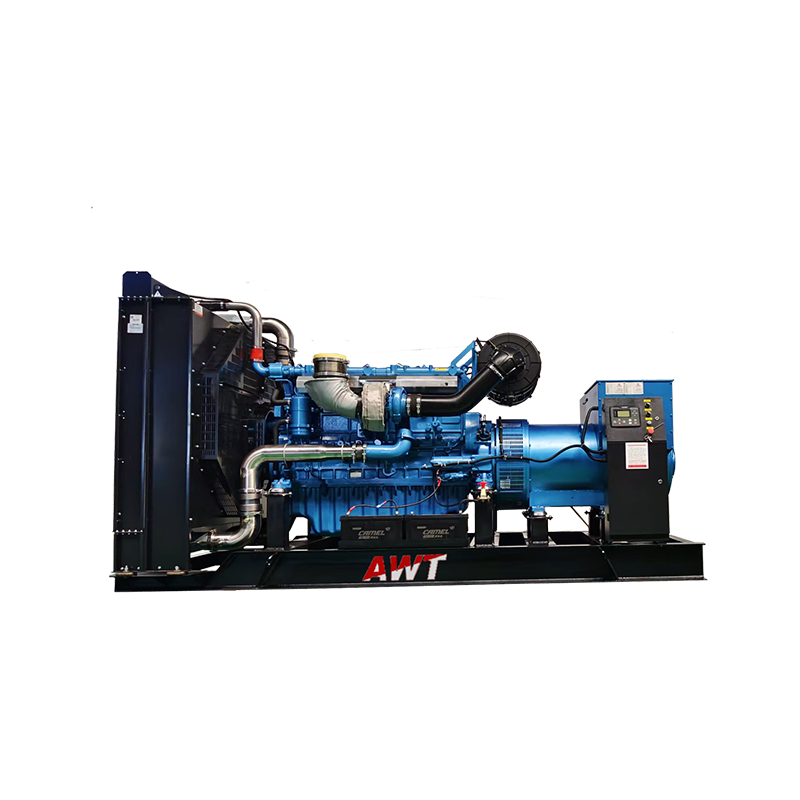 400–1000 kVA Heavy-Duty Diesel Generator Set for Industrial LoadsTargeted at medium-to-large power needs, this universal genset supports continuous full-load operation and mixed industrial loads. Reviewing room airflow and required upgrades is essential before selection, making this product page a useful starting point for capacity planning.View Product →
Seven Questions to Decide the Right Enclosure
Before you compare generator prices, answer these seven questions. The answers will point to one configuration almost immediately.
- Where will the set run for most of its life? Indoors points to open type; outdoors points to container type.
- What noise limit applies at the property boundary? Container units reduce the civil cost of silencing.
- Is there an existing generator room? If yes, verify its ventilation capacity before buying an open set.
- Will the unit stay on one site or move between sites? Regular moves favour the container design.
- How many hours of fuel autonomy do you need? Container units can integrate larger day tanks.
- Who will perform routine maintenance? Open sets are more convenient for in-house technicians.
- What is the project timeframe? A container set can be deployed in days; an open set requires the room to be ready first.
After the structure decision, you still need to match power range, engine brand, control philosophy, and optional accessories to the load profile. Different industries answer these questions differently: factories focus on load factor and maintenance intervals, infrastructure projects on enclosure protection and delivery schedules, and emergency power users on starting reliability, as outlined on the industries page. Discuss the site plan with a manufacturer that supplies both configurations and supports custom dimensions, tropical treatment, high-altitude derating, and parallel operation. If your specification is non-standard, OEM/ODM cooperation lets the factory adjust the enclosure layout, day tank size, control interface, and base frame to your exact drawings.
Making the Final Call
Container type and open type diesel generator sets are not competing products. They are different packaging strategies for the same engine-and-alternator core. The container type adds weather and acoustic protection, fuel autonomy, and deployment speed in exchange for a higher first cost. The open type offers lower equipment price and superior service access in exchange for a building that must supply what the enclosure would normally provide.
For outdoor, remote, rental, and noise-restricted applications, the container type is the better engineering and economic choice. For fixed plants with a proper generator room, the open type remains the sensible, capital-efficient option. If your site conditions fall between the two, or if you need a custom container layout, speak with a manufacturer that builds both lines and has project experience across 1 to 2500 kVA. That conversation costs nothing, and it can save you the same three weeks of rework that open sets caused on that mining site.