English
  Français
  Español
 Open Type vs Silent Type Diesel Generator Sets: Key Differences Explained
Sep 14, 2026
Content
- 1 What Is an Open Type Diesel Generator Set?
- 2 What Is a Silent Type Diesel Generator Set?
- 3 Key Differences at a Glance
- 4 Noise Limits and Compliance Often Decide the Structure
- 5 Price, Installation, and Total Cost of Ownership
- 6 How to Choose the Right Configuration for Your Site
- 7 The Bottom Line for Buyers
When a 150 kVA diesel generator set is quoted as open type and a similar quote arrives as silent type, the price difference is the first thing a buyer notices. The noise is the second. An open type diesel generator set mounts the engine, alternator, and control panel on a bare steel base frame, fully exposed. A silent type diesel generator set wraps the same core in a sound-attenuating canopy that lowers noise output at the source. The practical conclusion is simple: choose open type when the machine will sit inside a dedicated generator room with no strict noise limit, and choose silent type when the set must run outdoors, near occupied buildings, or under a permit that specifies a decibel limit. This article compares the two configurations on the criteria that actually drive the purchase decision — noise, compliance, first cost, installation work, maintenance access, and total cost of ownership. Both structures appear across a wide range of factories, infrastructure projects, and emergency power supply applications, and the correct choice depends more on the site than on the generator itself.
What Is an Open Type Diesel Generator Set?
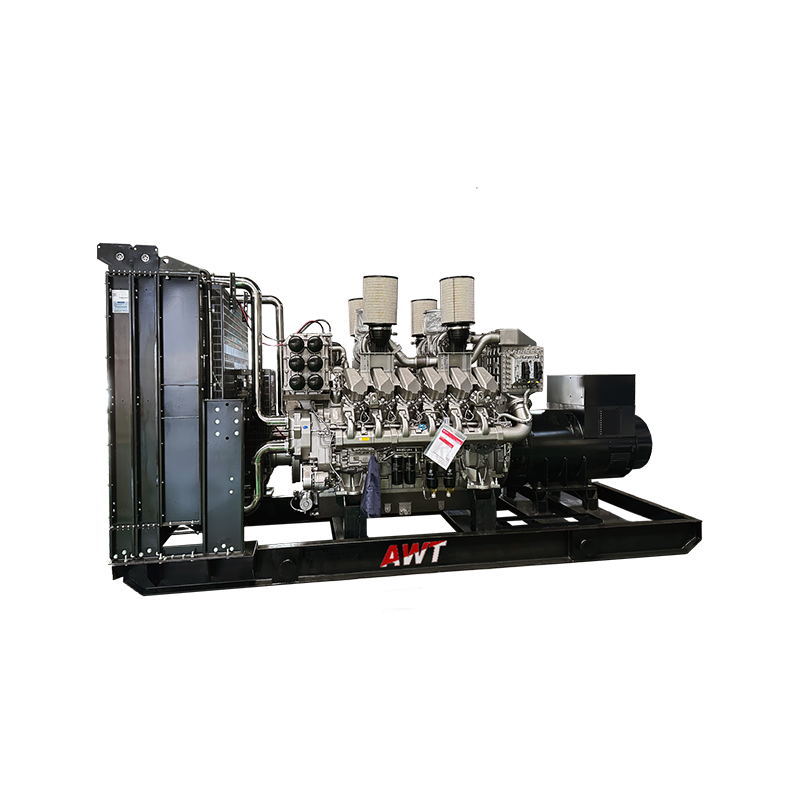
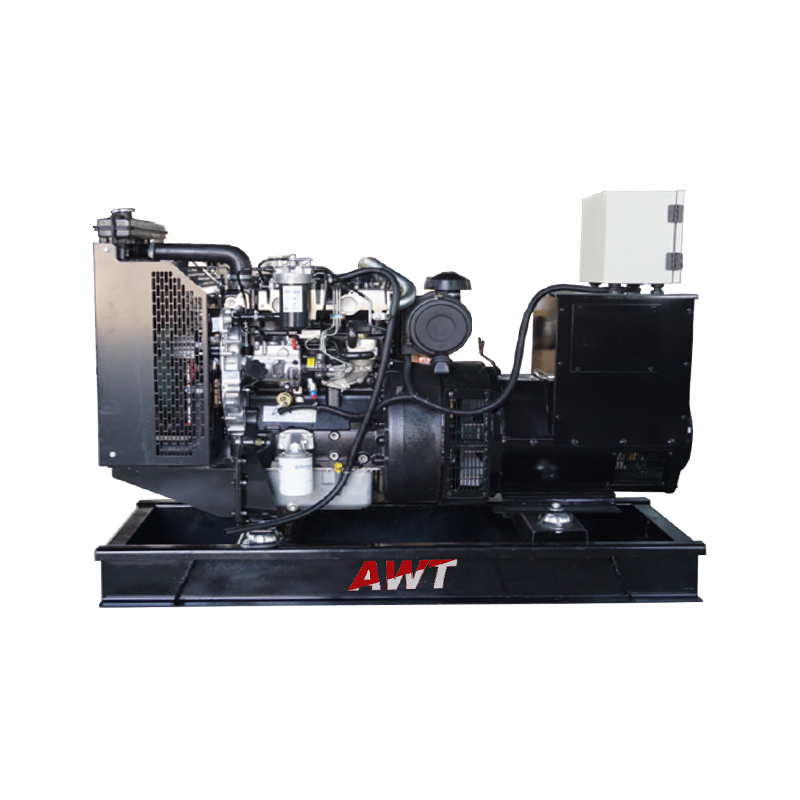
An open type diesel generator set — also referred to as a skid-mounted or bare unit — is assembled on a steel base frame that supports the diesel engine, alternator, radiator, control panel, and battery charger. There is no sheet-metal housing around the parts. The machine is intended to be installed inside a generator room, electrical substation, plant house, or fenced yard where the building itself provides weather protection and noise containment.
Because the radiator has unobstructed airflow, the open frame is the most thermally efficient layout. The engine compartment never traps heat, air filters are reached in seconds, and a mechanic can inspect oil lines, belts, and hoses without removing any cover. For a maintenance team that visits a site monthly, this direct access reduces service time and the chance of a loose connection being missed.
Open construction is usually the preferred choice when:
- The set is installed inside a dedicated machine room with adequate ventilation.
- The local noise regulation does not limit the sound pressure level at the site boundary.
- The buyer needs the lowest first cost per kVA.
- The room already has a concrete foundation, intake louvres, and exhaust ducting.
Open units are also the typical starting product when a project plans to add an acoustic enclosure or a prefabricated container at a later stage.
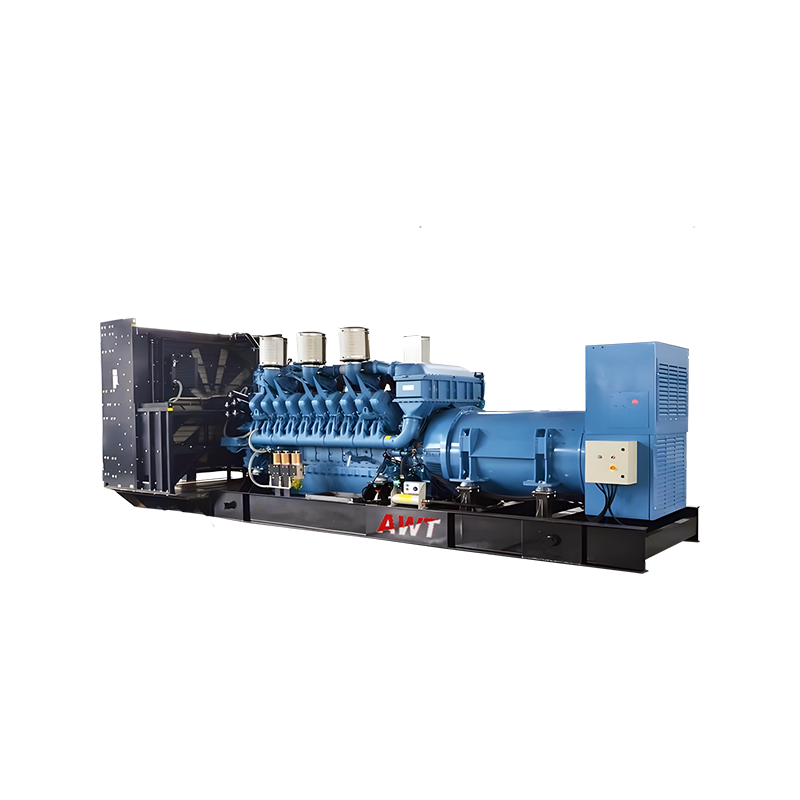
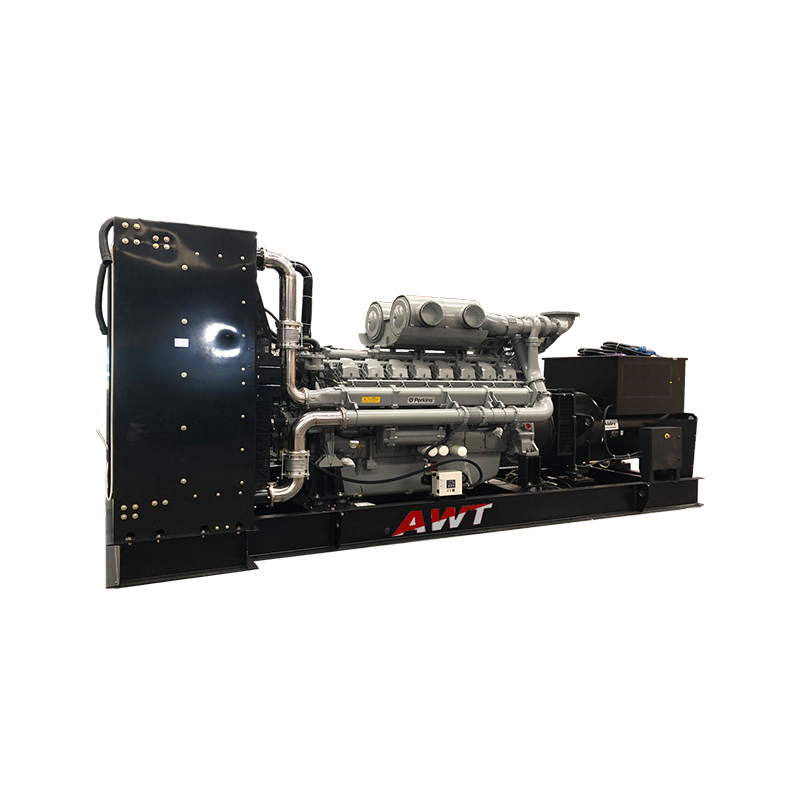 Open Type Diesel Generator Sets for Flexible Industrial PowerThis open-type genset offers exposed components for easy inspection and maintenance across a wide 10–2500 kVA range, making it a cost-effective choice for well-ventilated fixed installations.View Product →
What Is a Silent Type Diesel Generator Set?
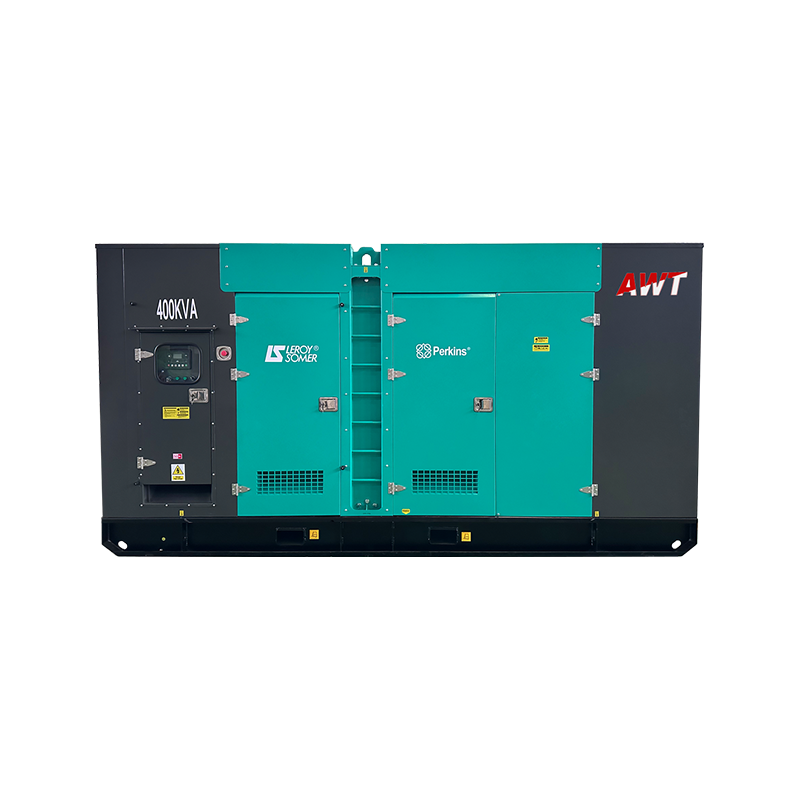
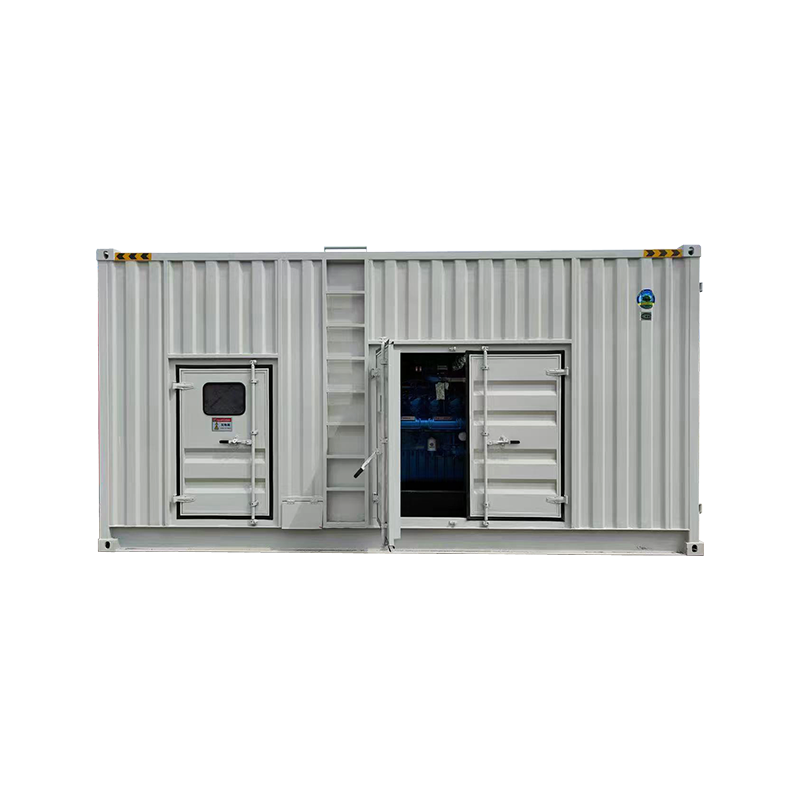
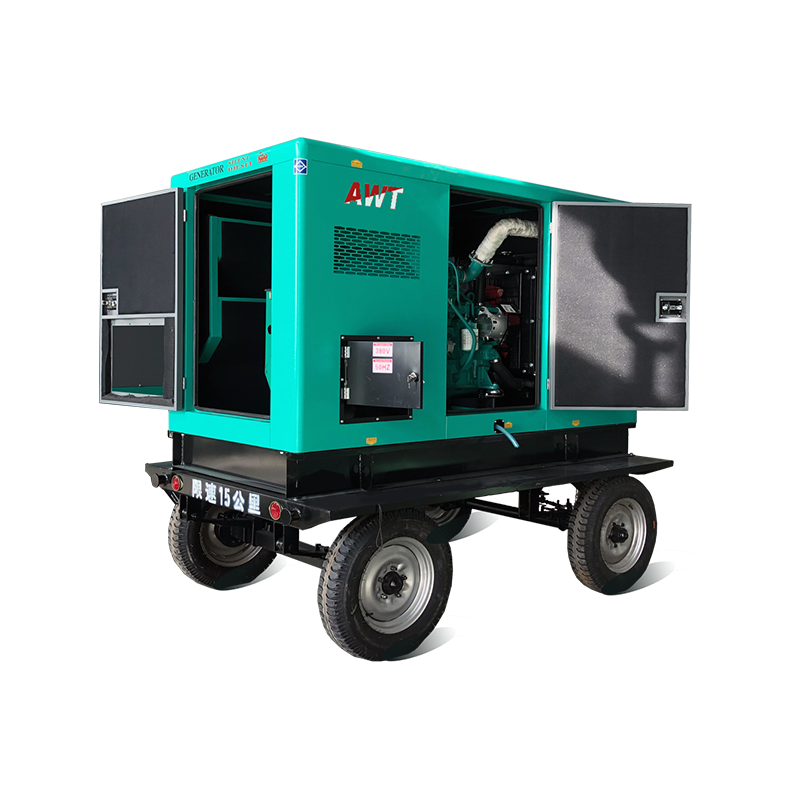
A silent type diesel generator set — also called a canopy type or soundproof unit — uses the same engine, alternator, and control system as an open unit, but the whole group is enclosed in a weatherproof, sound-attenuating canopy. The canopy walls are lined with acoustic absorption material, the exhaust system receives additional silencer stages, and the air inlet and outlet are shaped to restrict noise paths while still pulling enough cooling air through the radiator.
The result is a dramatic drop in emitted noise. Where a 200 kVA open unit may produce 100 dB(A) or more at a distance of 7 metres, a comparable silent unit typically stays between 65 and 80 dB(A) at the same measuring point. That range is close to normal conversation or a busy street, which is why municipal approvals and project specifications often require silent sets near residential areas, hospitals, hotels, and offices.
Silent type is typically chosen when:
- The set will be installed outdoors without a surrounding room.
- The project permit sets a maximum sound pressure level at the boundary.
- The machine must run at night without disturbing nearby homes or staff areas.
- The buyer wants weather protection without spending on civil construction.
Quality silent canopies come with hinged access doors and removable side panels arranged around the service points, so routine maintenance does not require dismantling the entire enclosure.
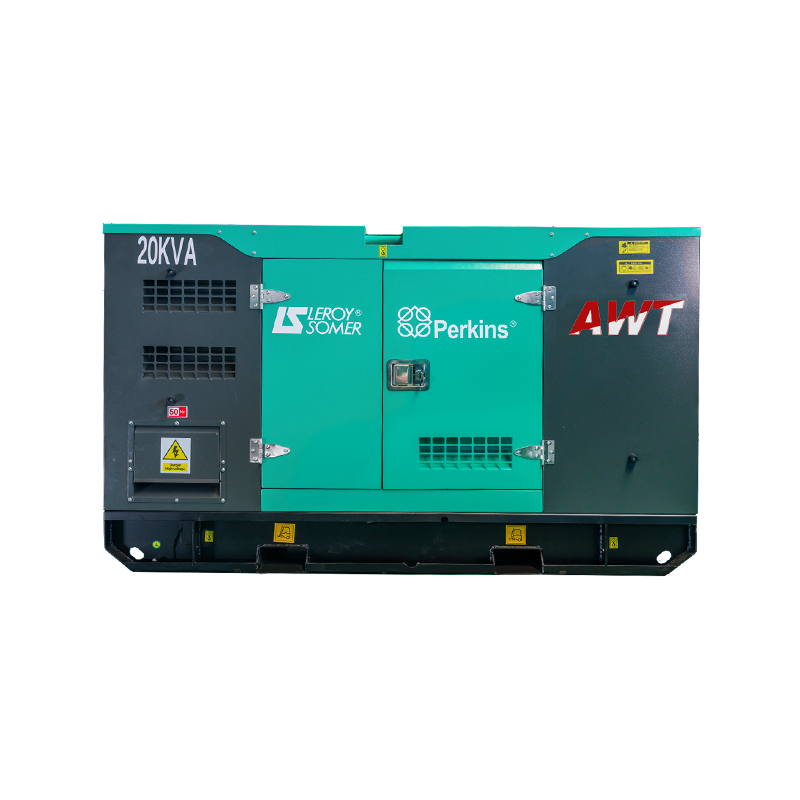 Silent Type Diesel Generator Sets with Soundproof CanopyA low-noise enclosed genset with weatherproof canopy and ≤75 dB(A) output at 1 meter, ideal for noise-sensitive urban, commercial, and residential standby power needs.View Product →
Key Differences at a Glance
The difference between the two structures becomes clear when the same generating core is compared with and without an enclosure. The table below summarises what changes.
| Item | Open Type | Silent Type |
|---|---|---|
| Noise level at 7 m | 95–110 dB(A) | 65–80 dB(A) |
| Enclosure | None; open base frame | Sound-attenuating canopy |
| Footprint | More compact | Larger due to canopy and ducting |
| Cooling air path | Free intake and outlet | Controlled through lined ducts |
| Maintenance access | Direct, unobstructed | Through hinged access panels |
| Weather protection | None | Rain, dust, and UV protection |
| First cost per kVA | Lower | Higher, typically by 15–30% |
| Typical installation | Generator room or plant house | Outdoor site near occupied buildings |
The most important conclusion from the table is that a silent set replaces civil work. A project that cannot build a concrete acoustic room can often place a silent set on a simple pad and meet the same noise requirement.
Noise Limits and Compliance Often Decide the Structure
Sound readings for generator sets are expressed in dB(A), a scale that weighs noise according to how the human ear perceives it, and most specifications measure at 1 metre or 7 metres from the set or from the site boundary. Measurements of this type are usually taken according to ISO 8528-10, which defines the test conditions for genset noise testing. In practice, an open unit starts close to the upper limit of what an industrial zone allows during the day, and meeting a night-time limit without additional sound treatment is difficult. A silent unit is designed from the start to meet a stated dB(A) value.
Consider a factory in a mixed industrial-residential zone. The environmental permit may allow 75 dB(A) at the boundary during the day and 65 dB(A) at night. An open 200 kVA set inside a sheet-metal machine room can fail such a measurement once doors, louvres, and ventilation openings are in place. Rebuilding the room afterwards — adding an intake silencer, a secondary exhaust silencer, and acoustic louvres — is usually more expensive than buying the silent version from the start.
This is why consulting engineers increasingly specify a silent type or sound-attenuated set whenever the installation site is not an isolated location. The structure is not an optional accessory; it is part of the compliance case that lets the project start on schedule.
Price, Installation, and Total Cost of Ownership
First cost
On a per-kVA basis, an open set is cheaper to build. The silent canopy adds sheet steel, acoustic treatment, a larger radiator or fan to compensate for the restricted airflow, and extra manufacturing time. A typical price increase lies between 15% and 30%, depending on the attenuation level and the power range. For a 100 kVA unit the difference is modest; for a 1000 kVA unit, the canopy and the associated cooling design become a significant share of the total cost.
Installation and site cost
An open set needs a room with a concrete floor, ventilation openings sized for the radiator airflow, a flexible exhaust connection, and usually acoustic treatment if the machine is close to people. These civil works can cost as much as the enclosure option itself. A silent set installed outdoors needs only a level concrete pad and a cable route, because the canopy performs the tasks that the room would normally perform.
Maintenance and relocation
Open frames give a mechanic the most comfortable working layout because every component is visible. Silent units require access panels, but canopies manufactured with service doors aligned to the filters and engine oil points reduce the access time to a few additional minutes. Silent sets also hold an advantage in temporary projects: a skid-mounted silent unit can be lifted, relocated, and returned to service with very little demolition or rebuilding work.
How to Choose the Right Configuration for Your Site
Before requesting a quotation, walk through the actual installation site and answer five questions:
- Where will the set physically sit? Indoors in a dedicated generator room points to open type; outdoors or in a shared courtyard points to silent type.
- What sound level is allowed? Check the permit, the contract, or the landlord's rules for a specific dB(A) value measured at a defined distance.
- Who will service the set? If the maintenance crew works in its own workshop, the open frame is convenient; if the set is outdoors and serviced by a mobile technician, the access panels of a silent canopy matter more.
- Will the machine be moved? Silent sets are easier to relocate because the enclosure protects the equipment during lifting and transport.
- What is the complete budget? Include the room, ventilation ducting, acoustic treatment, and installation labour before comparing the two prices.
For the common range of factory and commercial installations, a mid-size silent unit in the 100–400 kVA band covers most noise-sensitive projects, while open units in the same band serve dedicated machine rooms.
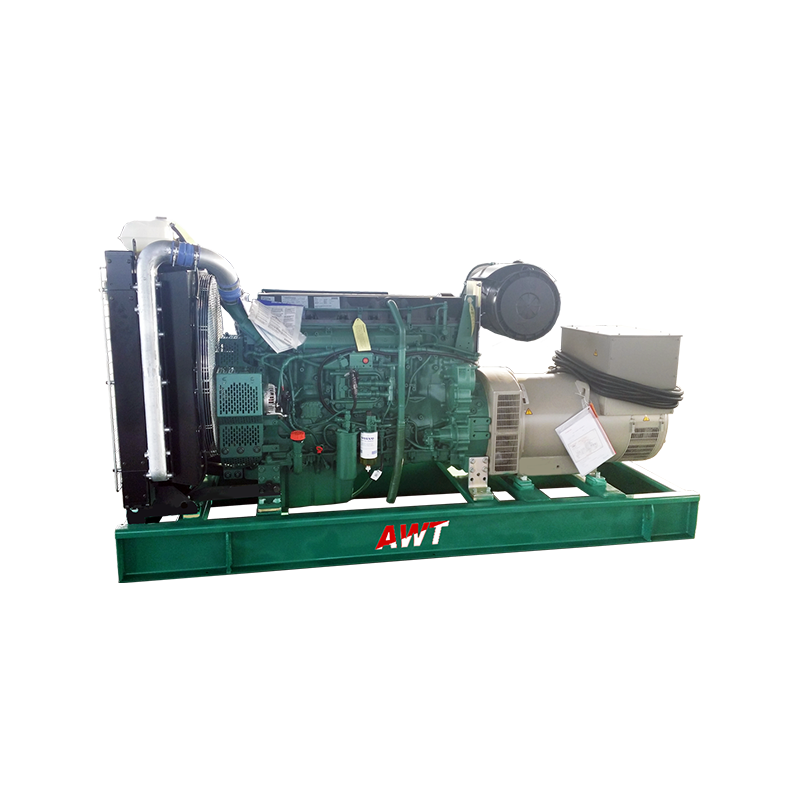 Universal 100–400 kVA Diesel Generator Sets for Medium LoadsThis mid-power series suits commercial and industrial projects needing stable long-term power, featuring robust engines, full-copper alternators, and strong overload resistance.View Product →
The Bottom Line for Buyers
The difference between open and silent type diesel generator sets is not a quality difference. The engine, alternator, and controller inside both configurations can be identical. The structure is selected to fit the installation: an open set rewards the buyer who can provide a proper machine room, while a silent set rewards the buyer who needs the machine to be thermally and acoustically independent of its surroundings. The deciding factors in nearly every project are the noise limit, the distance between the set and occupied buildings, and the site-work budget.
At Yangzhou Aiweite Electromechanical, both configurations are part of the standard production range from 10 kVA to 2500 kVA, with engine options including Cummins, Perkins, Weichai, Volvo, and MTU. If the site conditions differ from the typical cases described above, the fastest way to get a correct recommendation is to send the site drawing and the applicable noise limit, so that structure and power range can be matched together. Buyers who need a custom canopy layout or a private-label product can also develop the specification through our OEM/ODM route.